La Paz County Residents Fight Bills That Could Export Rural Groundwater
La Paz County Supervisor Holly Irwin says two Arizona bills could let outside investors pump McMullen Valley's wells dry and sell the water to Phoenix.

La Paz County Supervisor Holly Irwin came out swinging against two bills moving through the Arizona Legislature, warning that they would set a dangerous precedent. "Setting a precedent to move water away from rural Arizona to the urban areas is morally disturbing," Irwin said.
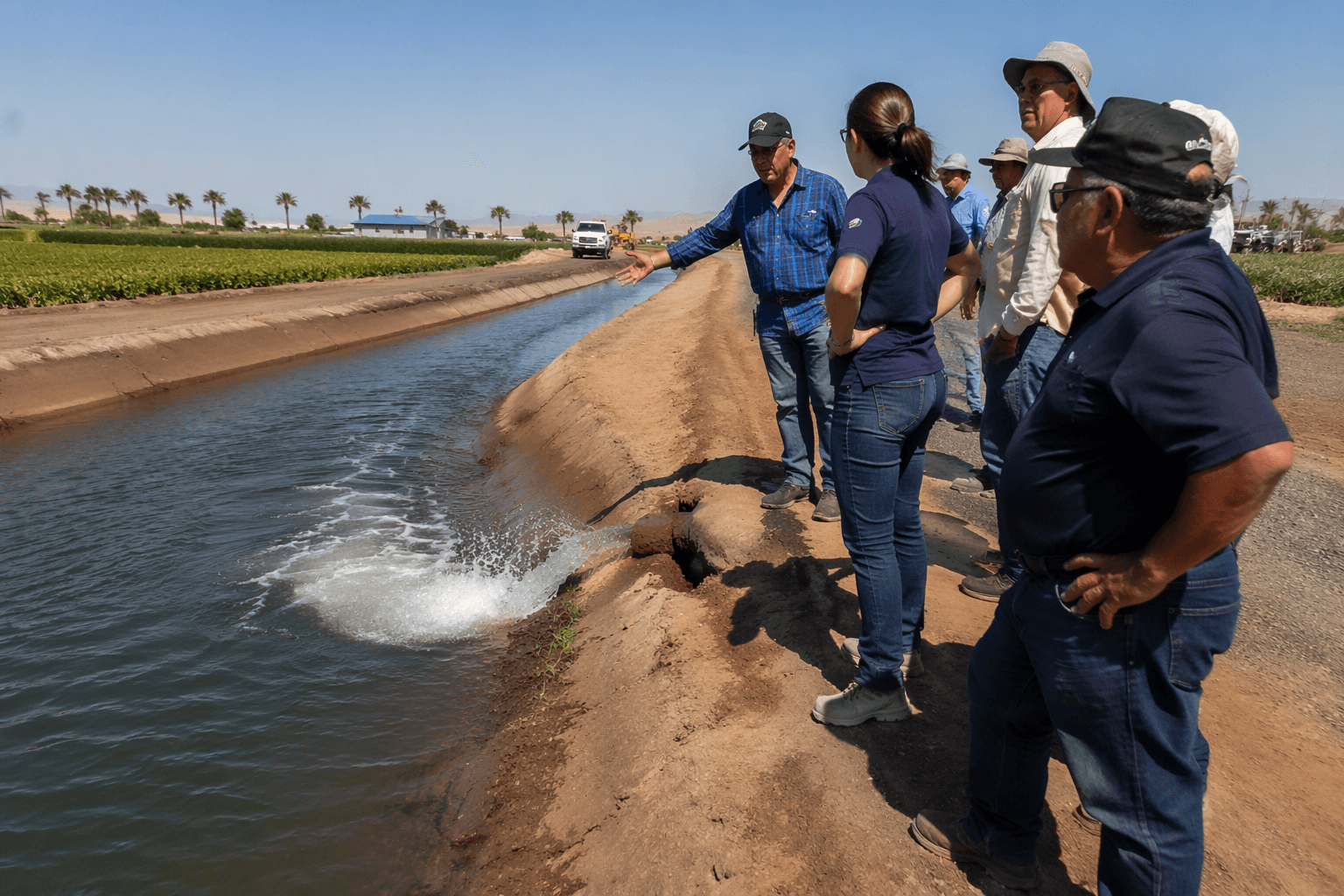
HB 2757 and HB 2758 could allow outside investors to gain control of rural Arizona's groundwater and sell it to distant Phoenix urban areas, according to advocacy group Rural Arizona Action. The bills target McMullen Valley in La Paz County, where about 3,000 residents depend on local wells for their water supply, in an area already facing declining groundwater levels and land subsidence from overpumping.
Investment group Water Asset Management owns thousands of acres of farmland in both McMullen Valley and Butler Valley and could profit by moving and selling groundwater from the aquifer under those lands, according to critics of the bills. Yavapai County Supervisor Nikki Check put it bluntly at a March 11 press conference at the Capitol: "We cannot allow our state laws to be rewritten just so a hedge fund can cash in with a giant payday on a speculative investment."
The ground beneath McMullen Valley is already paying a physical price. According to Arizona Department of Water Resources recordings of land subsidence, land in McMullen Valley has dropped 3.89 feet since 1992, with other parts of La Paz County sinking over five feet, creating earth fissures. If current trends continue, almost half of the wells in the McMullen Valley basin will be dry by 2075.
HB 2758's sponsor, Rep. Gail Griffin, compared the legislation to similar bipartisan bills passed last year allowing private water hauling out of the Harquahala Basin, south of the McMullen Basin. But there is a significant difference between the two basins: no one lives in Harquahala. Rep. Leo Biasucci of Lake Havasu City, who sponsored the Harquahala bill, voted against HB 2758 when it passed the Arizona House on Feb. 19.
Griffin has argued that "House Bill 2758 fulfills the spirit of the original language that was negotiated in 1991 — making it easier for cities to access the water they are already entitled to access." She described the McMullen Valley groundwater as "Central Arizona's water savings account" and said separate companion bills, including HB 2023, 2102, 2103, 2932, and 2933, address domestic water security concerns for residential well owners in the basin.
Residents and local leaders took their fight to state reporters and public-radio interviewers on March 26, arguing that any transfer framework would accelerate the depletion of the aquifer their communities depend on. Rural Arizona Action warned that the bills "could set a dangerous precedent, signaling that rural Arizona's water can be sold to the highest bidder rather than protected for the communities that depend on it."
HB 2758 initially failed to receive a do-pass recommendation in the Committee of the Whole on Feb. 17, with a recorded vote of 28 yeas to 29 nays, but the bill was subsequently revived. The House moved to rescind that failed vote and place HB 2758 back on an Active Calendar Committee of the Whole.
Former Prescott Mayor Phil Goode said repeated attempts to get rural groundwater protection proposals heard in Griffin's committee went nowhere, leaving a costly ballot initiative as the only alternative path forward.
Rural Arizona Action says there is still time to stop the bills before they become law and is urging constituents to contact their state senators and vote NO on HB 2757 and HB 2758. The bills now await action in the Arizona Senate.
This article was produced by Prism’s automated news system from verified source data, official records, and press releases, then run through automated quality and moderation checks before publishing. The system is built and supervised by the people who set the standards it runs under. Read our full AI policy.
Did this article answer your question?