Monsoon season begins, bringing storms, heat and flash flood risk to La Paz County
Sticky monsoon air settled in first, then storms, flash floods and dust hazards returned for Parker, Quartzsite and La Paz County road trips.

Sticky air and sudden storms were back over La Paz County, and the shift immediately changed what daily life looks like in Parker, Quartzsite and the river corridor. Arizona’s monsoon season began June 15 and runs through September 30, bringing the familiar mix of thunderstorms, heavy rain, lightning, hail, high winds, flash flooding, dust storms and extreme heat.
The early-season pattern was already active across western Arizona. Isolated cells west of Somerton brought lightning, rain and thunder, a reminder that the same weather system that hits Yuma County can spread quickly into La Paz County. Forecasters said temperatures stayed in the triple digits until about 8 p.m., while dew points in the high 50s and low 60s kept the evening muggy instead of giving residents any real break from the heat.
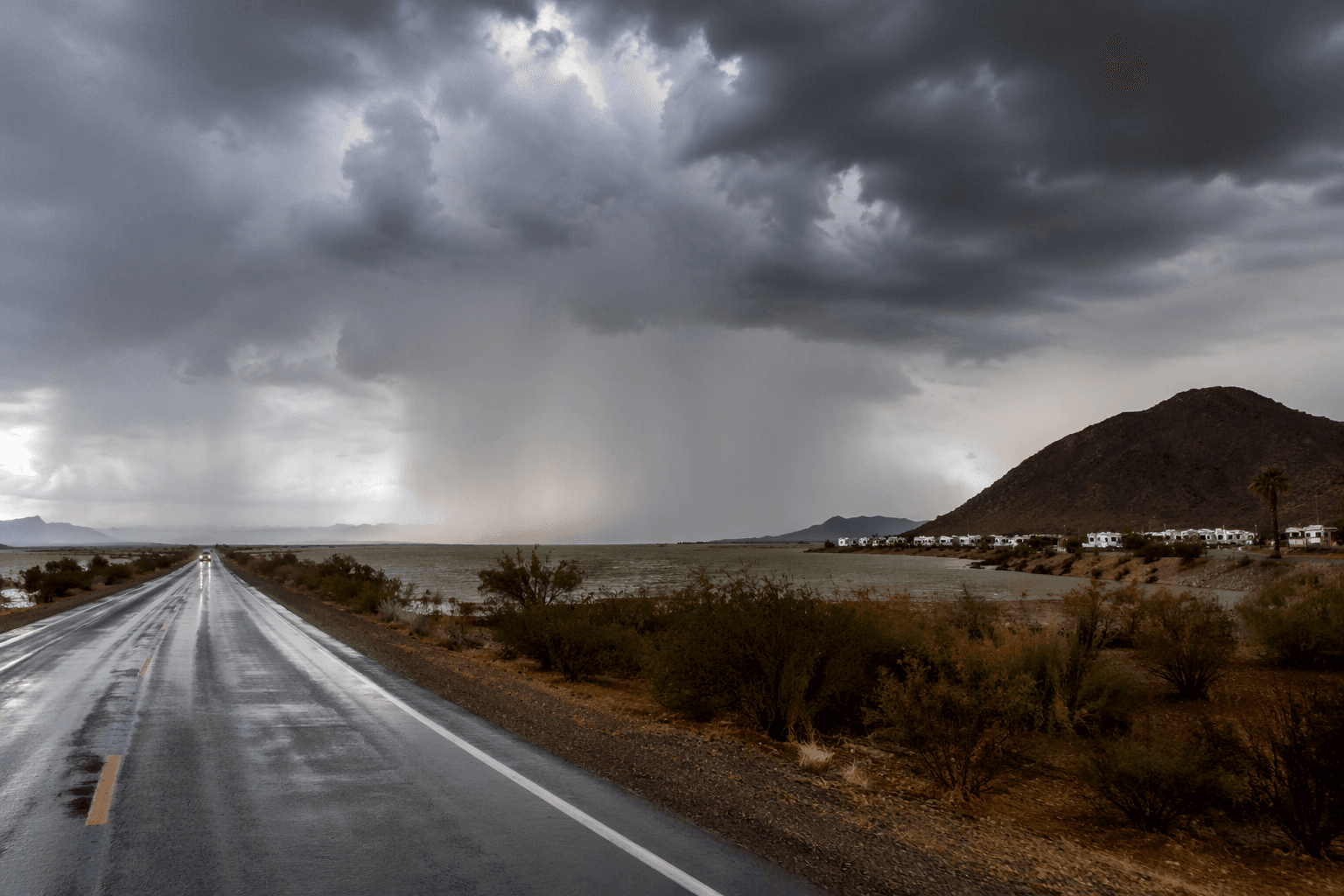
That combination carries immediate costs for people who live and work here. Longer stretches of hot, humid weather push cooling systems harder and can raise electricity bills just as outdoor work, travel and recreation become more dangerous. The first stronger monsoon bursts can also arrive fast, turning a normal drive into a heat, rain or visibility problem in a matter of minutes.
La Paz County has seen how severe monsoon storms can get. In the National Weather Service’s 2019 Southwest Monsoon review, the most intense storms were centered across La Paz County, affecting Bouse and Parker and sending very heavy rain and flash flooding from Quartzsite toward Anthem. That history matters because the county’s low-water crossings, washes and long stretches of rural pavement can become trouble spots fast when rain falls hard upstream.
The storm risk is not limited to water. The Arizona Department of Transportation and the National Weather Service warn that dust storms can arrive with little warning and create chain-reaction crashes on western Arizona roads. Monsoon Awareness Week ran June 7-13, but the real test for La Paz County comes now, as residents move into the stretch when triple-digit heat, sudden thunderstorms and dust events can overlap on the same day.
The forecast later pointed to some easing by midweek as an eastern Pacific low-pressure system helped dry and cool the air, but conditions were still expected to run above normal and Father’s Day weekend remained warm. In La Paz County, that meant the season had started exactly as it usually does: with a narrow margin for error and very little time to react once the sky changes.
This article was produced by Prism’s automated news system from verified source data, official records, and press releases, then run through automated quality and moderation checks before publishing. The system is built and supervised by the people who set the standards it runs under. Read our full AI policy.
Did this article answer your question?