Parker Dam reshaped the Colorado River, created Lake Havasu in La Paz County
Parker Dam sits mostly below the riverbed, but its reservoir, powerplant and recreation corridor still shape La Paz County's shoreline, boating and water delivery.
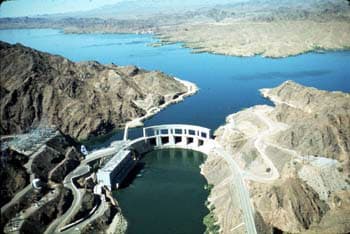
Parker Dam is the reason Lake Havasu exists in La Paz County, and the lake is the reason the Parker Strip looks and works the way it does today. The dam turned a stretch of the lower Colorado River into a controlled reservoir system that supports boating access, shoreline development, hydroelectric power and regional water delivery. What appears at first glance to be a remote desert landmark is actually one of the main structures organizing daily life along the river.
A dam built more underground than above it
The Bureau of Reclamation describes Parker Dam as a concrete arch structure and commonly calls it the deepest dam in the world, a label that makes sense once you look at its numbers. The dam is 320 feet tall in structural height, but about 73 percent of that height sits below the original river bed. Only about 85 feet is visible above the old river line, and another 62 feet rises above the roadway.
That hidden bulk comes from a massive build: Parker Dam contains 380,000 cubic yards of concrete, stretches 856 feet across the crest and uses five 50-foot-square gates to control water. Excavation for the dam and powerplant began in October 1934, the Rivers and Harbors Act of August 30, 1935 specifically authorized construction, and the dam was substantially completed in September 1938. Those dates matter because Parker was not an accidental landmark. It was an engineered decision that permanently changed where the river pooled, where people could launch boats and where development would cluster.
Lake Havasu made the Parker Strip possible
Lake Havasu extends 45 miles behind Parker Dam, covers more than 20,400 acres and has a total capacity of 646,200 acre-feet. That reservoir footprint is what gave the Parker Strip its shoreline identity. The river is no longer just a moving channel here. It is stored, managed and spread into a long water corridor that supports recreation, homes, marinas and a local economy built around access to the water.
The Bureau of Reclamation ties the Parker Strip Recreation Area directly to the dam, and the Bureau of Land Management describes Parker Dam Road as an 11-mile scenic byway along the California shore of the Colorado River. Along that corridor, the recreation mix is unusually broad: camping, swimming, boating, fishing, hiking, OHV use and wildlife viewing all sit within the same landscape. Visitors also come for the chance to spot wild burro and desert bighorn sheep, part of the desert setting that still surrounds the reservoir even as the shoreline feels developed and heavily used.

That combination of water, access and scenery is what people recognize on the ground in Parker and along the strip. The lake creates the boating culture. The shoreline creates the property and access pressures. The dam creates both.
The water system behind the recreation
Parker Dam is not only a recreation landmark. It is also a key water and energy machine in the Southwest. Lake Havasu’s forebay and desilting basin feed the Metropolitan Water District of Southern California’s Colorado River Aqueduct, while the Central Arizona Project also uses the forebay to pump Colorado River water into its canal system. In practical terms, the same reservoir that people see from the shoreline is part of the plumbing that moves water across state lines.
The Parker Dam Power Project was authorized by the same 1935 law that authorized the dam. Construction of the powerplant began in July 1939, and Reclamation says about half of the plant’s output is reserved for pumping water along the aqueduct. The powerplant has an operating capacity of 255,000 kilowatts, and the project was built partly with funds advanced by the Metropolitan Water District of Southern California. That arrangement helps explain why Parker Dam sits at the intersection of hydropower, water supply and regional planning rather than standing as a local feature alone.
It also helps explain why county life here cannot be separated from water policy. The reservoir level influences boating conditions, shoreline use and the look of the riverfront. The same project that makes Lake Havasu a destination also serves the infrastructure that keeps water moving to cities and farms beyond La Paz County.
Parker Dam sits inside a larger Colorado River system
Parker Dam was built as the second impoundment on the lower Colorado River, after Hoover Dam and before Davis Dam. That placement is important because the dam does not operate in isolation. Together, the three dams provide flood protection, hydroelectric generation and water storage for agricultural, industrial and domestic use across the Southwest, creating the regulated river system that now defines the region.

Historic American Engineering Record notes that storage behind Parker Dam and regulation of the river below it help the United States comply with the 1944 Mexican Water Treaty, including the annual delivery of 1.5 million acre-feet of water to Mexico. That makes Parker Dam part of both an engineering network and an international water obligation. The dam’s impact reaches well beyond the shoreline seen from Parker or the launch ramps on Lake Havasu.
The local administrative footprint is just as telling. Parker Dam sits about 17 miles northeast of Parker, Arizona, and Reclamation’s field office remains in Parker, California, on Highway 95. That geography reflects the cross-river, cross-state reality of life here: one river, one reservoir system and a county that lives with the consequences of both.
A history shaped by conflict, labor and forced removal
The dam’s construction was politically contentious from the start. The National Park Service says a contract was let on August 25, 1934, and that Arizona Governor B. B. Moeur declared martial law and sent the 158th Infantry Regiment to the dam site that November. At the same time, southern Californians were already building a 242-mile aqueduct in anticipation of Colorado River water. Those facts show that Parker Dam grew out of a regional struggle over who would control the river and who would benefit from it.
The history along the site also includes a darker chapter. The Parker Dam Reception Center later became the Poston internment camp, which housed nearly 18,000 people and became the third-largest city in Arizona at the time. That means the same river corridor now associated with boating, tourism and shoreline living was also part of the forced removal and incarceration of Japanese Americans during World War II.
Parker Dam still shapes La Paz County because it changed the physical river first and everything else after. The lake, the road, the launch points, the powerplant, the aqueduct connections and the layered history of conflict and displacement all flow from that one concrete structure on the Colorado River.
This article was produced by Prism’s automated news system from verified source data, official records, and press releases, then run through automated quality and moderation checks before publishing. The system is built and supervised by the people who set the standards it runs under. Read our full AI policy.
Did this article answer your question?