Robotic samplers help spot invasive species in Colorado River early
Silver-trunk robots are sampling the Colorado River before invasives take hold, a small early-warning tool with big stakes for La Paz County farms, fish and water access.
Why this tiny robot matters on the Colorado River
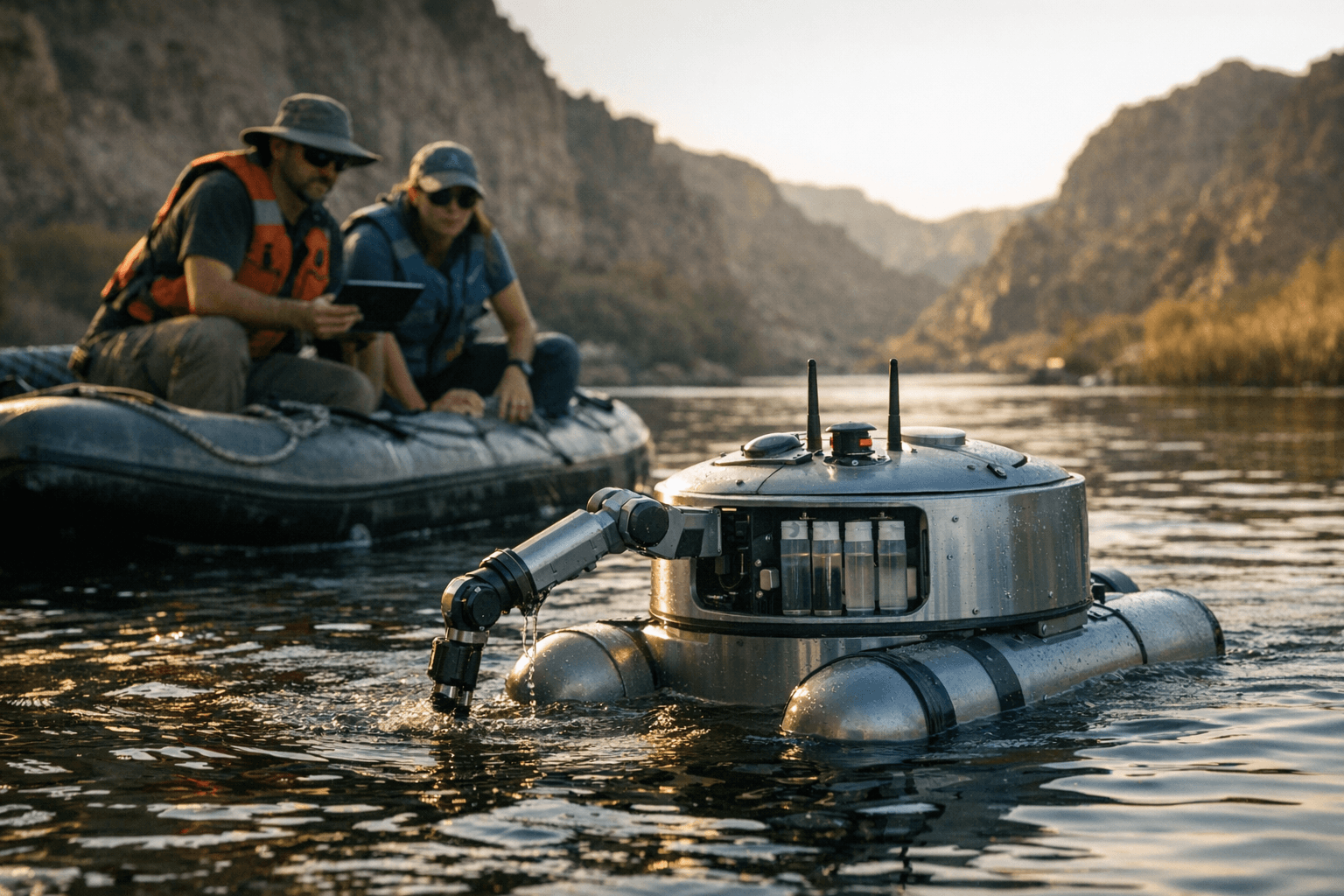
It looks like a silver storage trunk, but the little autonomous sampler drifting through the Colorado River system is built to do something far more urgent: catch invasive species before they spread. For La Paz County, that is not an abstract science project. It is a protection story for river users, anglers and growers who depend on the Colorado River for fish habitat, irrigation water and access to a working river corridor that can turn fragile fast if a new invader gets established.
The stakes are high because invasive species in the United States already cause more than $100 billion in damage each year. In the Colorado River basin, the problem is sharpened by lower water levels, tougher operating conditions and a system that now has less room for error. If early detection fails, a small biological foothold can become a basin-wide problem that is expensive, hard to reverse and painful for the farms and communities that rely on the river every day.
What the robotic samplers are watching for
Scientists and water managers are increasingly leaning on environmental DNA, or eDNA, to track invasive species in places where traditional sampling can be too slow or labor-intensive. The idea is simple but powerful: water can carry microscopic traces from fish and other aquatic life, and those traces can reveal what is moving through a river before anyone sees the species itself.
The U.S. Geological Survey is using that approach downstream from Glen Canyon Dam and in Lake Powell, where invasive fish and other aquatic threats can be hard to detect before they become established. The goal is to keep warm-water invasive fish from harming native species such as razorback sucker and humpback chub, both of which are already under pressure in a changing river system. In this setting, the robot is less a gadget than a smoke alarm for river health.
The new samplers matter because the old method is often a grind. Manual filtering takes time, costs money and is especially difficult in remote places. That is why the national early-detection framework tied to READI-Net includes autonomous eDNA samplers, standardized lab analysis and a communication system designed to move results quickly to managers who need to act.
Why La Paz County should pay attention now
The Colorado River Indian Reservation sits in western La Paz County and runs along 48 miles of the Colorado River, which makes river health a direct local issue, not a distant basin debate. The Colorado River Indian Irrigation Project provides water for agricultural uses on the reservation, so any threat that disrupts river operations can ripple into crop decisions, farm income and water delivery.
That is especially important in a county where water conversations already carry real tension. Local residents have spent months debating groundwater, river-dependent agriculture and long-term water security. The robotic sampler may be new, but the reason it matters is old and familiar: if the river gets compromised, the consequences show up first in the places that depend on stable water most.
The broader Colorado River system only adds urgency. The Bureau of Reclamation says the river is a critical resource for seven U.S. basin states, Arizona, California, Colorado, Nevada, New Mexico, Utah and Wyoming, as well as Mexico. It supports water supply, hydropower, recreation and fish and wildlife habitat. Several key operating agreements and decisional documents that govern the river are scheduled to expire at the end of 2026, which means the basin is heading into a major management transition while drought stress continues to shape Lake Powell and Lake Mead.
The local water picture is bigger than the river alone
La Paz County’s water future is tied to more than one source, and that is part of why this story lands so strongly here. The Arizona Department of Water Resources tracks county-specific water information, and the county includes the Ranegras Plain Basin, a 912-square-mile area where irrigation wells southwest of Vicksburg have contributed to a cone of depression. That groundwater stress sits alongside the river question, showing how closely surface water and aquifers are connected in western Arizona.
When the Colorado River is under strain, the county feels it in more than one direction. Farms need reliable deliveries. Tribal water users need protection for long-term agricultural and cultural uses. River access matters too, because a biologically healthy river is also a usable river. The robotics effort does not solve those problems by itself, but it gives water managers a better chance to spot trouble before it spreads into an expensive regional crisis.
Why invasive species are so hard to stop once they arrive
The fear is not theoretical. Quagga mussels have been a major U.S. invasive species concern since the 1980s Great Lakes invasion, and they are notorious for being prolific and difficult to tell apart visually from zebra mussels. USGS notes that these mussels have high reproductive capacity, which is exactly why early detection matters so much. Once a species like that gets into a system, the response gets harder, slower and far more expensive.
That is where the robot and eDNA approach change the game. Instead of waiting for a species to be caught in a net or seen clogging infrastructure, managers can look for minute biological traces and react sooner. For a river that supports native fish, irrigated agriculture and recreation, catching the first signs of invasion can mean the difference between a contained response and years of damage control.
Who is making the decisions
The push to improve detection sits at the intersection of science, water management and politics. Federal agencies like the U.S. Geological Survey and the Bureau of Reclamation are part of the response, while tribal and state leaders have their own water responsibilities and stakes. In April 2024, a historic Colorado River Indian Tribes water rights agreement was signed in Parker, underscoring how closely water governance, sovereignty and river health are linked in this part of Arizona.
Names matter here because so do decisions. Amelia Flores, Katie Hobbs, Deb Haaland, Holly Irwin and Katherine Dibble all sit within the web of people and institutions shaping the river conversation. The decisions they and other leaders make will influence how quickly warning signs are caught, how information is shared and how much room La Paz County has to respond before a biological threat becomes a water crisis.
What early detection can protect
If the system works as intended, the payoff is practical and immediate. It can help protect native fish habitat, reduce risks to irrigation systems and buy time for managers before a new invader becomes entrenched. For La Paz County, that means the Colorado River stays closer to what it needs to be: not just a line on a map, but a living supply line for farms, tribal water users, anglers and communities that cannot afford to lose another layer of certainty.
In a basin where every drop and every decision already matters, the silver robot’s real promise is speed. If the next invasive species is moving through the Colorado River, the region’s best defense may be catching its trace while it is still tiny enough to stop.
This article was produced by Prism’s automated news system from verified source data, official records, and press releases, then run through automated quality and moderation checks before publishing. The system is built and supervised by the people who set the standards it runs under. Read our full AI policy.
Did this article answer your question?