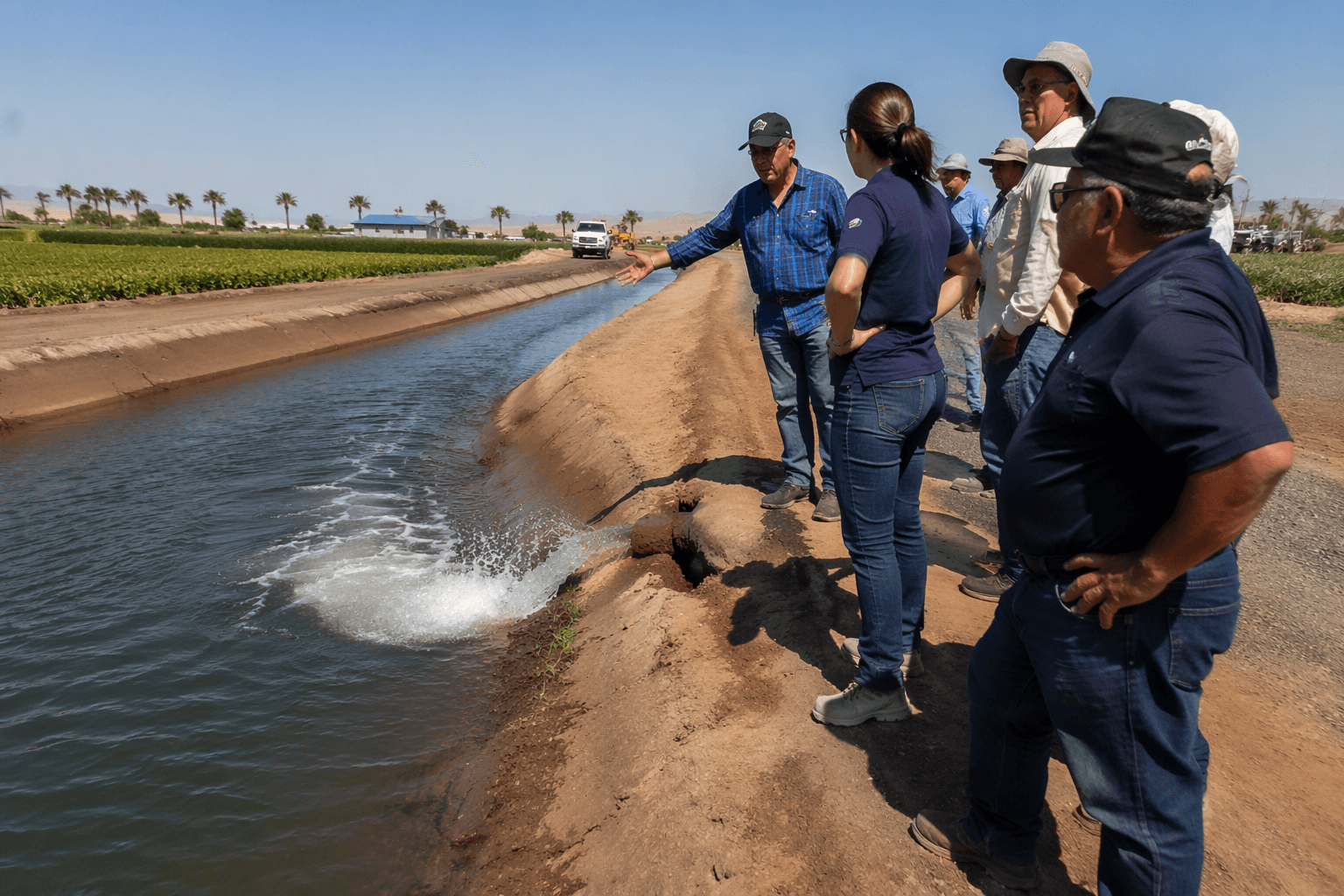
Saudi Farm Pumped 81% of Ranegras Basin Groundwater, Lawsuit Follows
Fondomonte’s wells supplied 81% of Ranegras Basin groundwater in 2023, and Arizona is now asking a judge to stop the pumping. La Paz County faces falling water levels and land subsidence.

Fondomonte Arizona, LLC pumped so much groundwater in the Ranegras Basin that, in 2023, its use accounted for 81% of all groundwater taken from the basin. Arizona says the Saudi-owned farm drew about 31,196 acre-feet that year to grow alfalfa for export, and state officials are now trying to stop the operation in court.
The case matters far beyond one farm in La Paz County. The Arizona Attorney General’s Office says Fondomonte began pumping in 2014 and that the withdrawals have contributed to declining groundwater levels and escalating land subsidence in the Ranegras Plain Basin. In practical terms, that kind of depletion puts more pressure on private wells, deepens the long-term cost of groundwater access and leaves less room for drought years in a basin already under strain.
Attorney General Kris Mayes filed the lawsuit on December 11, 2024, in Maricopa County Superior Court. The complaint seeks an order declaring Fondomonte’s pumping a public nuisance, an order barring further excessive pumping and the creation of an abatement fund. Arizona law defines a public nuisance as activity that injures health, obstructs property use or interferes with the comfortable enjoyment of life or property by a community.
The legal fight has become a test of who should control groundwater in the basin. Fondomonte has argued the issue belongs with the Arizona Department of Water Resources, while the state says the agency’s later action does not fix the alleged immediate harm. In January 2026, ADWR declared the Ranegras Plain Basin an Active Management Area, a designation that would require the state to assess current groundwater use, exempt existing users, block new irrigation and begin water reporting and management plans.
That move gives the basin a new regulatory framework, but it also underscores how late the response has come. By the time the basin was placed under tighter management, the state had already tied Fondomonte’s pumping to a large share of the basin’s withdrawals and to measurable physical damage in the form of land subsidence.
For La Paz County, the dispute now sits at the intersection of water policy, foreign-owned agriculture and local survival. The county does not have the main power to rewrite groundwater rules on its own, but the state court and ADWR can shape what happens next. Whether the basin’s future is decided through nuisance law, groundwater management or both, the immediate question is no longer abstract: how much water can keep leaving before the basin gives out.
This article was produced by Prism’s automated news system from verified source data, official records, and press releases, then run through automated quality and moderation checks before publishing. The system is built and supervised by the people who set the standards it runs under. Read our full AI policy.
Did this article answer your question?