Senate Passes Solar Land Bill, Brings Jobs to La Paz County
On December 17, 2025 the Senate unanimously passed the La Paz County Solar Energy and Job Creation Act, authorizing the county to acquire federal land for utility scale solar and battery storage development. The measure promises roughly 500 megawatts of solar generation, up to 900 megawatt hours of battery storage, and an estimated 700 construction jobs while including protections for cultural and environmental resources, and it now moves to the President's desk.
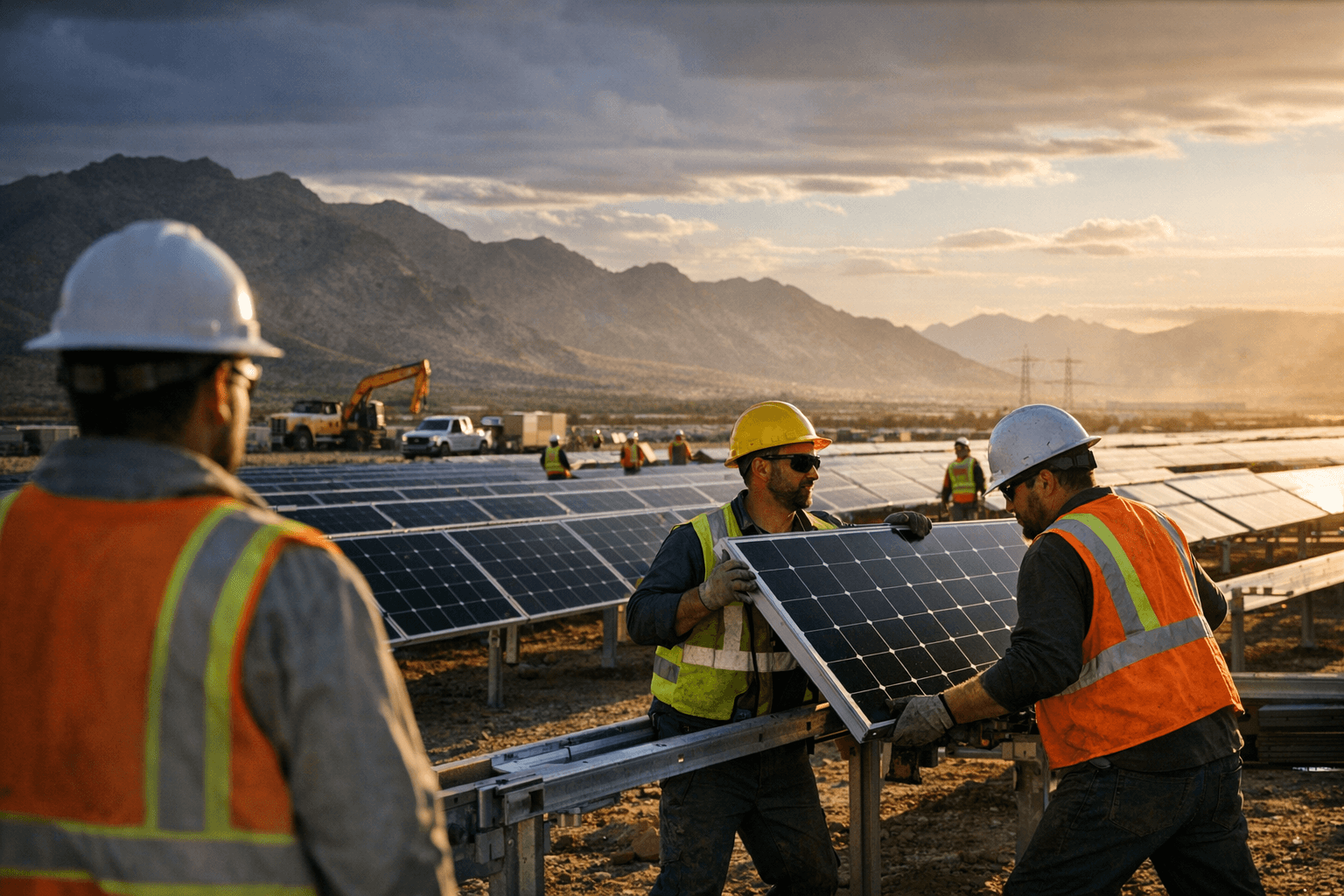
The Senate approved the La Paz County Solar Energy and Job Creation Act on December 17, clearing a key legislative hurdle that would allow La Paz County to acquire federal land for large scale solar and battery storage projects. The package outlined in the announcement calls for development of roughly 500 megawatts of solar capacity and as much as 900 megawatt hours of battery storage, estimates about 700 construction jobs and a small number of permanent operations jobs, and says it will incorporate protections for cultural and environmental resources as part of the land conveyance. Senators Mark Kelly and Ruben Gallego both supported the bill, and La Paz County leadership and the Colorado River Indian Tribes expressed backing and coordination on artifact protection and planning.
For local residents the measure represents a concentrated economic opportunity. The construction employment estimate of about 700 jobs could provide a temporary boost to the county labor market, supporting contractors, suppliers and service businesses. Permanent employment impacts are expected to be modest, reflecting broader patterns in utility scale renewable projects where most jobs occur during build out. The release noted county level planning and tribal coordination intended to limit impacts to archaeological sites and sensitive lands.
From a technical perspective the storage figure provides a useful benchmark. If paired directly with 500 megawatts of solar output, 900 megawatt hours of storage would equal roughly 1.8 hours of full output storage capacity, which would help integrate solar into regional grids and provide short duration firming. That level of storage is significant for grid flexibility although it is not designed to replace other reliability resources.
Policy implications extend beyond local jobs. Federal land conveyances for renewable energy are part of broader trends toward accelerating clean energy deployment and adding storage to balance variable generation. The balance between economic development, cultural resource protection and environmental stewardship will be the central issue as project proposals move through county and tribal review, permitting and any required federal processes.
Next steps require presidential action after the Senate passage. If signed, the law would enable La Paz County and partner stakeholders to begin site planning and permitting for projects that proponents say could reshape local economic activity while officials continue coordination on protections for cultural and environmental assets.
This article was produced by Prism’s automated news system from verified source data, official records, and press releases, then run through automated quality and moderation checks before publishing. The system is built and supervised by the people who set the standards it runs under. Read our full AI policy.
Did this article answer your question?