Lafayette County approves amplified sound on courthouse grounds
Amplified sound is now allowed on the courthouse grounds, a change that could make rallies, ceremonies and protests easier to hear in Oxford's town square.

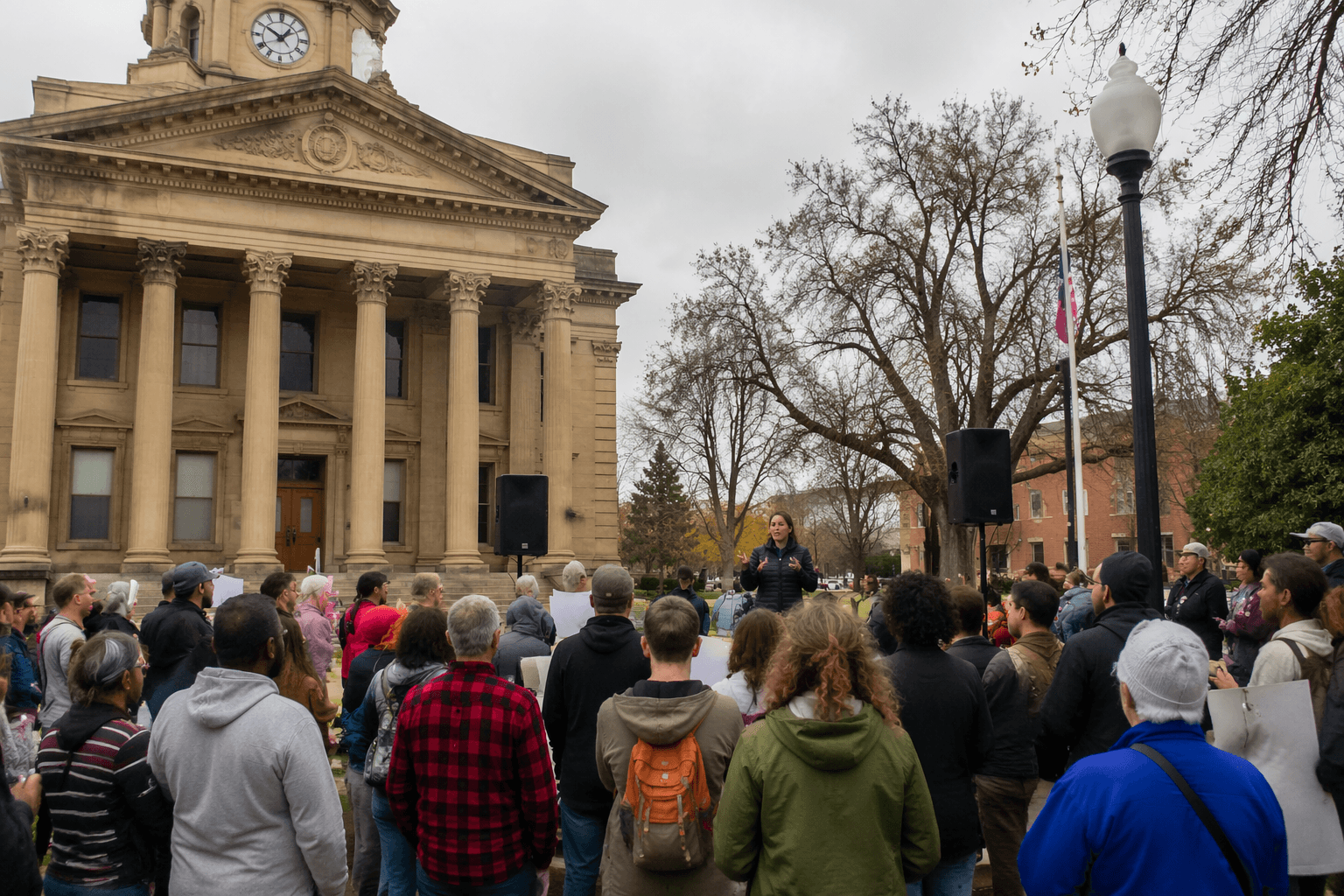
Lafayette County has opened a new chapter for one of Oxford’s most closely watched public spaces. The Board of Supervisors approved an amendment Monday, June 15, to the county’s Facility Use Policy, allowing amplified sound on the Circuit Courthouse Grounds, a shift that changes how people can gather, speak and organize at the center of the town square.
The policy governs the Circuit Courthouse, the Chancery Building and the courthouse grounds, and its stated purpose has been to preserve those facilities for county government business while still allowing some public use. Until now, that balance had tilted heavily toward control. The new amendment gives organizers a practical tool for reaching crowds with microphones and speakers, which should help rallies, public ceremonies, announcements and other community gatherings that rely on sound to carry across the square.
That restraint did not appear in a vacuum. In March 2019, county leaders tightened the facility-use rules after pro-Confederate rallies, imposing 30 days’ notice for some events, hourly facility-use fees and sheriff’s cost assessments for unusual law-enforcement or traffic burdens. The county also added limits on poles and sticks, banned masks that concealed identity and prohibited pets or other animals. Those changes reflected an effort to keep the courthouse grounds usable without letting the square become chaotic or difficult to secure.
The county tightened the space again in 2020 after John Rash sought permission to project art on the courthouse and monument. Lafayette County denied his permit and adopted an after-dusk closure policy, which later became the subject of Rash v. Lafayette County. The ACLU of Mississippi challenged the county’s courthouse-grounds permitting rules on First Amendment grounds, arguing that the site, which includes a Confederate monument and has long served as a community gathering point in the Oxford town square, had become too restricted for expressive activity. By February 2024, the ACLU said the curfew had been expanded to 30 minutes before dusk until dawn, and groups of five or more had to apply 14 days in advance.

County procedure still places a premium on advance notice. Facility-use requests generally must be submitted at least five days ahead of time through the County Administrator’s office, and the county administrator has authority to interpret and apply the policy. The change to allow amplified sound suggests Lafayette County is trying to widen access without surrendering control, a shift that will benefit speakers, protest organizers and civic groups most, while also testing how well officials can manage noise, timing and enforcement on a square that has repeatedly carried the county’s deepest civic disputes.
This article was produced by Prism’s automated news system from verified source data, official records, and press releases, then run through automated quality and moderation checks before publishing. The system is built and supervised by the people who set the standards it runs under. Read our full AI policy.
Did this article answer your question?