Ole Miss Launches Nation's First Academic Center on Collegiate Gambling
Ole Miss opened the nation's first collegiate gambling research center after finding 39% of Mississippi college students gambled in the past year.
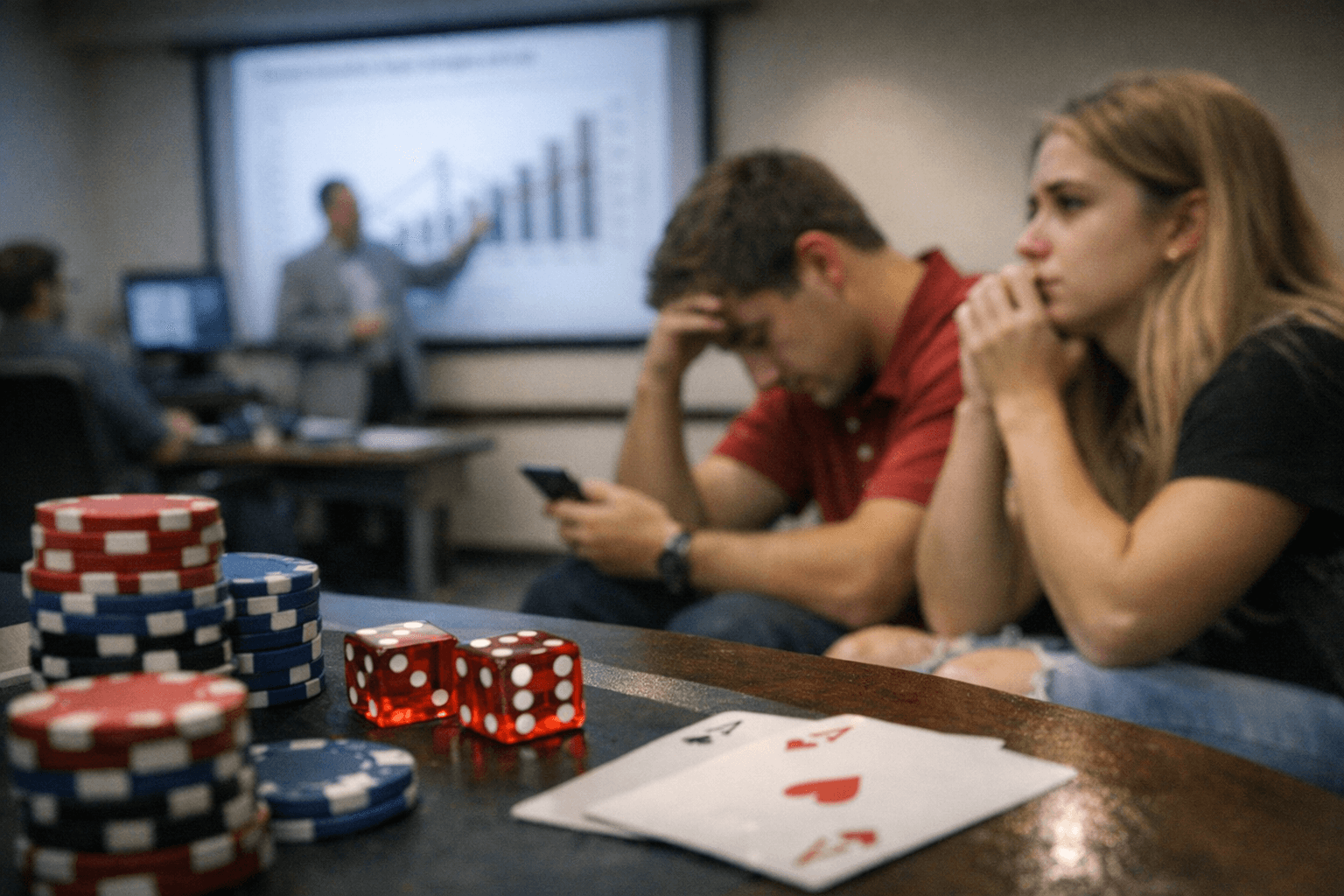
The University of Mississippi opened what researchers describe as the nation's first academic Center on Collegiate Gambling, a $700,000-a-year initiative rooted in striking survey data: 39% of Mississippi college students gambled in the prior year, and among those who placed sports bets, 6% met the American Psychiatric Association's criteria for problem gambling.
The Institutions of Higher Learning Board of Trustees approved the center in February, and hiring for staff and researchers is now underway through 2026. The center is coordinated through Ole Miss's William Magee Institute for Student Wellbeing, led by Hannah Allen-King, the institute's executive director and an assistant professor of public health, alongside social work professor Daniel Durkin.
"We really think that this is an issue that affects Mississippi at large," Allen-King said in a news release. "And so, we're trying to work with our legislators as they debate policy change around gambling in the state."
That legislative dimension is central to the center's design. Beyond the Oxford campus, organizers intend the center to produce policy guidance for state lawmakers as Mississippi weighs changes to its gambling regulations, positioning Ole Miss as a direct participant in those debates rather than a distant observer.
The center's academic scope spans a wide range of student gambling behaviors, from card games to mobile sports wagering, proposition betting, and prediction markets. Researchers will develop prevention programs and screening tools tailored to higher-education settings, and the center will offer direct counseling support for students struggling with gambling. Eight Ole Miss counselors have already received certification to identify gambling addiction in students, giving the university a treatment foundation before the center formally opens its doors.
Collegiate athletics integrity is the other major pressure point the center will address. The rapid expansion of legal sports betting has brought with it a documented rise in threats directed at student-athletes, whose on-field and on-court performance is now closely monitored by bettors. The center plans to study how betting intersects with competitive integrity and propose campus-level policies in response.
Public-facing initiatives will include annual conferences and a proposed Collegiate Gambling Awareness Week, giving the center a presence that extends beyond peer-reviewed research. Organizers also plan to collaborate with national researchers and public-health funders as they build out the program.
For Lafayette County, the center represents a concrete expansion at Ole Miss: new research positions, public programming rooted in Oxford, and a direct line into state and national policy conversations. Stakeholders across higher education, public health, athletic governance, and the betting industry are expected to track the center's early findings closely, given its status as the first institution in the country to house a dedicated academic program of this kind.
This article was produced by Prism’s automated news system from verified source data, official records, and press releases, then run through automated quality and moderation checks before publishing. The system is built and supervised by the people who set the standards it runs under. Read our full AI policy.
Did this article answer your question?