Ole Miss reopens after two-week ice storm closure, clears trees and debris
Ole Miss reopened Feb. 8 after a two-week closure from Winter Storm Fern; cleanup continues and the campus community faces months of debris removal and tree restoration.

The University of Mississippi welcomed students back to campus on Feb. 8 after shutting down for more than two weeks when Winter Storm Fern struck the Oxford area on the night of Jan. 24–25. Classes resumed and university leaders say the spring semester will continue mostly on schedule, with spring break and May graduation expected to take place as planned.
Damage surveys show the scale of the work ahead. Provost Noel Wilkin described a preliminary estimate of approximately 100,000 cubic yards of debris across campus and said crews had removed more than 22,000 cubic yards as of Feb. 9. Most pedestrian routes have been cleared by piling limbs and brush, but some parking lots and pathways remain blocked off and about a dozen buildings have minor issues.
The Grove and the Circle, central gathering spots for Rebels life in Oxford, were visibly affected but largely cleared in the immediate cleanup push. Students described an altered campus landscape. Trinity Foster, an Ole Miss freshman, said, "It’s super empty. I remember the Grove being way fuller than this. There’s trees everywhere." Ayla Jones, a sophomore, added, "We have so many trees on campus, which makes Ole Miss so beautiful, and a lot of them are gone now and it’s like wow. We’ve really been through something together."
Campus forestry numbers offer some measure of relief. University Communications Director Jacob Batte reported there are more than 14,000 trees on campus and that about 95 percent are expected to survive. Still, several trees including a few in the Grove have been flagged for removal, and Chancellor Glenn Boyce said tree and limb removal will continue through the month of February while the landscaping team begins planning replacements.
Cleanup is a joint effort between university crews and outside contractors. The university already had a contract in place with Looks Great Services of Mississippi to trim, cut and haul debris. John Pearce, IHL senior associate commissioner for finance, described the original agreement as just under $2 million for a 90-day term and said the university sought to amend the agreement for an expenditure up to $10 million. IHL communications director John Sewell cautioned, "They may not spend that much: it just gave them that cushion, if you will. And then they will work with FEMA, MEMA, and other insurance to recover those expenses."
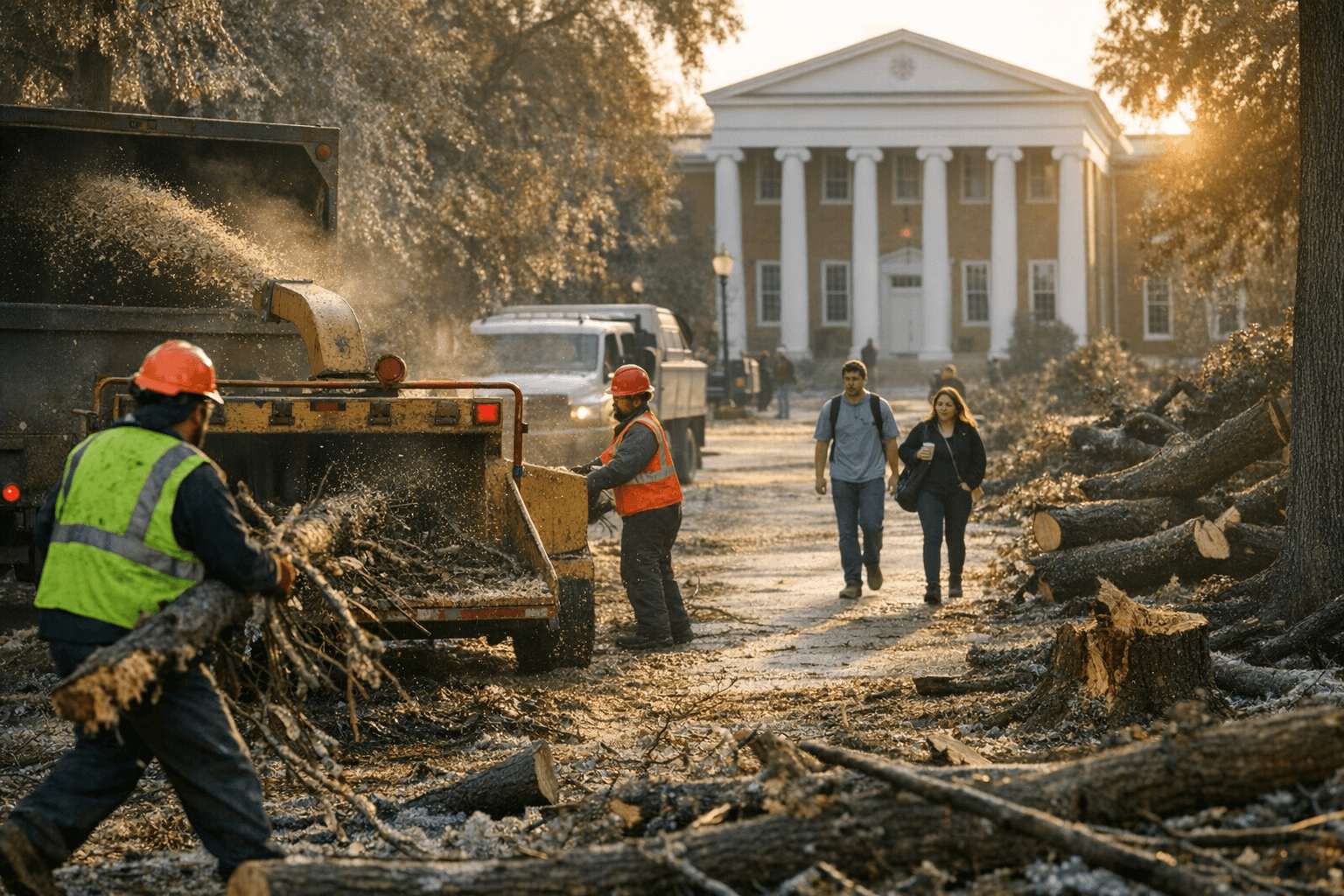
On the ground, landscaping director Nathan Lazinsky and his crews have been using chainsaws and heavy equipment to open walkways and move material to the university wood processing facility, where debris will be shredded into wood chips. Lazinsky recalled driving through what he called the remnants of a "frozen tornado" and said, "There were limbs falling all around me... I was like, 'This is not safe at all,' but I knew I had to get here because we still had students on campus."
Student welfare has been a priority. Dean of Students Bradley Baker highlighted the Rebel Relief Disaster Fund, saying, "Those funds, provided by our alums and by donors, can help to provide resources for our students in order for them to get back on their feet and worry about one less thing."
University officials emphasize the cleanup will be measured in weeks and months, not days. "It will likely be weeks, if not months, before the campus aesthetic gets back to what most people would consider somewhat normal for Ole Miss," Hansen said. For Oxford residents and the university community, that means continued crews and equipment in familiar spaces, phased tree plantings to restore canopy, and a budgetary and insurance process that will shape how quickly full recovery happens.
This article was produced by Prism’s automated news system from verified source data, official records, and press releases, then run through automated quality and moderation checks before publishing. The system is built and supervised by the people who set the standards it runs under. Read our full AI policy.
Did this article answer your question?