Oxford park, bike paths offer year-round outdoor recreation in Lafayette County
Patricia C. Lamar Park, city bike paths and nearby state parks give Lafayette County a practical outdoor network for walking, riding and camping close to Oxford.
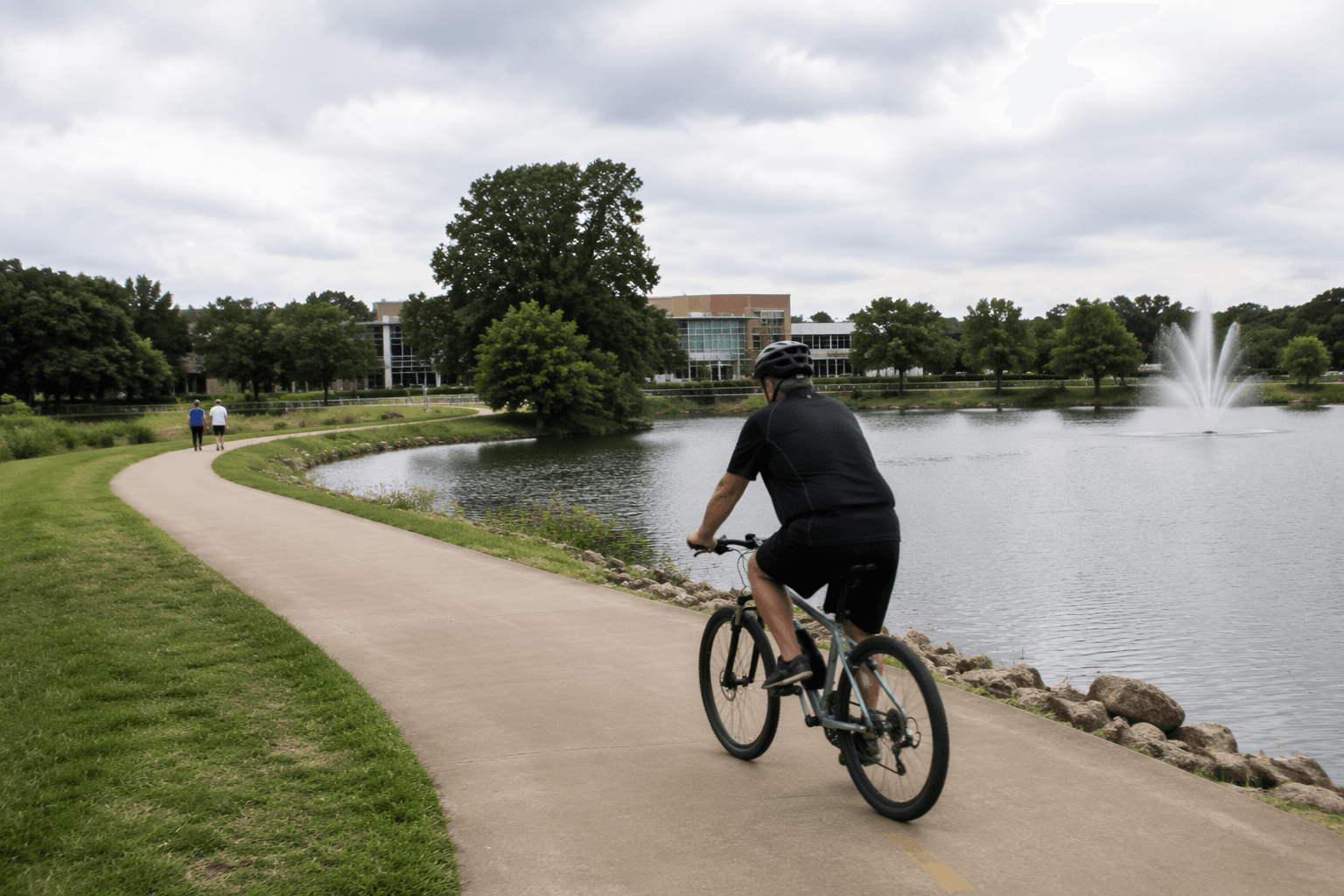
Oxford’s easiest year-round outdoor escape is already built into the city grid: Patricia C. Lamar Park sits at the corner of Columbus Avenue and University Avenue, with greenery, walking trails, garden features and a quiet lake. The city lists it as Lamar Park, and its name honors Patricia C. Lamar, Oxford’s first female mayor, who served from 1997 to 2001. For a county that values convenience, it is one of the few places where a short walk can feel like a full break from town without leaving Oxford.
Patricia C. Lamar Park: a close-in place to slow down
Visit Oxford describes the park as an outdoor arboretum, which fits the way it functions for everyday use. It is not just a green space to pass through; the walking trails, planted areas and lake give it enough structure for a quick loop, a longer stroll or a low-key stop between errands, classes or appointments. The setting makes it especially useful for people who want an outdoor option that does not require planning a whole day around it.
That combination of civic history and simple access gives the park a broader role than a standard neighborhood green space. A park named for Oxford’s first female mayor carries local meaning, while its location near University Avenue keeps it tied to the city’s daily traffic rather than tucked away on the edge of town. In practical terms, it works well for walkers, families with a short window, students looking for a place to decompress and anyone who wants a quiet route that is easy to find again.
Oxford’s bike network turns routine streets into recreation
Oxford has built much of its cycling appeal through long-term planning, and Visit Oxford calls the city “a haven for cyclists” because of years of investment in bike-friendly infrastructure. Riders can use miles of scenic road bike paths and mountain bike trails, many just minutes from the Historic Square, which means a ride can start close to the center of town instead of far outside it. That matters for people who want an after-work ride, a Saturday spin or a way to get outside without driving to a trailhead.
The Pathways Commission remains a central part of that system. The city says the commission’s goal is to diversify and increase transportation and recreation opportunities in Oxford by building an interconnected grid of bike lanes, pedestrian sidewalks and multi-use paths. It meets the fourth Monday of each month at 5:00 p.m. in City Hall, making it a clear point of contact for anyone following how the city’s bike and pedestrian network grows.
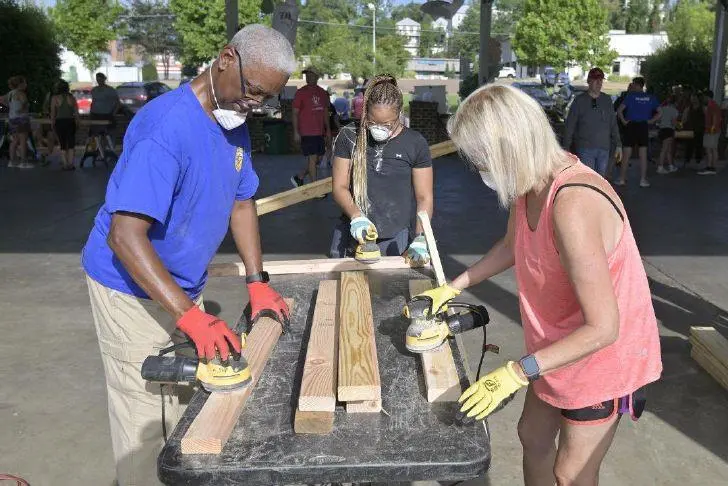
Oxford’s cycling push also has a track record. In 2015, the Pathways Commission was considering a grant application to help improve biking in Oxford, a reminder that the city’s current network has been built through sustained work rather than a single burst of interest. The University of Mississippi adds another layer to the picture, describing cycling in Oxford as a mix of historic streets and well-maintained bike paths, and the Oxford Cycling Club brings together mountain and road cyclists who work to create safer and more enjoyable recreational riding in and around town.
How the local options fit different kinds of outings
The strongest use case for Patricia C. Lamar Park is the quick, repeatable outing. It suits beginners because the park offers a straightforward layout with walking trails and a quiet lake instead of a long or technical route. It also works for families who want a manageable stop close to central Oxford, especially when the goal is time outside rather than a full-day outing.
The bike network fits a different kind of user. Students and regular riders can treat the paths and road routes as part of daily life, since many of them sit close to the Historic Square and connect to the city’s broader transportation grid. Cyclists who want a social layer can also connect with the Oxford Cycling Club, which gives mountain and road riders a local community focused on safer riding.
A simple way to use the recreation options looks like this:
- Start at Patricia C. Lamar Park for a short walk, a stroller-friendly outing or a quiet break near University Avenue.
- Choose the city bike paths or mountain bike trails when you want a ride that stays close to Oxford’s core.
- Use the Pathways Commission calendar if you want to follow how bike lanes, sidewalks and multi-use paths are evolving.
- Plan a longer weekend trip to the state parks or Sardis Lake when the goal is camping, fishing or an overnight stay.
Nearby camping and fishing add the weekend layer
When Oxford’s park and bike options are not enough, Visit Oxford points to John W. Kyle State Park and Wall Doxey State Park as nearby places that offer cabins, RV spots and tent spots. That mix gives travelers flexibility: cabins for people who want a more comfortable base, RV spots for those arriving by road and tent spots for a more traditional camping setup. For Lafayette County residents, those are the kinds of places that can turn a day trip into a weekend without requiring a long drive.
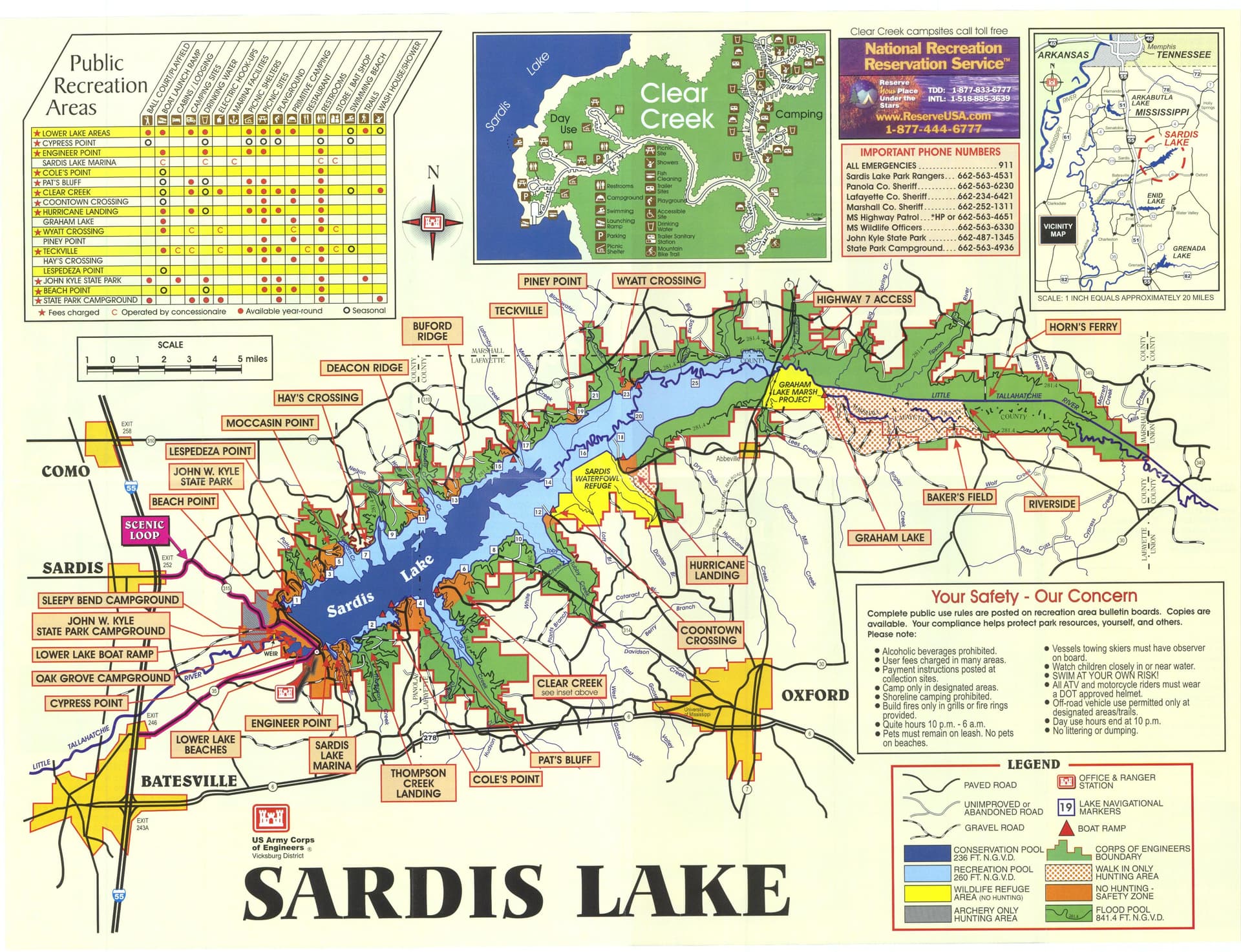
Sardis Lake expands the menu further. Visit Oxford lists it as a place for fishing, boating, camping, hiking and wildlife viewing, with the site at 2400 Highway 315 Scenic Route in Sardis, Mississippi 38666. The lake gives Oxford-area residents a larger outdoor destination for times when a local walk or bike ride is not enough, and it pairs naturally with the state parks for spring fishing trips, summer camping or fall weekends outside town.
Taken together, Patricia C. Lamar Park, Oxford’s bike routes and the nearby state-park and lake options give Lafayette County a durable outdoor system that residents can use repeatedly without special planning. The result is a set of practical recreation choices that stay useful whether the goal is a brief walk, a safe ride or a camping trip beyond Oxford.
This article was produced by Prism’s automated news system from verified source data, official records, and press releases, then run through automated quality and moderation checks before publishing. The system is built and supervised by the people who set the standards it runs under. Read our full AI policy.
Did this article answer your question?