Oxford police balance student safety, trust in bustling college town
Oxford officers spend as much time building trust as making arrests, a balancing act shaped by Ole Miss crowds, Square nightlife and a city that never really empties.
Oxford’s two jobs at once
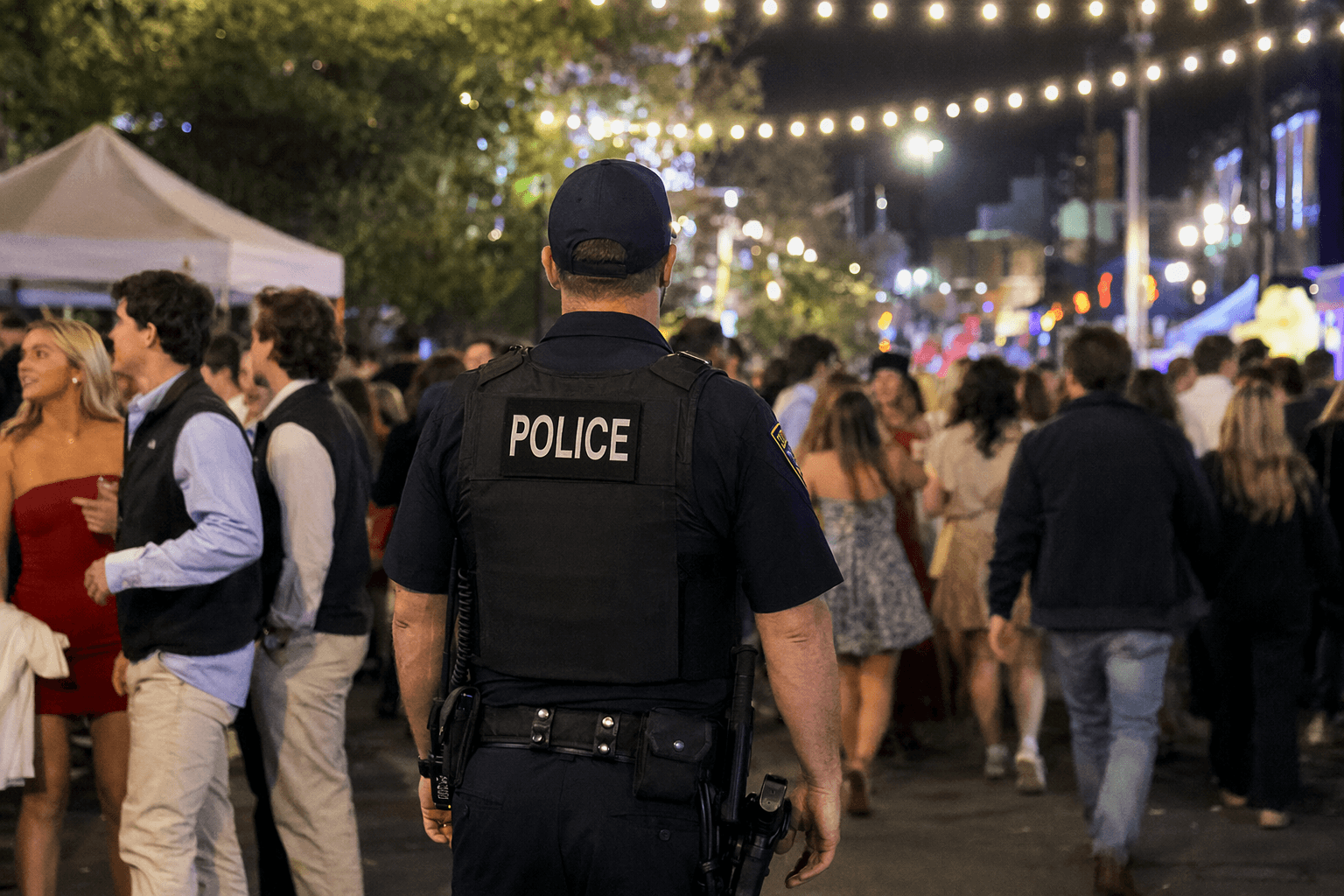
Oxford police work in a city that has to think like a neighborhood and a campus at the same time. On one side are permanent residents who need quiet streets, predictable response times and steady public safety; on the other are thousands of students, visitors and parents moving through The Square, campus roads and late-night gathering spots on weekends, game days and major university events.
That is why the Oxford Police Department’s mission, to “serve with wisdom and compassion and to create a safe and connected community,” matters in practice, not just on paper. With 91 sworn officers and more than 114 total staff, the department has to be large enough to cover a city that changes character depending on the calendar, the kickoff time and when the bars let out.
Why trust is the real tool
Sergeant Hillary Smith described a daily reality that is less about punishment than judgment. Many encounters with students begin with a problem that can be handled through education and relationship-building, not a citation or a trip to court. When officers can explain a rule, calm a situation and move someone toward a safer choice, the department saves time on paperwork and avoids turning every bad decision into a formal case.
That approach is not soft policing. It is a way of keeping students willing to call for help later, whether they are victims, witnesses or simply lost in a crowd. Smith’s point is straightforward: if students know officers as people first, they are more likely to come forward when something serious happens. In a college town, that trust can determine whether a situation gets reported early or stays hidden until it grows worse.
What the calls look like on the ground
The most common student-related calls often begin with alcohol and can escalate into fights, noise complaints or other disturbances, especially on high-traffic Ole Miss weekends. Drugs can also enter those situations, which makes de-escalation essential. Officers on those nights are not only answering a call; they are trying to stop a messy situation from becoming a dangerous one.
That is especially visible around The Square, where a night out can shift quickly from social energy to a law-enforcement issue. A student in the story described officers helping a girl who had become separated from her friends, finding her phone and getting her back safely rather than intimidating her. Another student said police are easy to forget about until someone really needs them, which is exactly the kind of quiet confidence Oxford officials want to build.
Game days change the city
Ole Miss football weekends show why Oxford policing cannot be treated like policing in an ordinary small town. The university said visitor spending in Oxford during the seven 2024 home football games totaled $325,283,234, and those seven games drew 471,601 visitors in the fall of 2024, the largest on record. That flood of people gives downtown businesses a boost, but it also raises the pressure on officers trying to manage traffic, crowds, alcohol-related calls and late-night disorder all at once.
In a place like Oxford, game days are not just sporting events. They shape when officers are deployed, how quickly they have to shift from crowd control to crisis response and how much attention has to be paid to exits, parking, sidewalks and the long stretch from the stadium area back toward downtown. The same streets that feel like a hometown on a quiet Tuesday can feel like a regional destination by Saturday afternoon.
The agencies have to work together
Oxford’s public safety system is built around overlap. The University of Mississippi Police and Campus Safety Department is a full-service, state-accredited law-enforcement agency that operates 24 hours a day, seven days a week. The university says that department has voluntarily reported crime statistics since the early 1970s, now through NIBRS, and its annual security report says it has agreements with the Oxford Police Department and the Lafayette County Sheriff’s Department for reports involving off-campus student organization events.
That matters because Oxford is not just a college town inside a city limit. It is the county seat of Lafayette County, the home of Ole Miss and a place where municipal officers, campus officers and county deputies all cross paths when students gather off campus or crowds spill beyond one jurisdiction. For families, that coordination is part of what makes the city feel manageable, even when the population swells for a concert, a rivalry weekend or a big event on campus.
The numbers behind the balancing act
The scale of the challenge is easy to underestimate until the numbers are laid out. Ole Miss reported 26,449 students for the 2024-2025 academic year. Oxford Fire Department says it serves about 19,000 Oxford residents and 18,000 University of Mississippi students, which shows just how closely the city’s day-to-day services are tied to the university’s rhythm.
That is why an arrest-only model would miss the point. Officers also have to think about prevention, safe transport, crowd flow and how to keep one bad night from becoming a larger public-safety problem. In a town that has to serve both fixed neighborhoods and a shifting student population, the most effective policing may be the kind nobody notices because it prevented a call from growing louder.
Where the rules meet real life
Oxford’s alcohol ordinance is one more piece of that balancing act. Late-night student incidents are often not just about conduct but about where local alcohol rules, public disorder concerns and university expectations meet. That overlap is why officers need to know when to warn, when to separate people, when to escort someone home and when a situation has crossed into something that requires a formal response.
For residents, students and parents, the result is a public-safety system that is trying to do two things at once: keep order in a busy college town and preserve the trust that makes people willing to ask for help. In Oxford, that trust is not a slogan. It is what allows the city to stay both lively and livable when the Square is crowded, the stadium is full and the same officers are expected to protect everybody moving through the middle of it all.
This article was produced by Prism’s automated news system from verified source data, official records, and press releases, then run through automated quality and moderation checks before publishing. The system is built and supervised by the people who set the standards it runs under. Read our full AI policy.
Did this article answer your question?