Beaver Bay traces Lake County’s oldest North Shore settlement roots
Beaver Bay still carries the weight of Lake County’s oldest North Shore settlement, but its history lives through museums, shops and roadside stops. The town’s past is also part of its present economy.

Beaver Bay sits on the North Shore as more than a scenic pull-off on Highway 61. It is widely regarded as Lake County’s oldest settlement on the north shore, and that history still shapes how the community introduces itself, what it preserves, and what visitors stop to see. In Beaver Bay, the past is not locked away in a single date on a plaque. It shows up in the geography, in the roadside landmarks, and in the businesses that keep the town visible today.
A settlement built before the shoreline filled in
Beaver Bay’s origin story begins with the Treaty of LaPointe in 1854, which opened the region to settlement and mineral exploration. Surveyors set up camp at the mouth of the Beaver River in October 1854, and the plat for Beaver Bay was filed on June 24, 1856. Later that year, the first settlers arrived by steamer, a detail that still helps explain why the town occupies such a central place in Lake County’s early human geography.
The community is repeatedly described as being founded in 1856 by German immigrants, which gives the settlement a more specific identity than a simple “oldest town” label. That German immigrant origin, combined with the plat date and the first arrivals by water, places Beaver Bay squarely in the moment when the North Shore was shifting from frontier to mapped-out community. For local history, those dates matter because they show Beaver Bay was established at the point where policy, surveying, transport, and settlement all came together.
That early start still gives the town cultural weight. Beaver Bay is not just old in the abstract sense. It is old in a way that helps explain why it remains a reference point for the rest of the county, especially when people talk about the North Shore’s earliest communities and the development of the shoreline corridor.
History that remains visible in daily stops
What makes Beaver Bay especially useful as a living-history story is that the heritage is still easy to encounter in ordinary travel. The Bay Area Historical Society, created in 1986, exists to collect and share the history of Silver Bay, Beaver Bay, and the surrounding area. It keeps that work tangible through a museum, souvenir shop, and visitor information center at 80 Outer Drive in Silver Bay, with summer hours Tuesday through Saturday.
That matters because Beaver Bay’s history is not handled as a remote academic subject. It is packaged through local institutions that help visitors orient themselves while also preserving the record of the area. The society’s role ties the town’s heritage to practical services, so the same local network that explains the past also helps people navigate the present.
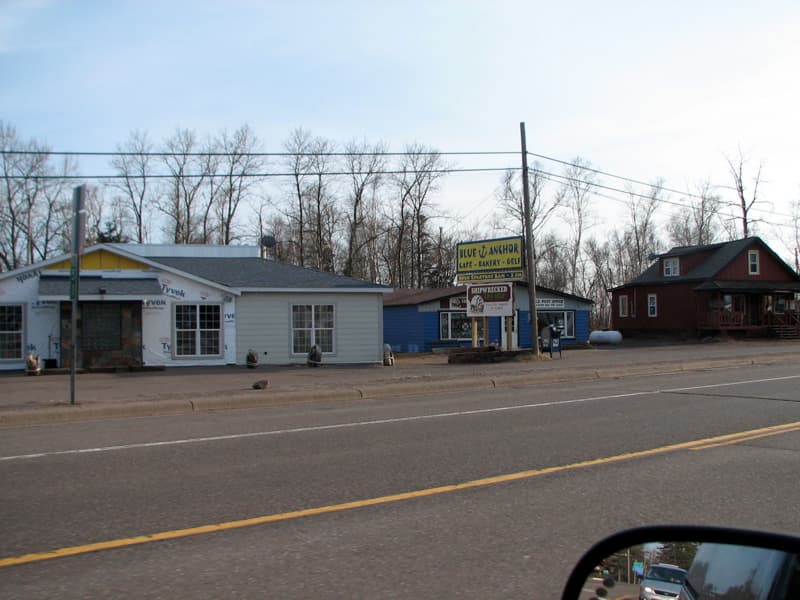
Lovin’ Lake County directs visitors to the Bay Area Historical Society-run information center in Beaver Bay, along with the Beaver Bay Agate Shop and the Beaver Bay Wayside. That combination says a lot about how the town functions now. One stop helps explain the history, another sells a piece of North Shore geology, and another frames the landscape itself, making Beaver Bay a place where the act of sightseeing is closely tied to the act of learning what the shoreline has meant over time.
Where geology, commerce and memory overlap
The Beaver Bay Agate Shop is one of the clearest examples of how heritage has become part of everyday commerce. The shop has been operating since 1941 and is described as the oldest rock shop in America. That gives Beaver Bay a rare kind of commercial continuity: a business that is both a retail stop and a cultural marker, rooted in the North Shore’s identity as a place where people look for agates, rocks, and souvenirs that connect the shoreline to its geology.
The shop’s longevity also gives the town a different kind of historical marker than the usual museum display. It is not only preserving memory through exhibits or archival work. It is preserving memory through repeated transactions, through the steady rhythm of travelers stopping in, and through a business model that is still tied to the fascination with Lake Superior’s shoreline stones. In that sense, the shop is part of the town’s working landscape, not just its remembered past.
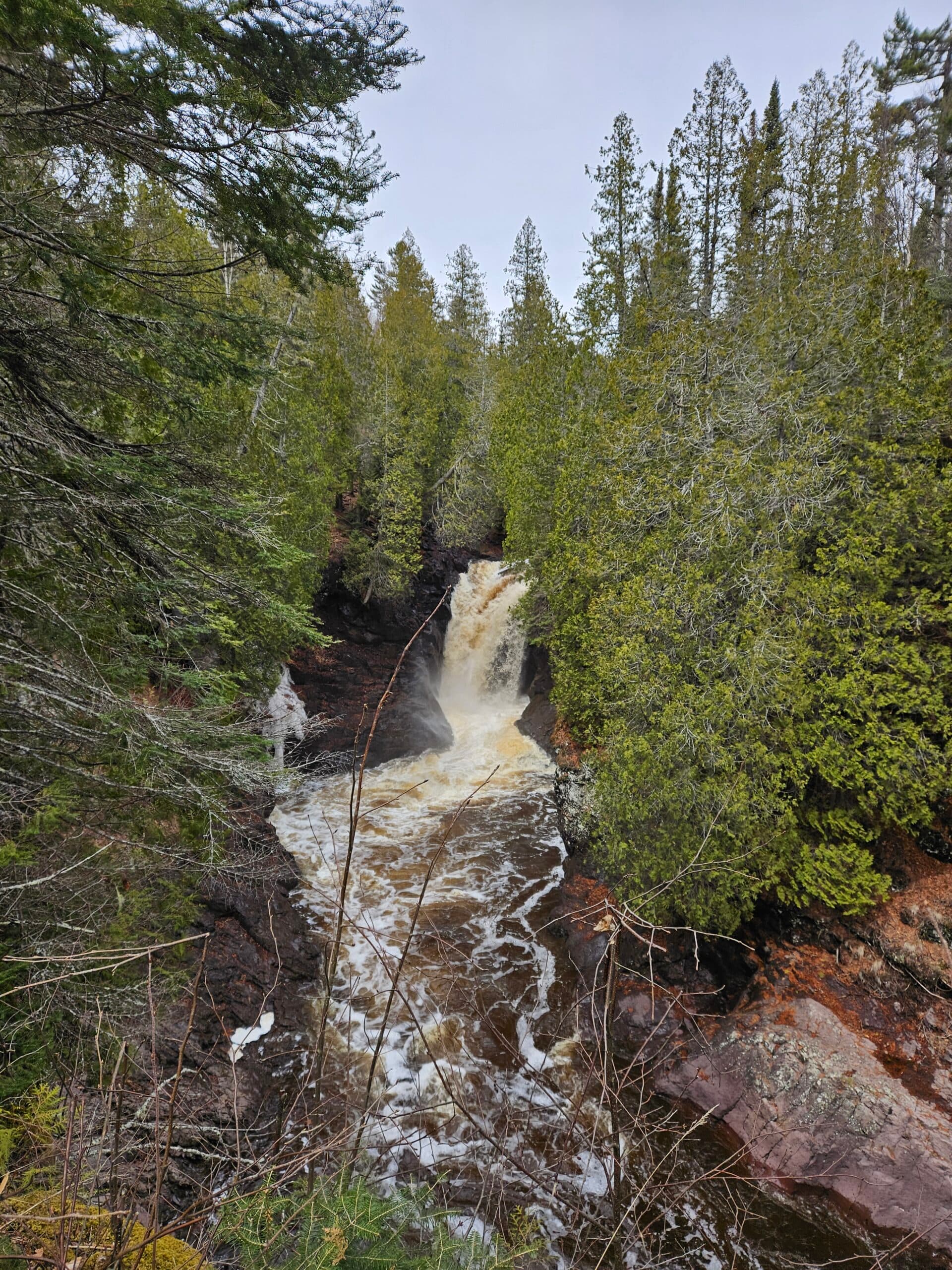
The Beaver Bay Wayside adds another layer to that overlap. Beaver River Falls can be seen there from Highway 61 or from the pedestrian path on Lax Lake Road, which means the natural feature is folded directly into the travel experience. The falls are not hidden behind a long detour or reserved for a specialized excursion. They are part of the public-facing geography of the town, visible in a way that reinforces Beaver Bay’s role as a place where the road, the river, and the shoreline all intersect.
How the old settlement still functions now
Beaver Bay’s strongest present-day identity comes from the way it blends preservation with use. The Bay Area Historical Society preserves the story of the Bay Area as part of Lake County and Minnesota, but the town’s history also survives because it keeps serving a real purpose for travelers and residents alike. A visitor can stop for information, see a waterfall, buy a rock, and leave with a better sense of the North Shore’s earliest settlement history.
That mix of heritage and utility is what keeps Beaver Bay from becoming a static museum piece. Its old settlement status is not merely ceremonial. It helps organize how the town is marketed, where people stop, and which places are treated as essential local landmarks. The story is not just that Beaver Bay was first. It is that the town has found ways to make being first matter in the present.
For Lake County, that is the larger significance of Beaver Bay. The town shows how an oldest settlement can remain active without losing its roots. Its founding dates, immigrant origins, historical society, agate shop, wayside, and river falls all work together as part of one continuous local identity, one that is preserved, commercialized, and woven into daily life at the same time.
This article was produced by Prism’s automated news system from verified source data, official records, and press releases, then run through automated quality and moderation checks before publishing. The system is built and supervised by the people who set the standards it runs under. Read our full AI policy.
Did this article answer your question?