Boundary Waters closes as 16 wildfires spread across Superior Forest
All Boundary Waters entry points closed as 16 fires spread across Superior National Forest, and Lake County reopened its Babbitt evacuation point for residents.
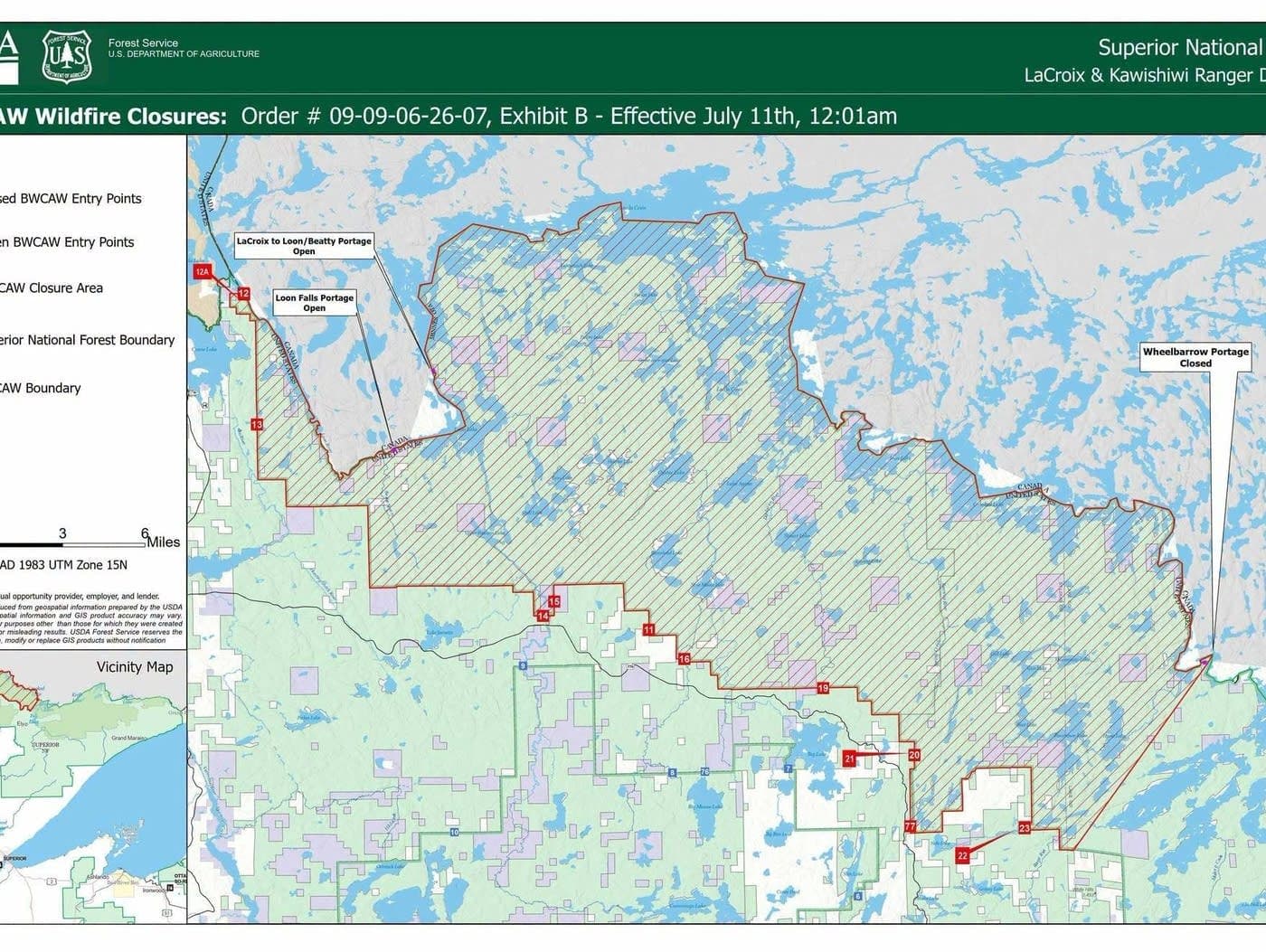
The Boundary Waters Canoe Area Wilderness closed to all visitors at 12:01 a.m. Tuesday, July 14, after firefighters were battling 16 active wildfires across the Superior National Forest. The shutdown pulled roughly 1,900 wilderness campsites offline at once, cutting off a huge share of Minnesota’s backcountry camping network.
The scale is what made the closure so sweeping. The Forest Service’s recreation listing puts the BWCAW at more than 1,098,000 acres, with over 1,200 miles of canoe routes, 12 hiking trails and more than 2,000 designated campsites. Officials said unusually hot, dry and windy weather was making fire spread quick and unpredictable, leaving managers little choice but to close the entire wilderness rather than leave pockets open. Regional coverage described it as only the third total closure in the Boundary Waters’ history.
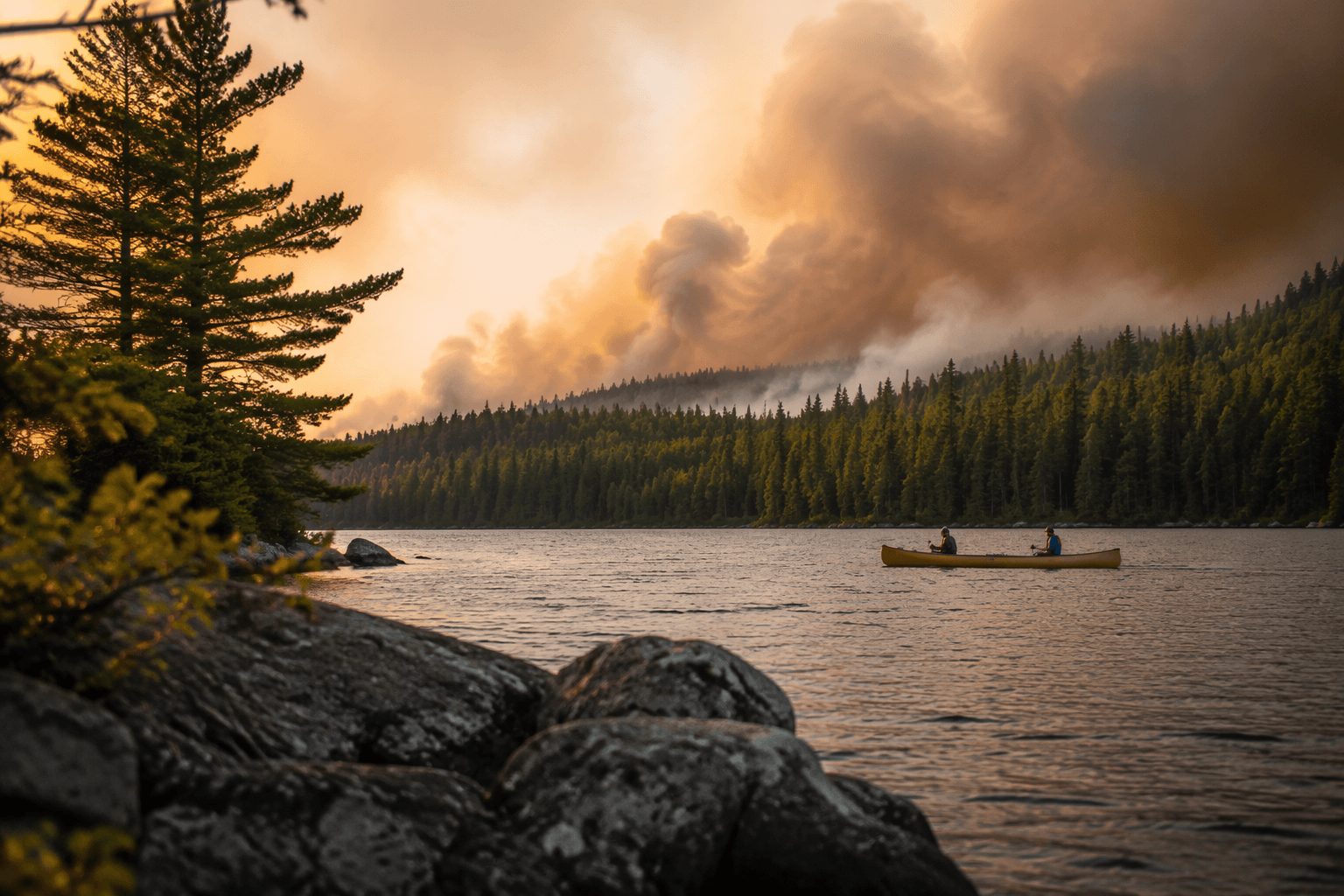
For Lake County, the impact reached well beyond paddlers and portages. Outfitters across canoe country lost BWCA trips immediately, and the closure rippled through lodging, restaurant reservations and shuttle schedules tied to summer travel in Ely, Winton and along the North Shore. Smoke and air-quality concerns also became part of the equation, pushing wildfire conditions outside the active fire lines and into the decisions families, visitors and businesses had to make that day.
Lake County Emergency Manager Warren LaPlante said the temporary evacuation point at the Babbitt Municipal Center would remain open until 9:00 p.m. July 14 and reopen July 15 at 8:00 a.m. That gave residents a clear place to go as the wildfire emergency tightened around communities near the forest boundary.
The Superior National Forest had already been operating under fire restrictions before the closure, but the spread of multiple blazes at once made the emergency order harder to avoid. The Forest Service said the weather was driving rapid changes from hour to hour, which left no reliable way to keep part of the wilderness open while protecting people inside it.
This article was produced by Prism’s automated news system from verified source data, official records, and press releases, then run through automated quality and moderation checks before publishing. The system is built and supervised by the people who set the standards it runs under. Read our full AI policy.
Did this article answer your question?