Lake County Courthouse Gets Locally Crafted Tables Built for Modern Courtrooms
Locally crafted tables at Two Harbors' Lake County Courthouse replaced aging furniture that blocked modern AV setups, while keeping the county's capital spending in the local economy.
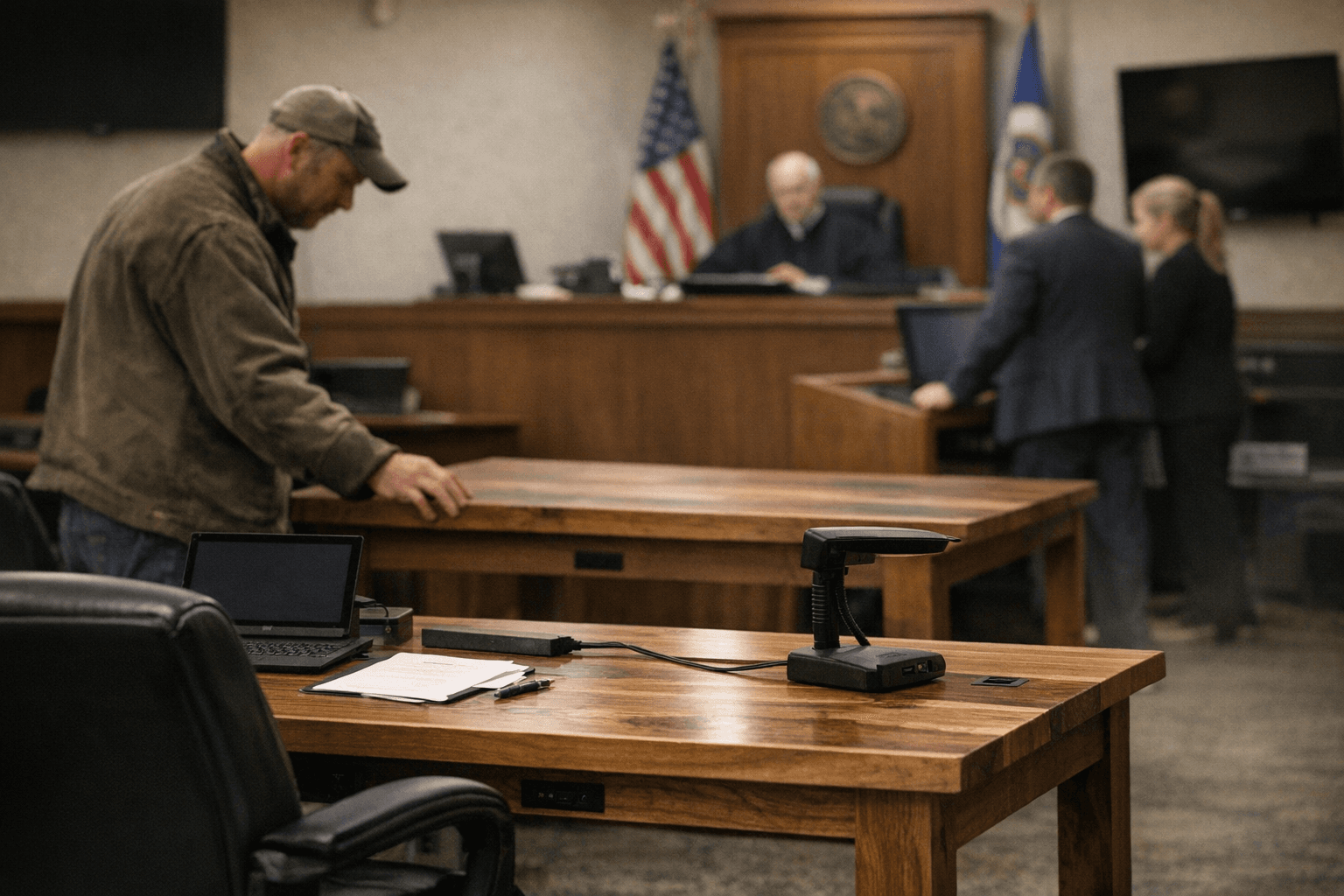
Two Harbors' Lake County Courthouse finished replacing its aging courtroom furniture this spring, completing an installation of locally crafted tables that addressed a wiring problem quietly undermining the county's ability to run modern hearings.
The old tables could not accommodate the microphones, monitors, and cable runs that digital evidence presentations and remote testimony now require. The new pieces, fabricated by Lake County woodworkers using locally sourced materials and North Shore finishing methods, were designed from the start to integrate that infrastructure. The result is a measurable reduction in setup time whenever judges or attorneys need to present electronic exhibits or connect remote participants.
County procurement and facilities staff arranged the project and timed the installation to finish before the spring public meeting season, with work completed across late March and early April 2026. The decision to commission local craftspeople rather than purchase off-the-shelf furniture from a regional vendor was deliberate. Officials described the new tables as both functional and rooted in community identity, with Lake County materials and workmanship now visible to anyone who enters a courtroom or meeting room at the courthouse at 601 Third Avenue.
Judges noted improved ergonomics in the new configuration. Attorneys pointed to better surface area for exhibits and laptops, a practical gain in any proceeding that leans on document-heavy presentations. The county funded the project through a targeted capital allocation for courthouse improvements, sized to limit impact on the operating fund. No full line-item cost was released publicly.
The project puts a local face on a problem rural courthouses across the country are wrestling with: how to update facilities for hybrid public access and electronic evidence without large capital budgets. By directing that spending toward local businesses, the county converted a deferred maintenance problem into a contract that stayed in the community.
County officials said the same model could apply to additional courtroom and public-room updates if the response from judges, staff, and attorneys continues to hold.
This article was produced by Prism’s automated news system from verified source data, official records, and press releases, then run through automated quality and moderation checks before publishing. The system is built and supervised by the people who set the standards it runs under. Read our full AI policy.
Did this article answer your question?