Two Harbors Council Delays Waterfront Plan Vote Until April Meeting
The Two Harbors City Council tabled its waterfront plan vote, pushing a decision on Agate Bay's future to later in April while staff resolves permitting and grant questions.
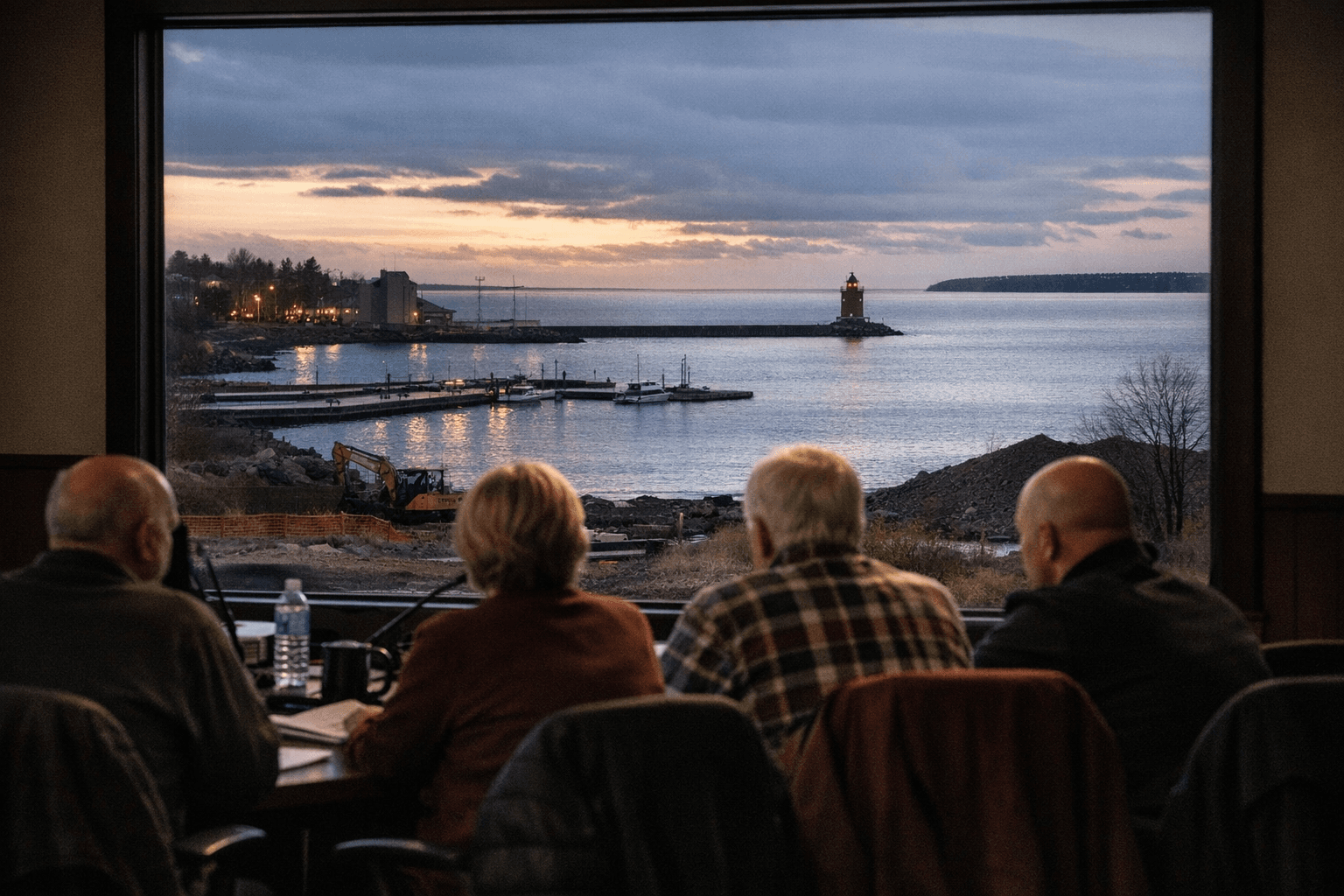
The Two Harbors City Council voted this week to table its proposed waterfront plan, pushing a formal decision on Agate Bay's shoreline future to the city's next regular April meeting while councilmembers sought more time to resolve permitting questions, grant eligibility, and gaps in public comment.
The council met April 1 and opted against committing to a preferred design approach amid several unresolved concerns. Public comment on the plan remained incomplete, environmental review items were still outstanding, and questions about matching fund requirements had not been answered. Councilmembers also cited the need to coordinate with Lake County and state agency partners on the scope and sequencing of the shoreline work. Together, those gaps made an immediate vote the riskier path: the council was unwilling to approve a plan that grant conditions or regulatory changes might later force them to revise.
The waterfront at the center of the discussion encompasses Agate Bay and the adjacent public shorefront that anchors Two Harbors' commercial fishing operations, harbor access, and tourism economy. Planning conversations have been underway for months, with nature-based shoreline stabilization emerging as a core approach. Those proposals intersect directly with federal and state grant programs that can unlock significant funding for North Shore restoration projects, but typically require a finalized plan, permits in order, and local matching dollars committed before application deadlines close.
For businesses and property owners along Two Harbors' waterfront who anticipated early design and construction timelines, the delay extends an already lengthy planning horizon. The calculus cuts both ways, though: for grant-dependent projects, submitting without a finalized plan or missing an application cycle can push a project back by a year or more. The council's move suggests the city would rather absorb a short delay now than face a forced redesign later under grant conditions it did not fully anticipate.
In the weeks ahead, city staff will continue public outreach and refine design alternatives while pursuing clarity on permitting requirements and funding eligibility. Conservation groups, tourism businesses, and residents with property or interests along the shore have all been engaged in the process; the next April council meeting will be the next formal opportunity to shape the outcome.
This article was produced by Prism’s automated news system from verified source data, official records, and press releases, then run through automated quality and moderation checks before publishing. The system is built and supervised by the people who set the standards it runs under. Read our full AI policy.
Did this article answer your question?