Lake County's first female police officer, Fran Orttel, reflects on her legacy
Fran Orttel’s path from Knoxville to Silver Bay became a Lake County first, and her legacy shows how far women in policing have come, and how far they still have to go.
A first that still matters in Lake County
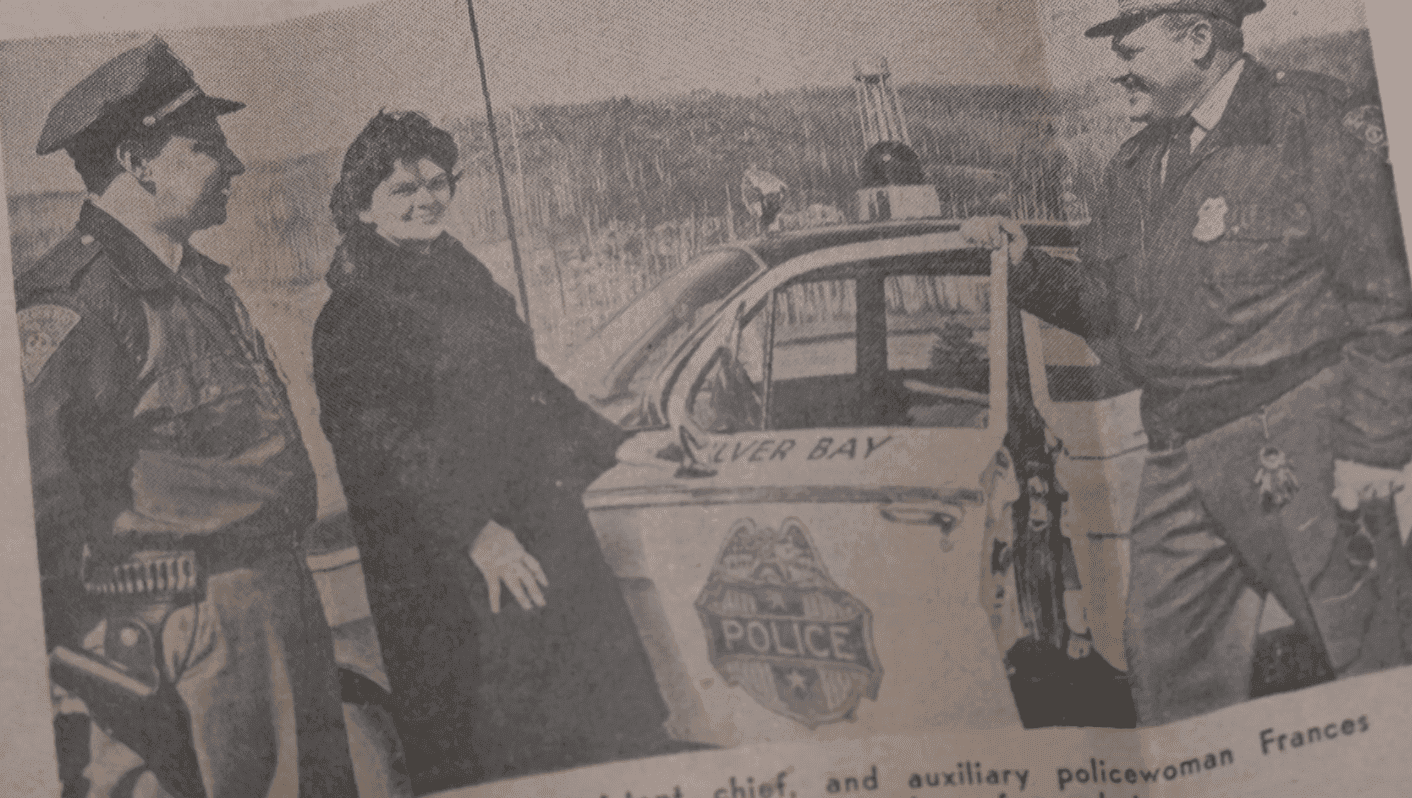
Fran Orttel’s place in Lake County history began with a move north and a new life in Silver Bay. She came from Knoxville, Tennessee, as Fran Jevning, joined the Silver Bay Police Department in 1963, and became the county’s first female police officer, a milestone that still carries weight as she turns 92 this summer.
That distinction is more than a personal honor. In a young company town still defining itself, Orttel stepped into a profession that was changing slowly and, in many places, reluctantly. Her story helps explain how women began to enter local policing not through a sweeping reform, but through individual doors opening one by one.
Silver Bay was still new when Orttel arrived
The timing matters because Silver Bay itself was barely out of infancy when Orttel put on a badge. The city was founded in 1954 as a Reserve Mining company town, originally known as the Beaver Bay Housing Project, and it was officially incorporated in 1956. Silver Bay’s history page says the first shipment of pellets went out in April 1956, which places Orttel’s hiring less than a decade after the town’s creation.
That means her career unfolded in a place where institutions were still taking shape. Reserve Mining Company’s taconite operation built the town’s early identity, and civic life grew alongside industry on the North Shore. In that setting, a woman joining the police department was not just a staffing decision. It was a signal about who could serve in public safety and who could represent authority in the community.
What being first meant in a 1963 police department
Orttel’s appointment landed in a period when policing across the United States remained overwhelmingly male. Even now, the 30x30 Initiative says women make up less than 14% of sworn officers and only 20% of recruits in state and local law enforcement agencies. That helps frame how unusual Orttel’s role was in 1963, when women were even more underrepresented.
The Minnesota Department of Public Safety has highlighted Debbie Montgomery, who became the St. Paul Police Department’s first female officer in 1975, as part of the state’s broader history of women shaping public safety. That comparison shows how early Orttel’s Lake County milestone really was. In Silver Bay, she was not following a long line of women before her. She was helping create it.
The barriers she faced were not only about getting hired. They were about legitimacy, expectation, and the simple question of whether a woman belonged in law enforcement at all. In a field built around old assumptions, being first meant proving competence before a department, and a community, had any reference point for what a female officer could do.
Why Lake County still remembers her
Her story continues to resonate because Lake County often preserves its history through the people who lived it. The Lake County Historical Society, founded in 1925, exists to preserve and present that memory, and Silver Bay’s civic past has also been kept alive through a Minnesota legacy project that preserved 15 hours of interviews with 44 early and former residents.
That kind of local record matters in a place like Silver Bay. A town founded around industry can be remembered through production figures and corporate milestones, but it is the people who give the history texture. Orttel’s story belongs to that deeper layer: the civic memory of a place that was built quickly, grew into a modern city, and then learned to recognize the women who helped shape its public institutions.
Silver Bay’s broader history also carries the mark of Reserve Mining’s environmental and industrial legacy on Lake Superior. That gives the town’s public story a dual character, part industrial expansion and part long-running debate over land, water, and public responsibility. Against that backdrop, Orttel’s role in local policing stands out as a quieter but equally important form of institutional change.
What has changed for women in policing, and what has not
The clearest change since Orttel’s era is that women are no longer invisible in law enforcement. Departments today recruit, train, and promote women in ways that would have been far less common in the 1960s, and St. Paul’s recognition of Debbie Montgomery shows how those breakthroughs became part of Minnesota’s official history. In Lake County, that larger shift gives Orttel’s career a different meaning now than it would have carried at the time.
But the numbers show the work is not finished. If women are still less than 14% of sworn officers nationwide, and only 20% of recruits, then the pipeline remains narrow before officers even reach the stages of supervision, command, and retirement. The challenge for departments is no longer only to hire women once; it is to recruit them consistently, keep them in the profession, and make leadership feel reachable rather than exceptional.
For Lake County, that comparison is especially important because local history can make progress feel complete when it is not. Silver Bay had a woman in uniform early. That fact should be remembered, but it should also be measured against the broader reality that women are still underrepresented in policing across the country. Orttel’s legacy is therefore both a marker of how far local law enforcement opened up and a reminder that firsts do not automatically become norms.
A legacy rooted in place
Fran Orttel’s story is tied to Silver Bay’s growth, to Lake County’s memory, and to the long arc of women entering public safety jobs that once excluded them. She arrived from Knoxville, built a life in a young North Shore city, and stepped into a role that changed what could be imagined in Lake County policing.
That is why her legacy lasts. It is not only that she was first. It is that her presence made room for the idea that first could happen here at all.
This article was produced by Prism’s automated news system from verified source data, official records, and press releases, then run through automated quality and moderation checks before publishing. The system is built and supervised by the people who set the standards it runs under. Read our full AI policy.
Did this article answer your question?