Lake County's North Shore Offers Prime Spring Bird Migration Viewing
A single late-May walk through Tettegouche can yield 100+ species, and Lake Superior's lake effect compresses migration into a narrow shoreline strip birders rarely find anywhere else.
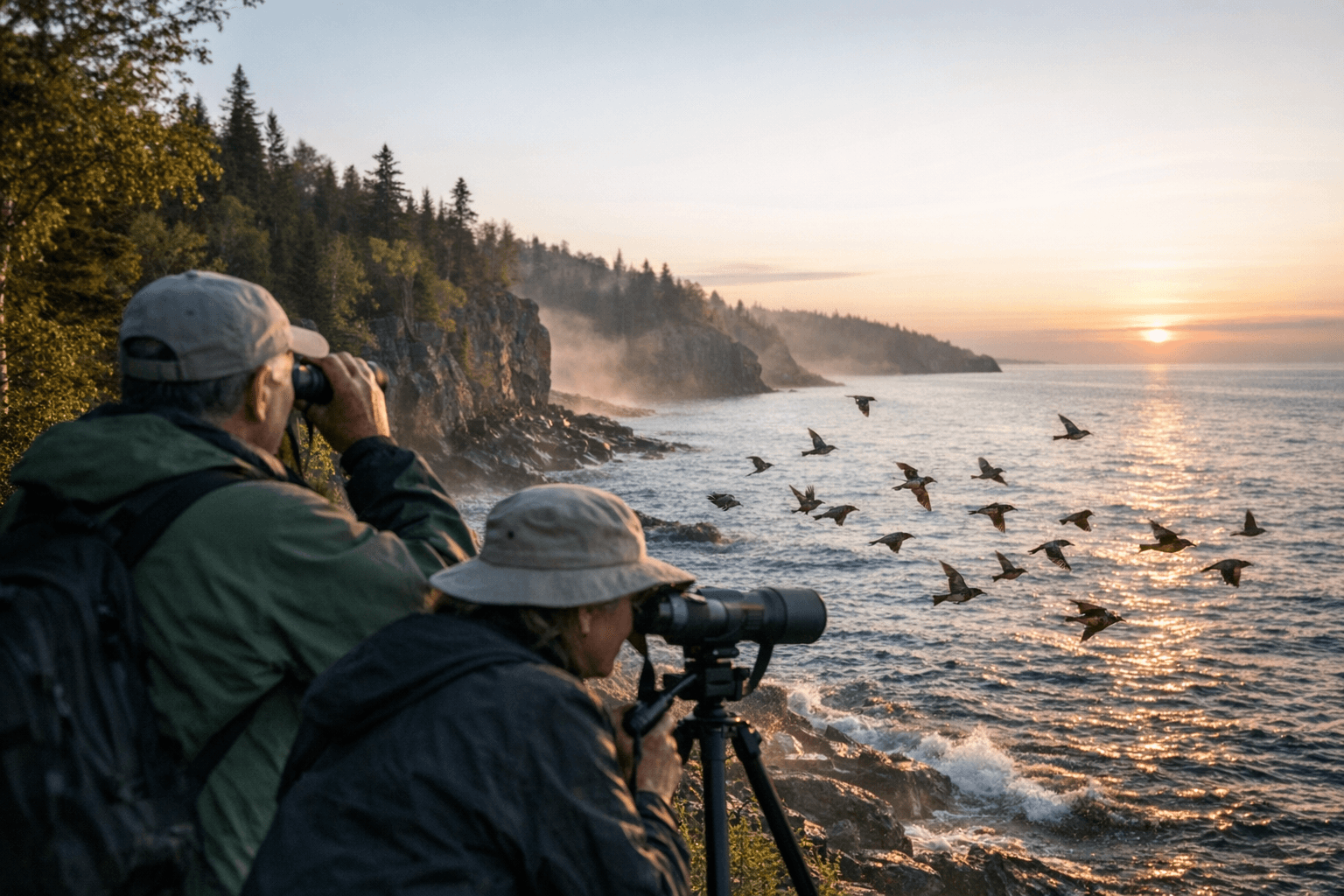
Every spring, something quietly extraordinary happens along the Lake County shoreline: Lake Superior acts as a funnel. Birds traveling north hit the cold mass of the lake and turn, concentrating thousands of migrants into a narrow corridor of forest, rocky headland, and river mouth that runs right through Two Harbors, Schroeder, and up to Grand Marais. The result is one of the most productive spring migration windows in Minnesota, running from late March through the end of May, and it is happening right now.
Why the North Shore Outperforms Inland Sites
The "North Shore advantage" is real and measurable. Lake Superior's enormous thermal mass keeps the shoreline cooler than inland Minnesota well into spring, which means birds funnel along the coast rather than dispersing broadly across the landscape. That compression effect concentrates passerines, waterfowl, and shorebirds into the state parks and river mouths of Lake County in densities that would be impossible to replicate 30 miles inland. According to the Minnesota DNR's North Shore birds resource, late May visits to a single North Shore state park can produce sightings of more than 100 species in one outing, a benchmark most Minnesota birding sites never reach.
Week-by-Week Timing Guide
Understanding when to go matters as much as knowing where.
*Late March:* The first reliable migrants appear during warm southerly wind events and after ice-out begins on inland lakes and wetlands. Expect Canada Geese and returning Common Loons on open lake water, along with American Robins, Red-winged Blackbirds, and, in lucky years, early Turkey Vultures riding thermals above the ridgelines. These early arrivals are weather-dependent and can vanish overnight if a cold front pushes back in.
*April:* The pace accelerates through the month. Killdeer are among the first shorebirds to return to river mouths and flooded fields. Osprey and Bald Eagles become reliable sightings over the open lake by mid-April. Yellow-rumped Warblers, the hardiest of their family, begin filtering through by the third week. The Minnesota DNR notes that the first significant spring migrant wave typically arrives in early April, with numbers building steadily through the rest of the month. BirdCast's migration dashboard, which tracks live radar data from March 1 through June 15, provides nightly forecasts for Minnesota and is the most practical tool available for predicting a big movement night before it happens.
*Early May:* Warbler diversity peaks rapidly. Palm, Yellow, Black-and-white, and Nashville Warblers move through in volume, and shorebird staging picks up at river mouths and any exposed mudflats created by spring flooding. This is the window when experienced local birders recommend multiple short visits rather than one long trip; an early-morning outing on a calm day after a night of southerly winds can produce dramatically different results than a visit made two days earlier.
*Late May:* Maximum diversity. The DNR's benchmark of 100-plus species per park visit is most achievable in this window. Scoters, including White-winged, Black, and Surf, move along the open lake. Spotted Sandpipers return to the rocky shoreline at Gooseberry Falls. Ruffed Grouse, year-round Lake County residents, are drumming in the surrounding forest as the last of the warblers pass through.
The Best Lake County Stops
Gooseberry Falls State Park anchors the southern end of the Lake County birding corridor. The river mouth and shoreline rocky outcrops are reliable for Herring Gulls year-round and draw scoters and diving ducks during migration. The forested trails above the falls concentrate passerines on mornings after big overnight flights.
Tettegouche State Park, centered on the Baptism River and its dramatic coastal headlands, offers both inland forest birding and open shoreline access. The varied habitat makes it one of the most species-rich single stops on the North Shore.
The area around Split Rock Lighthouse State Park provides exposed shoreline overlooks well-suited for scanning lake birds and raptors riding the ridge thermals. Waterfowl and loons are easily spotted from the cliffs above the lake.
Sugarloaf Cove Nature Center in Schroeder offers something none of the state parks can match: hands-on bird banding during migration, run through naturalist programs that give visitors direct contact with the birds being studied. It is one of the premier nature centers in the region, and the bird banding sessions are a genuine rarity for casual visitors and committed birders alike.
Where to Stay and Where to Grab Coffee
Two Harbors serves as a practical base for the southern Lake County sites. Superior Shores Resort sits directly on the lakefront and offers a range of accommodations, from guest rooms to lakeside condominiums, with shoreline fire pits that make early-morning starts feel considerably less brutal. The town's proximity to Gooseberry Falls, less than 20 miles up the shore, makes it the logical overnight option for birders working the southern corridor.
Grand Marais anchors the northern end of the route and functions as a full-service hub: good restaurants across price ranges, the Grand Marais Harbor (where Bald Eagles winter near open water), and the Gunflint Trail branching off into boreal forest habitat that harbors Boreal Chickadees, crossbills, and owls. North House Folk School in Grand Marais offers structured birding courses at multiple skill levels, making it a destination in its own right for those who want guided instruction alongside independent exploration.
Rules That Protect the Shoreline
Sensitive habitat along the North Shore requires straightforward stewardship. Keep dogs leashed at all times on park trails, particularly near shoreline areas where shorebirds rest and feed during migration stopovers. Stay on designated trails around wetlands and river mouths; trampling vegetation at staging areas disrupts the feeding opportunities birds depend on during high-energy migration. Observe from distances that don't flush resting birds, a particular concern at exposed beach and mudflat sites where there is no cover for birds to retreat to.
Logging Sightings and Contributing to Migration Science
Migration timing on the North Shore is shifting. Researchers and monitors note phenological changes, earlier arrivals in some species and altered stopover conditions as wetlands change and shoreline character evolves. Each sighting logged to eBird becomes a data point in a long-term record that scientists use to track these shifts. Submitting a checklist after each outing, even a short one with common species, contributes to the most comprehensive migration database in North American ornithology.
WTIP, the community radio station serving the North Shore, regularly features segments on seasonal wildlife including its "Talking Loons" programming, which offers expert perspectives on what's moving and when. For trip planning, local park websites and chamber visitor pages list seasonal guided birding walks, and BirdCast's live Minnesota dashboard provides the night-before intelligence that separates a productive morning from an empty one. The combination of real-time forecasting tools and one of Minnesota's most concentrated migration corridors makes Lake County a rare case where timing a weekend trip around a weather forecast is genuinely worth the effort.
This article was produced by Prism’s automated news system from verified source data, official records, and press releases, then run through automated quality and moderation checks before publishing. The system is built and supervised by the people who set the standards it runs under. Read our full AI policy.
Did this article answer your question?