Northern Moose Alliance Collars 60 Juvenile Moose in First Study Winter
Seth Moore's crews collared 60 juvenile moose despite weeks of canceled flights, launching a five-year study that could reshape Minnesota hunting seasons and tribal resource decisions.
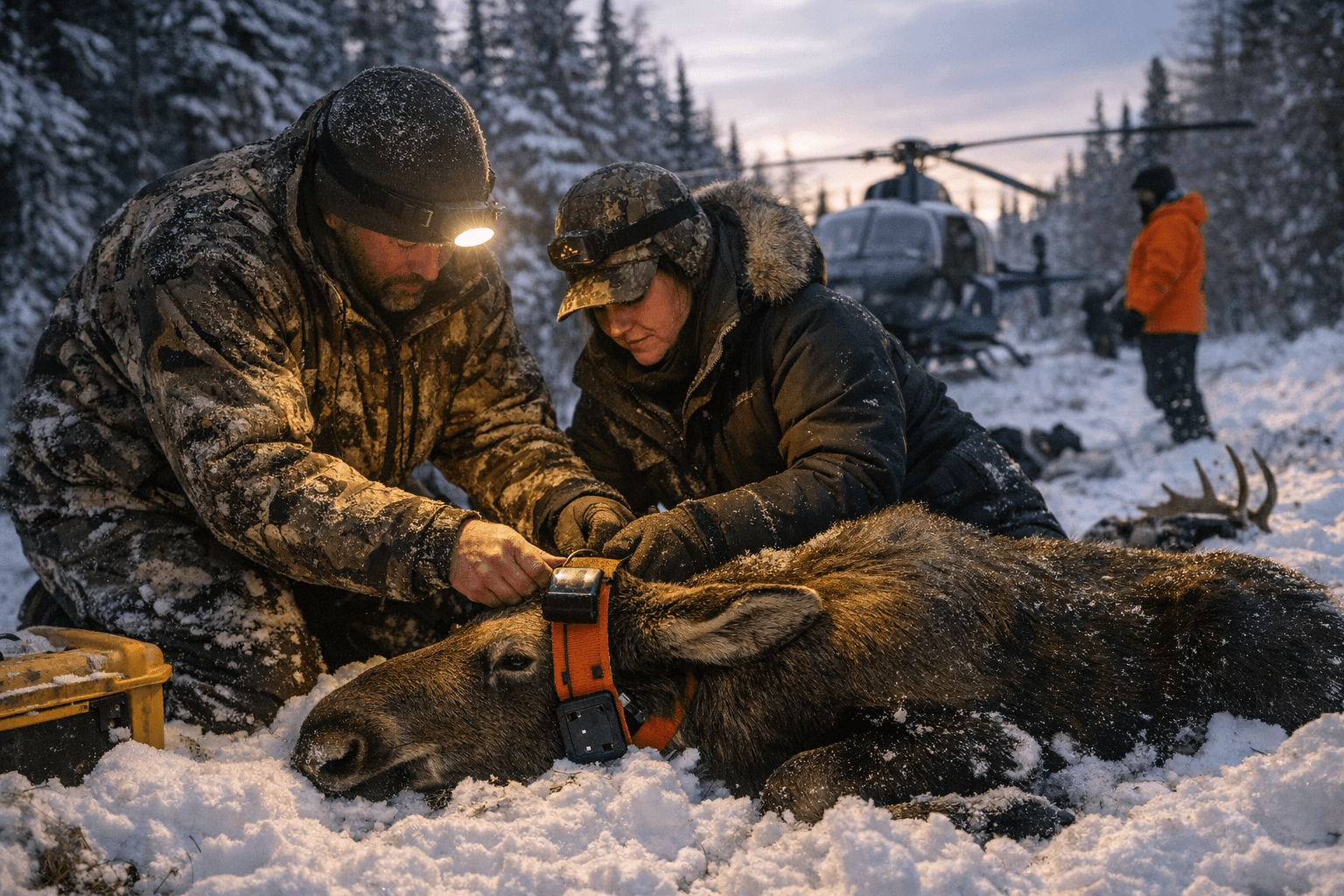
Despite multiple weeks of weather that grounded helicopters and scrubbed planned flights across northeastern Minnesota, Seth Moore's teams found their window. Researchers with the Northern Moose Alliance managed to fit GPS collars on 60 juvenile moose in a "very small amount of time," said Moore, director of natural resources for the Grand Portage Band of Lake Superior Chippewa, marking a successful first winter for a five-year study that wildlife managers hope will reverse one of the region's most troubling ecological trends.
The project, running from 2025 to 2031, is the first moose research effort co-led equally by state and tribal governments. "This is the first moose research project that is co-led by state and tribal governments, and I think that is a really powerful statement on the importance of moose to Ojibwe people in Minnesota, but also to the Minnesota citizenry as well," Moore said. It is also the first equally shared Tribal-State partnership on a Legislative Citizens Commission on Minnesota Resources project, backed by $2.07 million from the Minnesota Environment and Natural Resources Trust Fund.
The Northern Moose Alliance brings together the Grand Portage Band of Lake Superior Chippewa, the 1854 Treaty Authority, and the Minnesota DNR, with operational and fundraising support from the National Parks of Lake Superior Foundation. Tom Irvine, the foundation's director, described his organization's role as pulling voices together and coordinating public outreach. The foundation is also funding Adam Mortensen, a dedicated moose biologist who relocated to Grand Marais to work the project full-time.
Field teams this winter targeted juvenile moose aged 8 months to 3 years, an age class that has received comparatively little research attention. Each subsequent winter through 2031, researchers plan to collar between 60 and 80 additional juveniles. Morgan Swingen, a wildlife biologist with the 1854 Treaty Authority, said the collars will help answer a central question: at what age do female moose become reproductive adults. Teams will also collect fecal pellets to test progesterone levels, tracking pregnancy rates across the collared population.
The collars do more than record location. When a collar's activity sensors detect a mortality event, it triggers a signal prompting researchers to recover the carcass for a forensic necropsy, allowing biologists to identify specific causes of death such as predation, starvation, or winter tick infestation. That granular mortality data is what wildlife managers across northeastern Minnesota, including in Lake County, have been waiting for.
Michelle Carstensen, the DNR's wildlife health program supervisor, said the moose population has stabilized over the past decade but is not growing. The DNR's 2026 moose survey showed a slight uptick, though the population remains well below its peak from a decade ago. Minnesota's moose herd has declined roughly 60 percent from its historic highs, compressing a population that once ranged widely into its current northeastern stronghold.
That trajectory shapes decisions far beyond wildlife management. Hunting allocations, treaty-based subsistence harvest, and the outdoor tourism economy that draws visitors to the North Shore all depend on whether calf survival begins to improve. The Alliance's five-year dataset will feed directly into those conversations between tribal and state managers.
On April 2, the Alliance launched a public website and a citizen-science component asking North Shore residents to submit trail camera photos documenting winter tick prevalence on moose. Winter ticks, which can kill moose when infestations grow severe enough, are among several mortality factors the project aims to quantify over the coming years.
This article was produced by Prism’s automated news system from verified source data, official records, and press releases, then run through automated quality and moderation checks before publishing. The system is built and supervised by the people who set the standards it runs under. Read our full AI policy.
Did this article answer your question?