Silver Bay library event spotlights peregrine recovery through photography
Silver Bay families got a close look at one of the North Shore’s biggest conservation comebacks, with Jill Beim pairing peregrine banding photos and science at the public library.
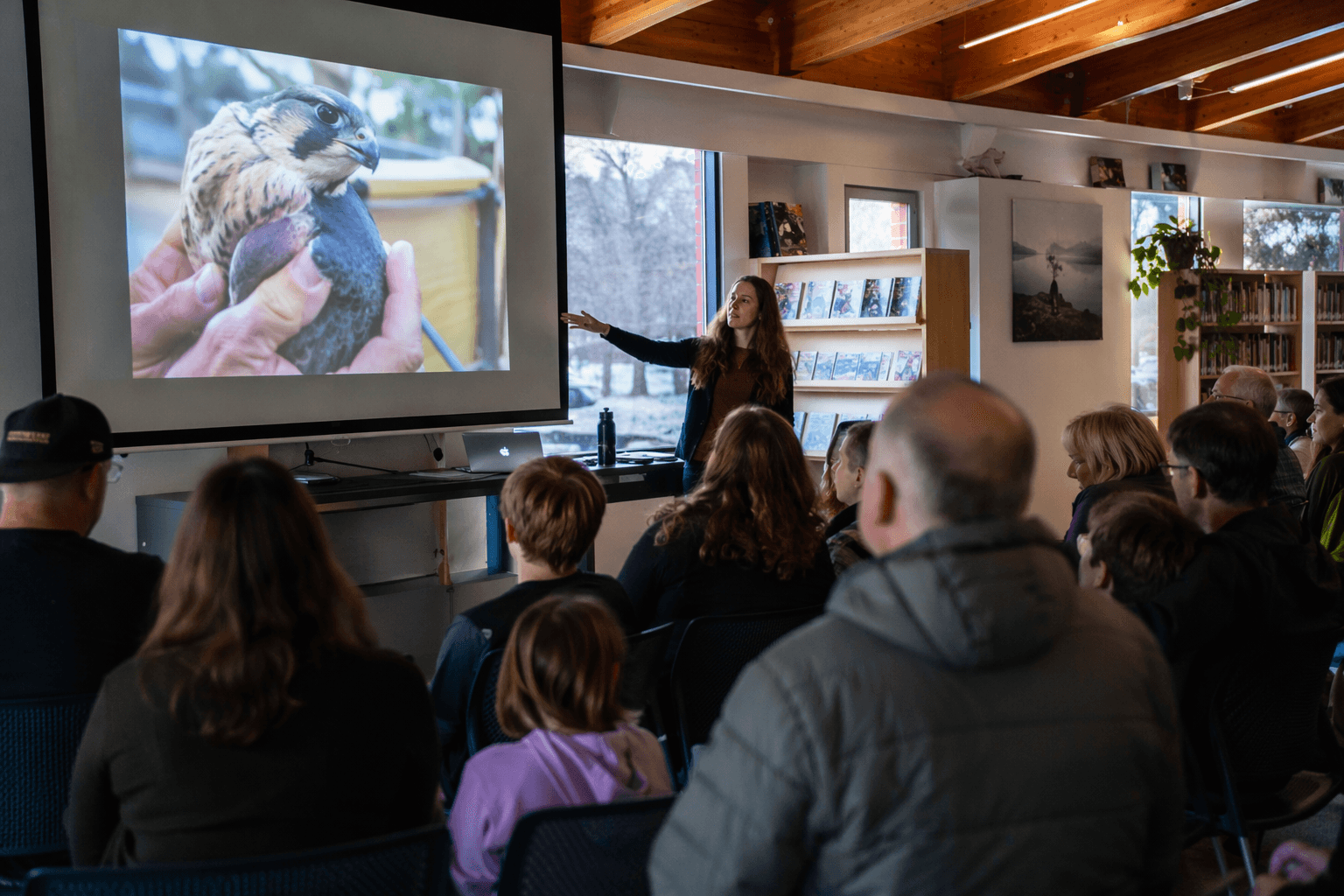
Families packed a free program at the Silver Bay Public Library on May 22 to hear how peregrine falcons came back to the North Shore and how photographers help document that recovery. The all-ages event ran from 1:30 p.m. to 2:30 p.m. at 9 Davis Drive and included a free copy of Ranger Rick magazine for attendees.
The draw was not just the birds, but the access. Jill Beim, a conservation photographer based in Silver Bay, used her presentation, Peregrine Banding Through a Photographer’s Eye, to show how scientists and volunteers track peregrines that nest on Lake Superior cliffs. For Lake County families, the appeal is local and immediate: these are not distant wildlife stories, but birds that live, hunt and raise chicks along the same shoreline residents see from Highway 61 and the parks around Silver Bay.
That comeback has been dramatic. The Minnesota Department of Natural Resources says peregrine falcons once numbered only 30 to 40 breeding pairs in Minnesota before they were extirpated between 1946 and 1962, with DDT a major factor. The species was removed from the federal endangered list in 1999, and Minnesota moved it from endangered to threatened in 1996 before reclassifying it as special concern in 2013. By 2015, the state had 70 territorial pairs fledging 142 young.
The University of Minnesota’s Raptor Center says the Midwest recovery included releasing close to 1,000 young peregrines over 16 years to the Lake Superior North Shore and other sites. Today, the center says, there are about 200 nesting pairs in the Midwest, and the population has grown beyond its historical level. That makes the North Shore one of the most visible places to watch the recovery play out in real time.
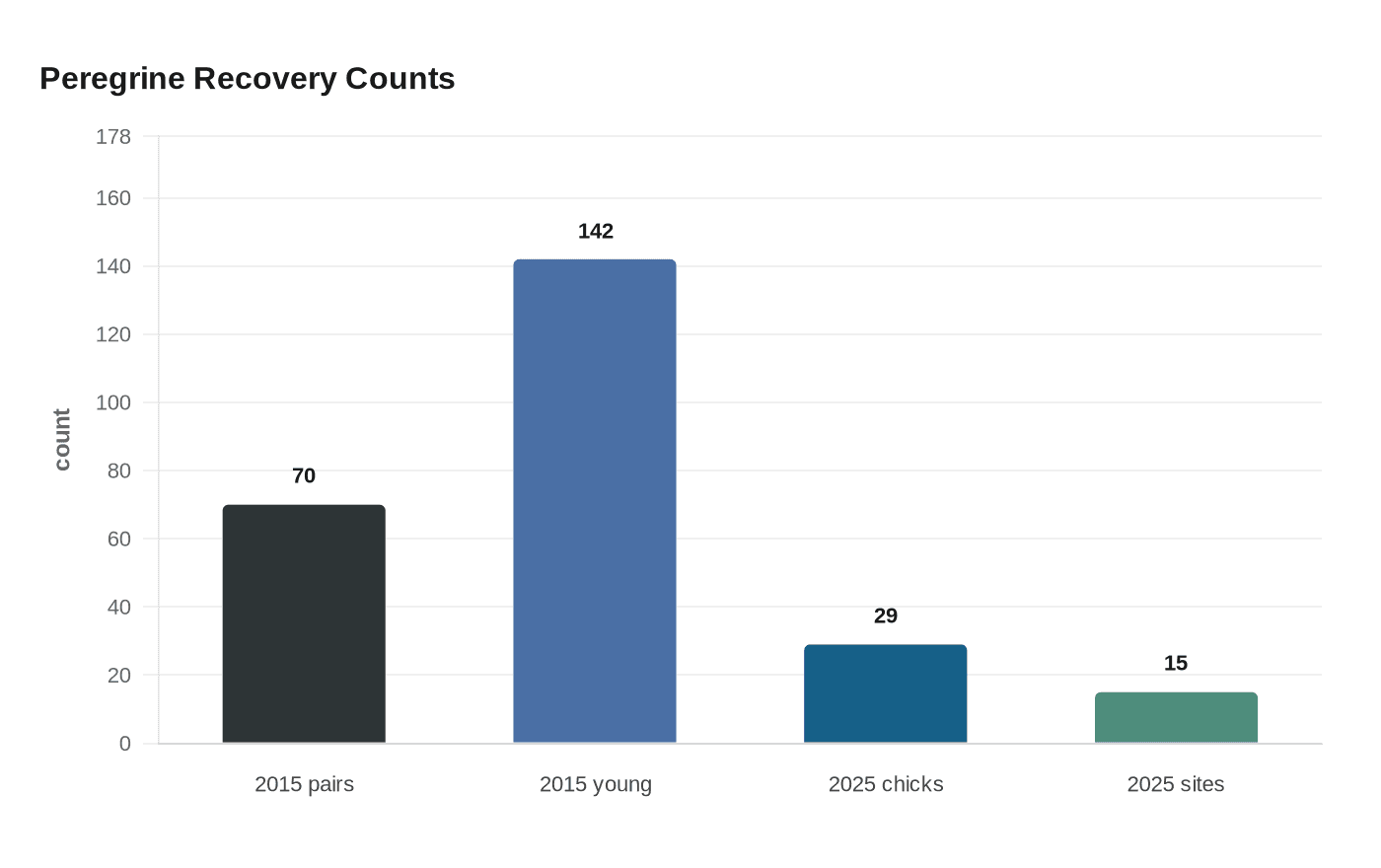
The work continues each season. Beim’s 2025 field report said the North Shore banding effort covered 15 nesting sites between June 10 and June 25 and resulted in 29 chicks being banded. She also identified Jackie Fallon as the Midwest Peregrine Society’s vice president of field operations and Minnesota state coordinator, and said leg bands can be read from as far as 700 feet away through binoculars or a spotting scope.
The Silver Bay event fit into that broader picture of public science. Tettegouche State Park near Silver Bay marked the 30th anniversary of its first wild peregrine nesting after recovery, with two pairs nesting there in 2019 and a possible third nest still being searched for. For a community built around the North Shore landscape, the message was plain: peregrine recovery is not abstract conservation history, but a living success story unfolding on nearby cliffs, and the library gave residents a front-row seat.
This article was produced by Prism’s automated news system from verified source data, official records, and press releases, then run through automated quality and moderation checks before publishing. The system is built and supervised by the people who set the standards it runs under. Read our full AI policy.
Did this article answer your question?