Sámi author Elin Anna Labba explores loss and memory in The Home of the Drowned
Elin Anna Labba's novel turns a flooded Sámi homeland into a story about silence, family memory and what communities lose when outsiders remake the land.
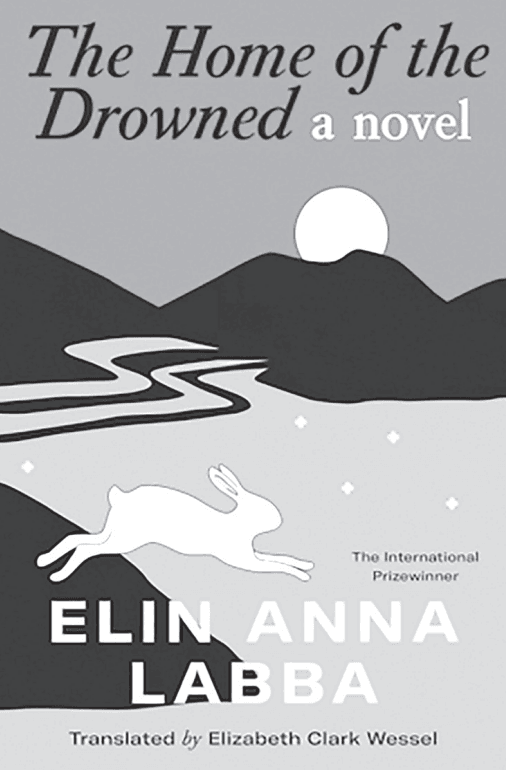
Elin Anna Labba's first novel begins with a place remade by water, and that makes it especially resonant on the North Shore. The Home of the Drowned follows a family along a chain of northern lakes before hydropower turns that landscape into one reservoir, swallowing homes and the routines that keep memory alive. For Lake County readers, the book's force lies in its clear-eyed view of what happens when outside decisions redraw a place people thought they knew.
A fiction debut built on a nonfiction foundation
Labba comes to this novel with a record that already marked her as an essential Sámi voice. Her first book, *Herrarna satte oss hit / The Rocks Will Echo Our Sorrow*, won the 2020 August Prize for nonfiction, and *The Home of the Drowned* is her fiction debut. She has also worked as an editor for Sámi magazines and led Tjállegoahte, the Sámi Writers’ Centre, roles that place language, memory and cultural preservation at the center of her work.
That background matters because Labba did not write this book with international readers in mind. She wrote it to understand her own history and her own family, and she did not expect it to be translated. The result is a novel that feels intimate rather than explanatory, even as it opens a window onto Sámi history for readers who may have come to the subject with only the flattened shorthand of bright colors and reindeer.
The reservoir at the center of the story
The novel is rooted in the historical flooding tied to Lake Akkajaure, also known as Áhkájávrre, one of Sweden's largest reservoirs. The water came with the Suorva dam, built between 1913 and 1923 and inaugurated in October 1923, according to SMHI. Sources on the project say the reservoir displaced hundreds of Sámi people, turning a living landscape into a controlled body of water on the Lule River in Norrbotten County, near Stora Sjöfallet National Park.
That history is not an isolated case. A 2023 scholarly article notes that hydropower expansion has taken place in Sápmi for more than 100 years, and the Stockholm Environment Institute says about 80% of Sweden's large-scale hydroelectric power generation is located there. The same institute says hydropower provides about 45% of Sweden's total electricity generation. Those figures make the book's setting more than a backdrop: they show how deeply energy policy has been written into Sámi land.
Silence, shame and the work of remembering
What gives Labba's story its emotional weight is the silence around it. She describes a family history shaped by shame, where some relatives believed they had nothing worth saying and some of the flooding stories were only half told or deliberately held back. As she began asking questions, she found that the family held far more than they first admitted, including memories of rising water, changing shorelines, lost homes and the practical strain of moving livestock and rebuilding daily life elsewhere.
That is where the novel becomes a form of recovery. It gathers fragments that might otherwise remain buried and shows how displacement does not end when the water rises or the houses are moved. The cost continues in what people are willing, or unable, to pass on to the next generation, especially when a community has been taught that silence is safer than witness.

Why this matters on the North Shore
Lake County knows the pressure that water and land can exert on a community. Along the Lake Superior shoreline, from Two Harbors to Silver Bay, place is never just scenery. It carries work, migration, family memory and the long record of decisions made by people who did not have to live with the consequences.
That is why Labba's novel belongs in the conversation here about Indigenous history, cultural memory and erased histories. The Sámi experience she writes about is rooted in Sápmi, but the pattern is familiar anywhere a community is asked to adapt after land or water is altered for a larger system. Official versions of progress often celebrate the project itself; families carry the afterlife of the loss.
The Home of the Drowned offers Lake County readers a way to see that tension more clearly. It shows that when a landscape is remade without consent, the damage does not stay at the shoreline. It settles into memory, where it can become either silence or resistance.
This article was produced by Prism’s automated news system from verified source data, official records, and press releases, then run through automated quality and moderation checks before publishing. The system is built and supervised by the people who set the standards it runs under. Read our full AI policy.
Did this article answer your question?