Two Harbors council hears neutrino research plan for water plant site
The council got a neutrino primer for a Lake Superior research project at the Water Treatment Plant, where UMD will lease land and pay for permanent upgrades.
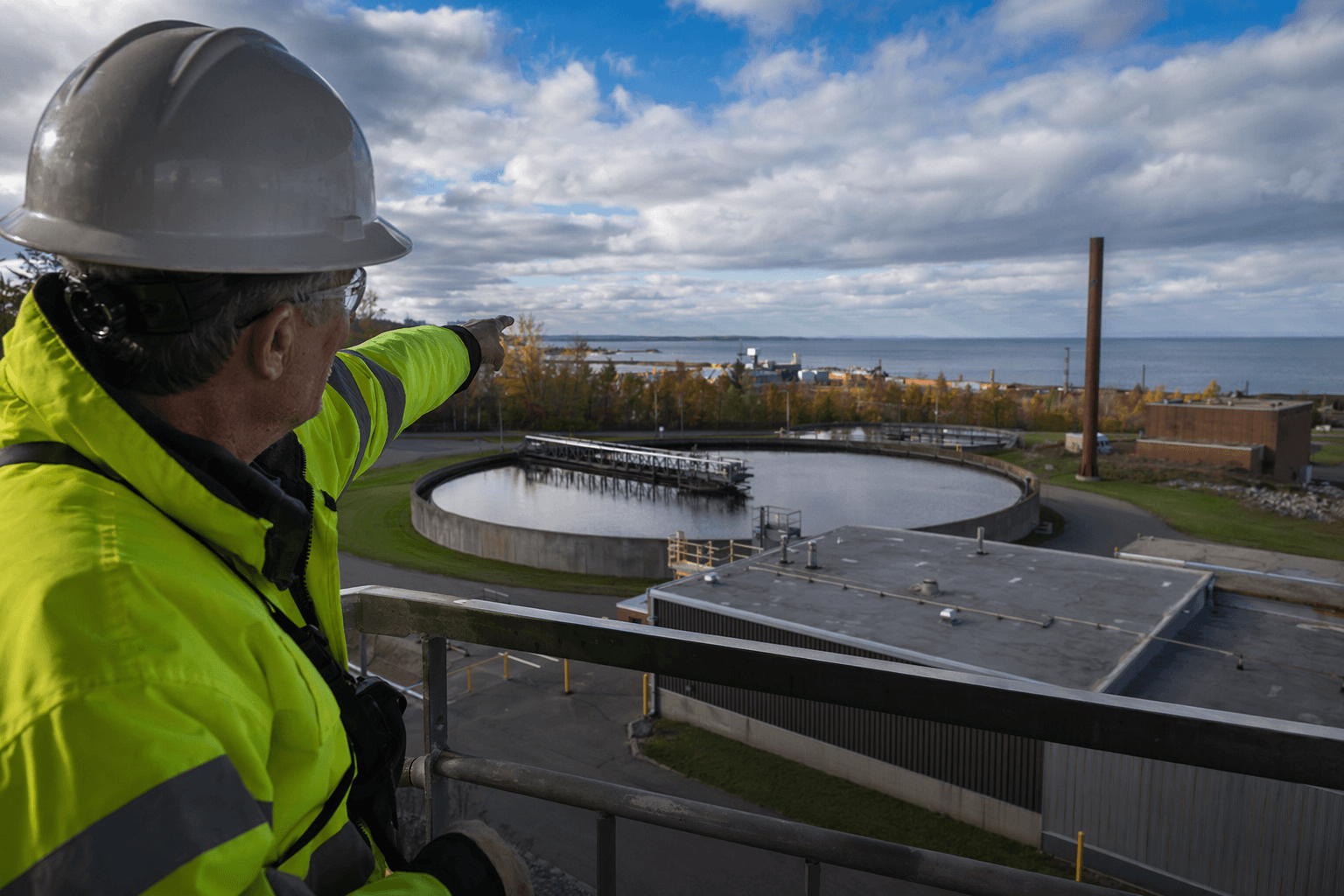
Two Harbors turned a city utility site into a discussion about particle physics and public value on May 12, when the City Council heard from Alec Habig of the University of Minnesota Duluth about the neutrino research now tied to the Water Plant. The presentation came after the council had already approved an agreement in April that leases land and grounds at the Water Treatment Plant for two years for a Lake Superior research project, with the university expected to pay for permanent building improvements.
Habig, a professor in UMD’s Department of Physics and Astronomy, used the meeting to explain why the project is not just another university outreach effort. Neutrinos, he told the council, are neutral particles that pass through nearly everything and are so difficult to detect that they can move through matter without leaving a trace. He tied them to some of the biggest events in the universe, including the Big Bang and supernovae, saying supernovae release about 99% of their energy as neutrinos.

The council’s earlier approval gave the arrangement a practical shape. Under the April 13 agreement, the City of Two Harbors and UMD will use the Water Treatment Plant building and grounds as a base for the project, and the university will cover permanent improvements that outlast the lease. That detail matters locally because it shifts the question from abstract science to the condition, use, and long-term value of a city-owned facility.
Habig also pointed to northern Minnesota’s own history in neutrino research. He referenced MINOS, which sent a neutrino beam from Fermilab near Chicago to an underground facility in the Soudan Mine, a reminder that Lake County and the Iron Range have already played a role in global physics work. His research background includes cosmic rays, neutrinos, particle astrophysics, and supernova early-warning systems, with work tied to MINOS, MINOS+, NOvA, HALO, DUNE, Super-Kamiokande, MACRO, and SNEWS and SNEWS2.0.
The project also fits into UMD’s wider lake research presence. The university’s western Lake Superior buoy program operates multiple buoys, including one near McQuade Harbor, adding another layer of scientific infrastructure on the North Shore. In Two Harbors, that broader network now intersects with a municipal water plant, a setup that shows how a small city facility can become part of a much larger public research mission.
This article was produced by Prism’s automated news system from verified source data, official records, and press releases, then run through automated quality and moderation checks before publishing. The system is built and supervised by the people who set the standards it runs under. Read our full AI policy.
Did this article answer your question?