Two Harbors Depot Museum preserves Lake Superior rail and ore history
The Depot Museum shows how railroads, ore docks, and county politics built modern Two Harbors, and why that history still shapes its downtown today.

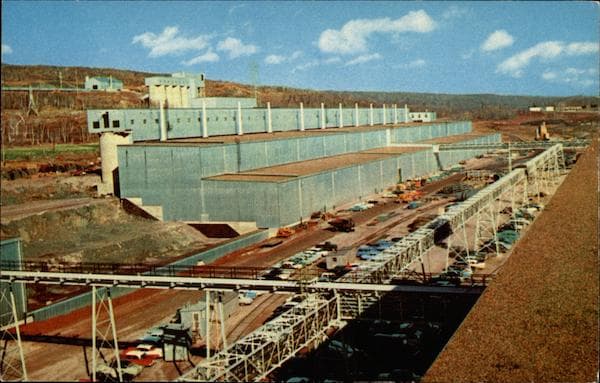
The Two Harbors Depot Museum sits at the point where Lake Superior shipping, railroad management, and Lake County politics all met. Built in 1907 for the Duluth & Iron Range Railroad by Duluth architect Peter Olson, the depot opened as the company’s headquarters and passenger station, looking out over the ore docks and rail yards that made the harbor town work. The museum inside the building now explains why Two Harbors grew where it did, why its street pattern bends toward the waterfront, and why the city’s identity still carries the weight of rail and ore.
How the harbor made the town
Two Harbors did not become a rail and shipping center by accident. The Agate Bay ore dock, built in 1884, turned the shoreline into a major loading point for Iron Range mining, and the town’s civic map followed that industrial logic. Lake County had already moved its county seat from Beaver Bay to Two Harbors in 1884, before the city even had its current form, and the settlement was platted in 1885, incorporated as a village in 1888, and later incorporated as a city on February 26, 1907.
That timeline matters because it shows how closely public life tracked the harbor economy. When the Two Harbors Iron News began publishing in 1890, Agate Bay and Burlington Bay had only recently been joined into one town, so the depot was never just a building for train passengers. It was part of the system that tied workers, freight, and county government to the shoreline.
A railroad headquarters turned public landmark
The depot’s original purpose explains its scale and presence. The Duluth & Iron Range Railroad placed its headquarters and passenger station in a structure designed to face both Lake Superior and the ore docks, a practical choice for a company that moved people as well as cargo. The National Register of Historic Places nomination describes it as a two-story brick building with a prominent cornice and a full-front covered promenade, details that still make the building look like a civic landmark rather than a modest station.

Corporate geography changed in 1938, when the Duluth & Iron Range merged into the Duluth, Missabe, and Iron Range Railroad and moved its headquarters to Duluth. The building remained important anyway. Passenger service continued until July 15, 1961, long after the railroad’s management had shifted away, which left the depot as one of the clearest surviving reminders of the era when Two Harbors functioned as a working harbor town built around rail logistics.
What the museum holds inside
The Lake County Historical Society opened its first museum operation in the depot in 1960, only a few years after passenger service ended. In 1984, the museum expanded to the entire ground floor for the centennial of iron ore shipping from Agate Bay, turning the depot into a larger interpretive space that now offers more than 4,000 square feet of exhibit area. One inventory puts the collection at about 3,500 objects, 5,000 photographs, and more than 150 feet of archival material, a scale that gives the site enough depth to tell more than one story at a time.
That depth matters because the exhibits go beyond railcars and freight schedules. The museum covers Lake County archaeological digs, the first shipment of iron ore from Minnesota, and the turn-of-the-century logging companies that shared the region with the railroads. In practice, that means visitors can see how the county’s economy moved from extraction to shipping to settlement, and how each phase left a different kind of record behind.
Why the depot still shapes downtown life
The depot’s location above the docks still influences how people move through Two Harbors. Heritage visitors who come for the museum, the rail story, and the harbor views also move through the city’s commercial core, which gives downtown businesses a built-in spillover from the same history that drew the railroad here in the first place. The building is not isolated from the city’s economy; it sits inside the walkable route that links the waterfront, the old rail landscape, and the storefronts that serve residents and visitors alike.
Its National Register status also matters in practical terms. A listed historic property carries a stronger preservation case when local groups look for maintenance support, grants, or restoration attention, especially for a building that remains one of the defining structures on the harbor. In Two Harbors, where history is visible in the street grid as much as in the museum cases, preservation is not a decorative concern. It is part of how the city keeps the story of its waterfront economy legible.
A county seat with rail and ore in its DNA
The depot also helps explain why Two Harbors carries so much of Lake County’s civic weight. Lake County was created in 1855 with Beaver Bay as the county seat, but the seat moved to Two Harbors in 1884, before the depot was built and while the harbor was still becoming the region’s industrial center. The county’s first courthouse in Two Harbors, a wooden building erected in 1887, served until it burned in 1904, another reminder that the county’s public institutions developed alongside the rail-and-port economy rather than apart from it.
That history still shapes how residents think about the city’s role. Two Harbors is not only a scenic harbor town or a stop along the North Shore; it is the place where county government, industrial shipping, and local identity converged. The depot museum, together with the Two Harbors Light Station and the 3M Birthplace Museum, gives the Lake County Historical Society three distinct ways to show how that identity formed, and why the city’s past still informs what kind of county seat it remains today.
This article was produced by Prism’s automated news system from verified source data, official records, and press releases, then run through automated quality and moderation checks before publishing. The system is built and supervised by the people who set the standards it runs under. Read our full AI policy.
Did this article answer your question?