Warm Spell to Give Way to Rain, Ice Risk Along North Shore
A 60-degree warm spell on the North Shore gave way to freezing rain and a wintry mix, glazing Highway 61 from Two Harbors north with ice just as spring traffic was building.
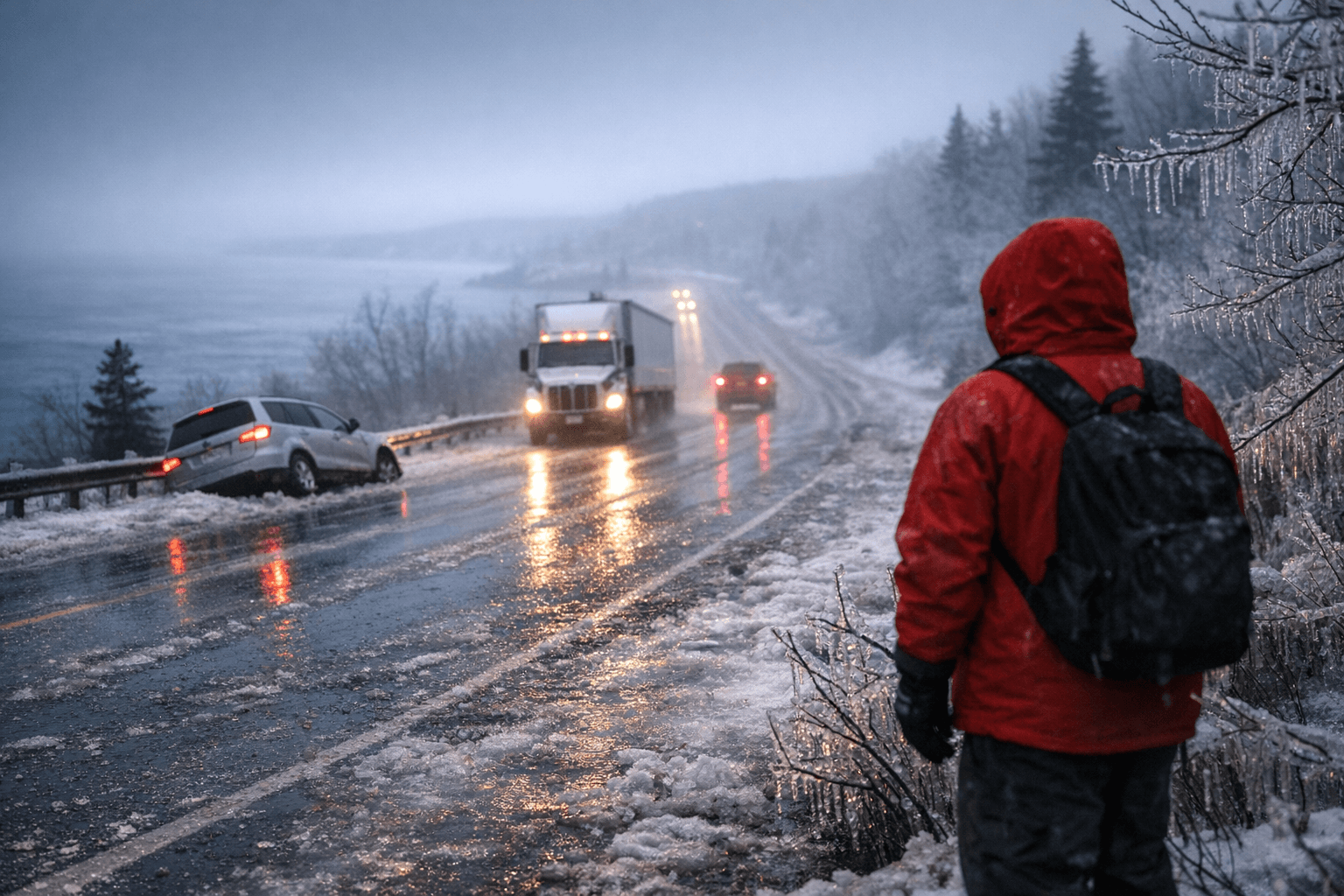
Highway 61 between Two Harbors and Silver Bay ran straight into a classic North Shore weather trap last week when temperatures that climbed into the upper 60s collapsed under incoming rain and a wintry mix, glazing the region's primary coastal artery within hours of what felt like the first real day of spring.
The National Weather Service in Duluth issued the warning on March 25, calling for a brief but significant warm-up across the Arrowhead before a moisture system tracking in from the west arrived later that same day. Rain was expected to push through and persist through Thursday afternoon, but for communities on the immediate North Shore and at higher elevations, forecasters flagged a harder problem: a wintry mix, a light glaze of freezing rain, and localized snow accumulations of up to 2 inches in shore-adjacent spots. The forecast stressed that coastal versus inland positioning and local elevation could produce meaningfully different outcomes within just a few miles, meaning Two Harbors and Silver Bay, separated by roughly 15 miles, could see different precipitation types simultaneously.
That variability carries real stakes for Lake County's working economy. Logging and trucking operations that depend on road conditions and weight-limit windows faced a compressed scheduling picture: late March typically coincides with spring load restrictions on county roads, and a sudden ice event layered on soft, thawing ground complicates haul schedules and equipment movement. Construction crews eyeing early-season project starts faced the same uncertainty, with a warm afternoon that signals a green light capable of producing a frozen work site by the following morning. Delivery reliability on the Highway 61 corridor can degrade quickly when slush that pools on shoulders during the warm-up refreezes after dark.
The spring-thaw dynamics underground added another layer of concern. Low-lying road sections near stream crossings and culverts, already stressed by snowmelt, are among the first places on the North Shore to develop black ice during rapid temperature reversals. Driveways and private access roads built on clay-heavy soils common in the area can become impassable as saturated ground freezes overnight.
Lake County highway crews typically respond to these mixed-precipitation forecasts by staging plowing and sanding equipment in advance, but the transition window between warm pavement and a freezing glaze can close faster than equipment can cover the full reach of the Highway 61 corridor. The Lake County Sheriff's Office and other first responders tend to see elevated call volume during these events, particularly for weather-related crashes and stranded vehicles on secondary roads feeding into the main shore corridor.
Motorists traveling the North Shore during the transition period were advised to slow down, allow extra braking distance, and avoid nonessential travel during active freezing rain. The National Weather Service in Duluth remains the primary source for real-time updates as conditions evolve, and county officials were expected to post road advisories to county social media channels if the situation deteriorated beyond the initial forecast. For anyone with outdoor equipment exposed to wind and wet weather, the forecast served as a pointed reminder that March on the North Shore is not done with winter.
This article was produced by Prism’s automated news system from verified source data, official records, and press releases, then run through automated quality and moderation checks before publishing. The system is built and supervised by the people who set the standards it runs under. Read our full AI policy.
Did this article answer your question?