Eugene ballot measure would tax big corporations for climate projects
Proponents turned in 14,387 signatures for Eugene’s 2% corporate climate tax. At 2%, every $1 million in taxable gross profits would mean a $20,000 bill.
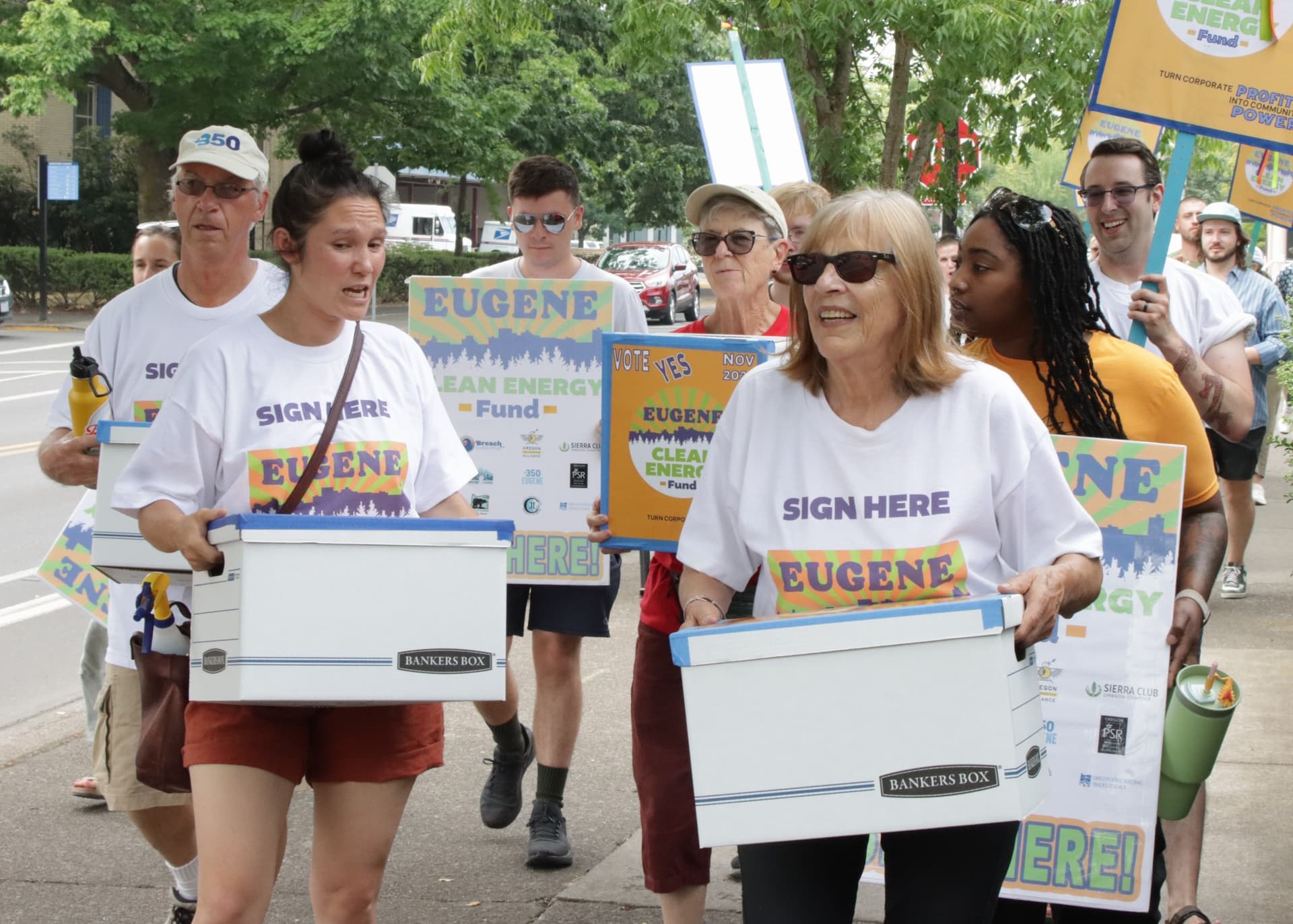
Eugene Clean Energy Fund backers turned in 14,387 signatures on July 21, putting their 2% corporate climate tax one verification step from the November ballot. Lane County still had to validate the names, but organizers said they had cleared the threshold needed to qualify.
The measure would take 2% of gross profits from some large corporations doing business in Eugene, including the kinds of retailers and banks activists named when they launched the effort in February. That means the bill would rise quickly with sales: a company with $10 million in taxable gross profits tied to Eugene retail sales would face a $200,000 charge, while $50 million would mean $1 million.

Supporters say the money would pay for clean energy projects, energy-efficiency work, climate infrastructure and jobs programs. A city proposed-legislation document says the fund is designed to provide a consistent long-term funding source and an oversight structure, with an investment account managed by the City of Eugene Public Works Administration.
That oversight detail separates the proposal from a routine local ballot measure. Instead of a one-time grant or a general tax increase that disappears into the city budget, the Eugene plan creates a dedicated account and a long-term spending stream tied to climate action projects. The city already has a climate framework in place: Eugene adopted its Climate Recovery Ordinance in 2016, with goals of cutting fossil fuel use 50% by 2030 and reducing greenhouse gas emissions by 7.6% annually by 2100. City materials also say consultation on Climate Action Plan 2.0 has concluded.
The biggest comparison is Portland. Eugene organizers said in February that they wanted their measure to mirror Portland’s voter-backed clean energy fund, and Portland’s program has become the model they point to. OPB described the Portland Clean Energy Fund in 2026 as a $1.7 billion climate fund and a blueprint for other cities. In 2024, OPB reported Portland was preparing to spend $140 million on 3,100 home retrofits over five years.
That Portland example is central to the national-precedent argument. Eugene’s measure would not just tax corporations locally; it would test whether a Portland-style climate fund can be exported to another Oregon city and sold to voters as a business-funded public investment. Oregon’s 2024 Measure 118, a separate corporate-tax-and-rebate proposal, also showed how sharply corporate taxes can divide statewide politics, but Eugene’s measure is narrower, local and tied to specific climate spending.
This article was produced by Prism’s automated news system from verified source data, official records, and press releases, then run through automated quality and moderation checks before publishing. The system is built and supervised by the people who set the standards it runs under. Read our full AI policy.
Did this article answer your question?