Oregon finishes wildfire recovery projects five years after Labor Day fires
The state says its wildfire housing rebuild is complete, but the McKenzie Valley still measures recovery by stable, affordable homes and the infrastructure to support them.

The state says the last of its wildfire housing recovery projects is finished, but in the McKenzie Valley the real test is still whether displaced families have found stable, affordable homes close enough to rebuild their lives.
Oregon Housing and Community Services said all state-funded housing recovery developments tied to the 2020 Labor Day wildfires and straight-line winds are complete, capping a recovery effort that delivered 324 new homes across fire-affected communities, including in Lane County. The agency said the Legislature put more than $150 million into wildfire housing recovery, with about $36 million set aside in the Wildfire Recovery and Resilience Account for shelter, clothing, essential services and housing support.
The scale of the disaster remains hard to overstate. The fires began Sept. 7, 2020, and spread quickly in hot, dry, windy conditions, forcing more than 40,000 evacuations and burning more than 1 million acres statewide. Oregon later said the disasters affected eight counties. FEMA identifies the Holiday Farm Fire disaster in Lane County as FM-5357-OR, with an incident period from Sept. 8, 2020, to Oct. 3, 2020.
In Lane County, the Holiday Farm Fire still defines the long arc of recovery. The county said it was preparing to receive $17,483,497 in federal funds for affordable housing solutions for renters displaced by the fire, including accessory dwelling units, clusters of single-family homes and possibly a manufactured home park. Lane County also said it received $7.9 million in Planning, Infrastructure, and Economic Revitalization funds for recovery work tied to the Holiday Farm Fire footprint.
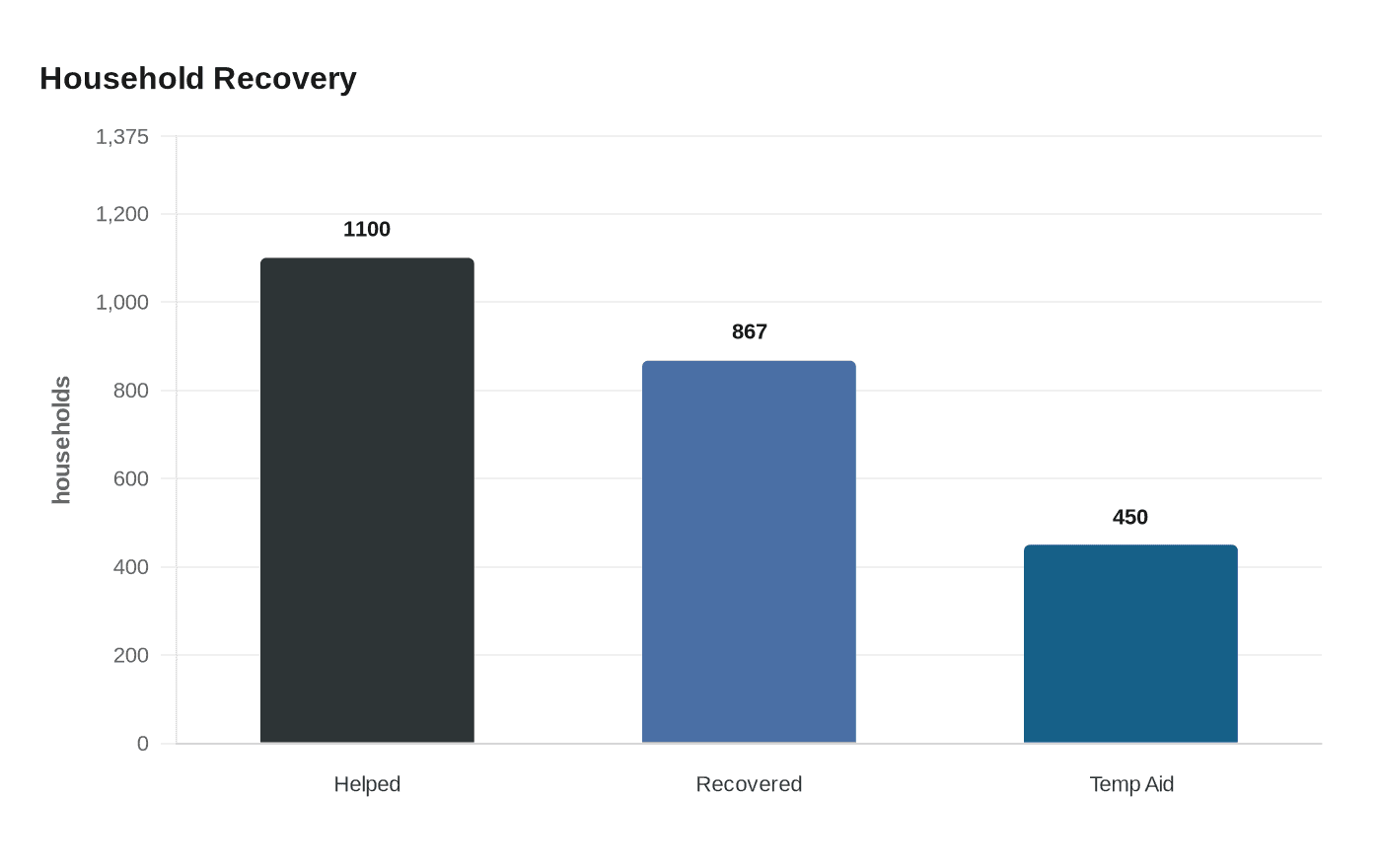
The finished state projects mark a major milestone, but they do not erase the deeper shortage that followed the fires. Oregon Capital Chronicle reported in 2023 that more than 1,100 households had already received help from the $150 million recovery program, with 867 households fully recovered and 450 receiving temporary housing assistance. Even then, state planners estimated nearly $1.9 billion in unmet needs after the fires.
OHCS said its funding contributed to the restoration of almost two-thirds of the homes destroyed in the disasters. For the McKenzie River corridor and other fire-scarred parts of Lane County, that is progress measured in roofs, walls and keys handed back. It is also a reminder that recovery, five years on, is no longer just about rebuilding what burned, but about whether the next home is affordable, permanent and tied to a community that can endure.
This article was produced by Prism’s automated news system from verified source data, official records, and press releases, then run through automated quality and moderation checks before publishing. The system is built and supervised by the people who set the standards it runs under. Read our full AI policy.
Know something we missed? Have a correction or additional information?
Submit a Tip