University of Oregon plans housing cutbacks as demand falls
Barnhart Hall will close and Riley Hall may sit empty as UO expects dorm demand to fall 9% to 10%, a shift that could ripple into Eugene rentals.

Fewer University of Oregon students want dorm rooms next year, and the first cut will land at Barnhart Hall, with Riley Hall held back as backup. For students deciding between campus housing and Eugene apartments, that means one more sign that the cost math is changing.
University Housing said it expects on-campus demand to drop about 9% to 10% for the upcoming academic year. Barnhart Hall will close for 2026-27, and Riley Hall will only be occupied if housing demand requires it. Students now living in those halls are being moved through the transition, while staff assignments are being shifted to other facilities across campus.
The housing squeeze is part of a broader financial reset at UO. University Housing has told staff it is seeking budget reductions of 8% to 10%, and some staffing changes may come through attrition and unfilled openings rather than layoffs. The university has said it wants to minimize harm to employees, but it has not guaranteed that layoffs can be avoided. Full staff impacts are expected by the end of August.
The cutbacks fit into a larger enrollment problem already pushing the university to trim spending. President Karl Scholz told faculty, staff and student employees on May 14 that UO needed to cut around $65 million to avoid an ongoing annual deficit. He later said the Fall 2026 class is expected to have 1,888 nonresident first-year students, more than 500 below the university’s decade-long average of about 2,400. With roughly 80% of the Education & General Fund budget tied to tuition, that drop has immediate consequences for the housing side of the operation as well.
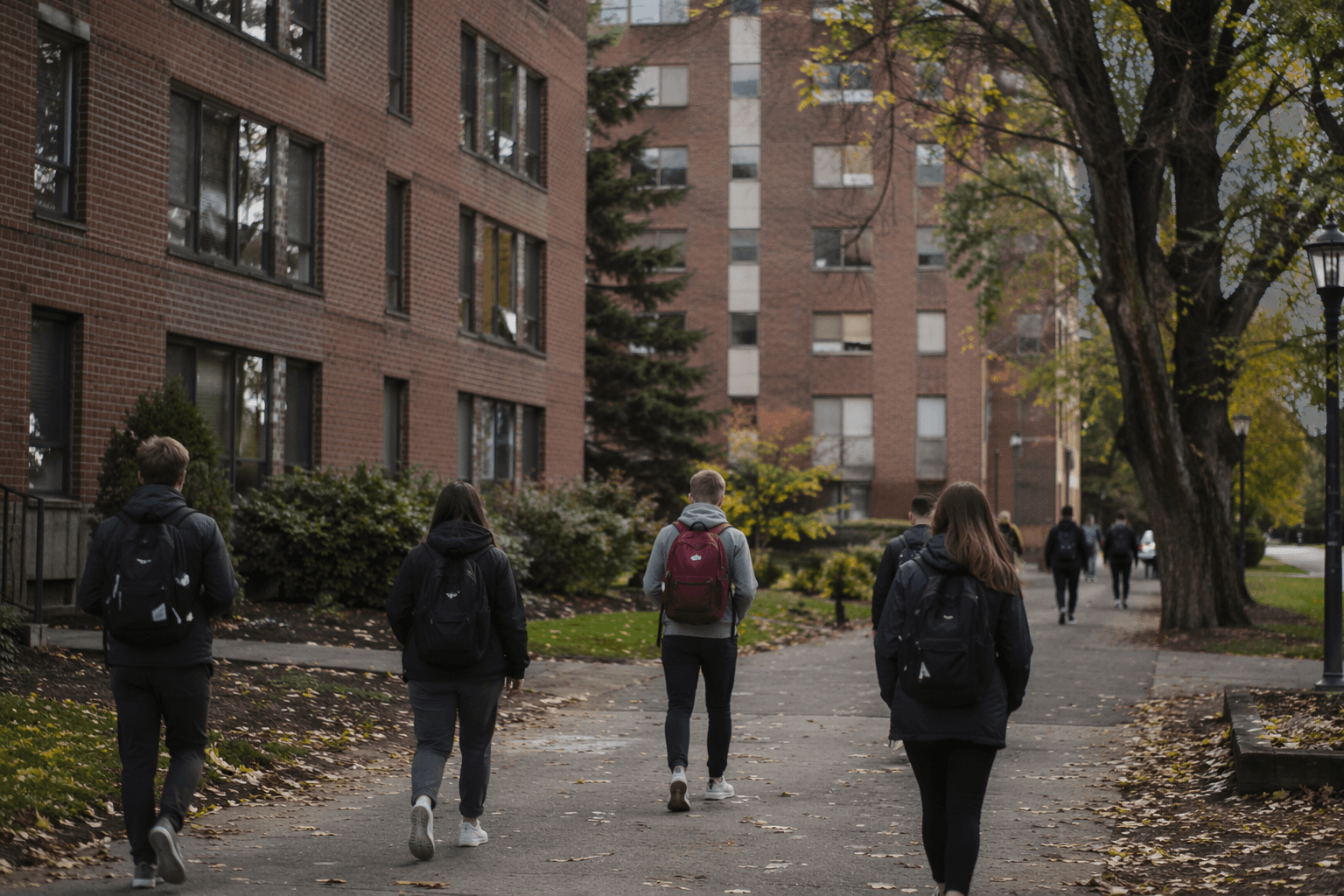
For Eugene, the impact is bigger than a dorm closing. Barnhart is not just a sleeping hall; it includes Barnhart Dining, a service center and weekend brunch, and sits near the EMX bus line on east campus. Riley is a smaller community with a courtyard and bike and bus access. Pulling back on both halls changes more than bed counts. It shifts dining, staffing and student traffic in a part of campus that had been treated as part of UO’s long-term growth.
The move is also a sharp reversal from the recent past. UO’s 2024 Next Generation Housing Development Plan laid out east campus housing, infrastructure and open space for the next 20 years and beyond, and the university was still building a seven-story, 870-bed residence hall on east campus at an estimated cost of $160 million. Before the closure decision, 2026-27 proposed housing rates still showed Barnhart down about 0.6% and Riley up about 8.4%.
One student reaction captured the tradeoff now facing many families: the closure felt sad, but an apartment can be cheaper than a dorm. That is the practical ripple effect for Lane County, as UO backs away from some residence hall space while the campus and Eugene housing market adjust to fewer students living on campus and a smaller incoming class overall.
This article was produced by Prism’s automated news system from verified source data, official records, and press releases, then run through automated quality and moderation checks before publishing. The system is built and supervised by the people who set the standards it runs under. Read our full AI policy.
Know something we missed? Have a correction or additional information?
Submit a Tip