Aguilar adopts water conservation plan to track losses, fix aging meters
Aguilar’s new plan shifts the blame from lawns to leaky pipes and bad meters, after the town delivered 43.1 million gallons in 2024.
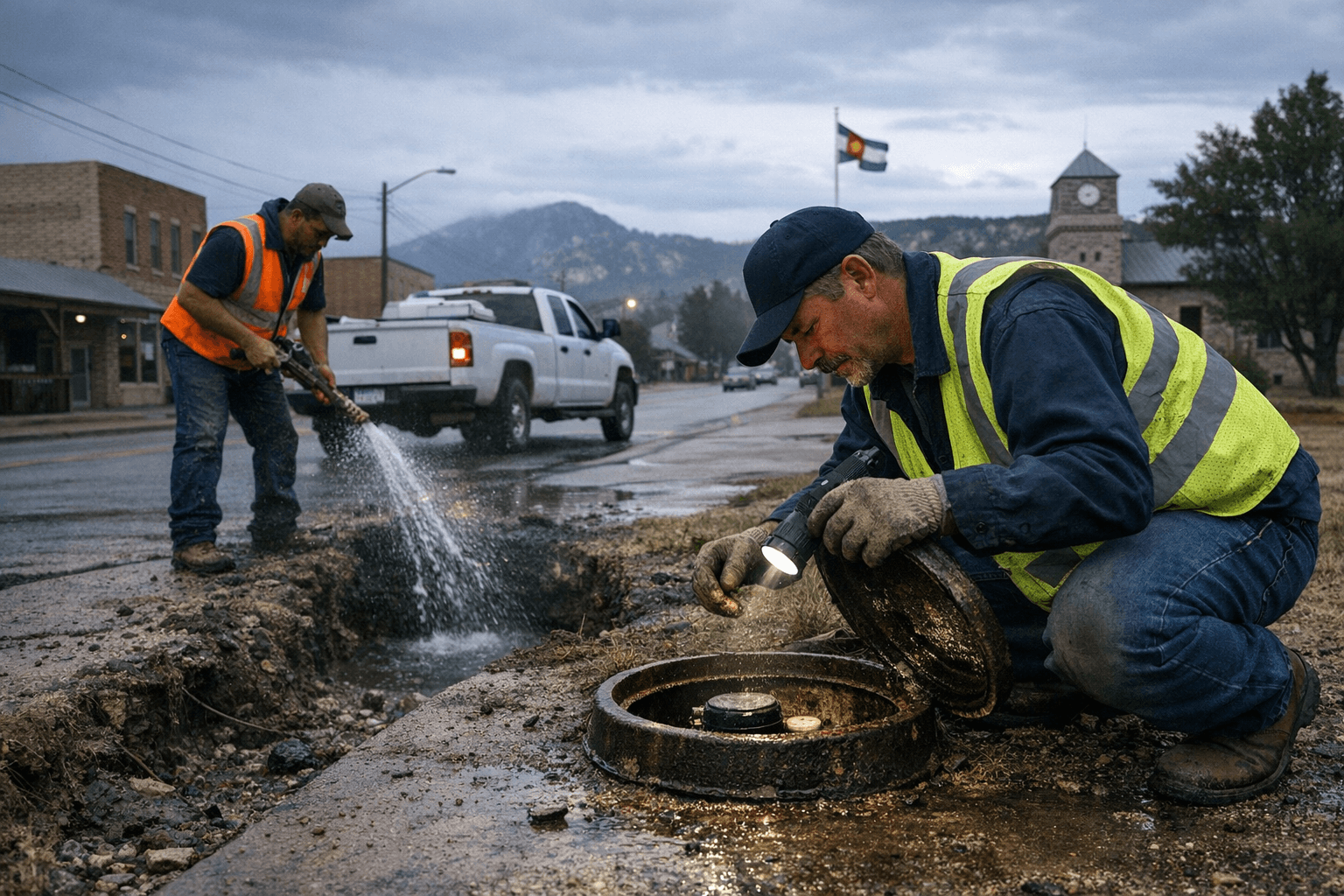
Aguilar’s water problem is not just how much residents use. The town’s new conservation plan turns the focus to the water that disappears inside the system before it ever reaches a tap.
The Town of Aguilar Board of Trustees adopted the plan on April 14 after a workshop and special meeting, setting out a strategy aimed at unaccounted-for water, leaks, aging infrastructure and metering gaps. The town’s system can move far more water than it is legally allowed to use, a mismatch that now sits at the center of planning, compliance and long-term survival.
The biggest weakness is measurement. Many of Aguilar’s water meters are outdated or inaccurate, leaving town officials without a clear read on how much water is being consumed, wasted or lost in the distribution network. That matters in a town with tight margins: Aguilar served an estimated 447 residents across 443 service connections in 2024 and delivered about 43.1 million gallons of water that year. About 78% of the town’s water use was metered, which means a substantial share of the system still was not being tracked through reliable metering.
The plan also shows where demand is concentrated. Residential single-family homes accounted for about 36% of use, while municipal meters made up more than 57%, making municipal consumption the largest category in the system. That does not solve the mystery of where the water is going, but it does show that the town’s own infrastructure and operations are a major part of the load.

The conservation plan arrives while Aguilar remains under state scrutiny. The Colorado Department of Public Health and Environment issued an enforcement order in May 2023, and a sanitary survey conducted Dec. 9, 2025, then issued Jan. 6, 2026, found three significant deficiencies and five violations. Earlier reporting also said the town was under Stage 3 water restrictions as of Nov. 18, 2025, underscoring how conservation, compliance and daily service have become tied together.
For a town founded in 1894 and counted at 456 people in the 2020 Census, the stakes are larger than a routine utility update. Aguilar’s aging pipes, failing storage tank issues and administrative strain have already made every loss more consequential. Replacing meters, finding leaks and tightening accounting could improve billing accuracy, reduce outage risk and make the town more resilient in drought, while also shaping future utility costs for customers who are already living under water restrictions.
This article was produced by Prism’s automated news system from verified source data, official records, and press releases, then run through automated quality and moderation checks before publishing. The system is built and supervised by the people who set the standards it runs under. Read our full AI policy.
Did this article answer your question?