Guide to Getting Broadband in Trinidad, Aguilar and Rural Las Animas County
Learn practical steps and local options to get or improve internet service in Trinidad, Aguilar and rural Las Animas County.
1. Fixed wireless providers
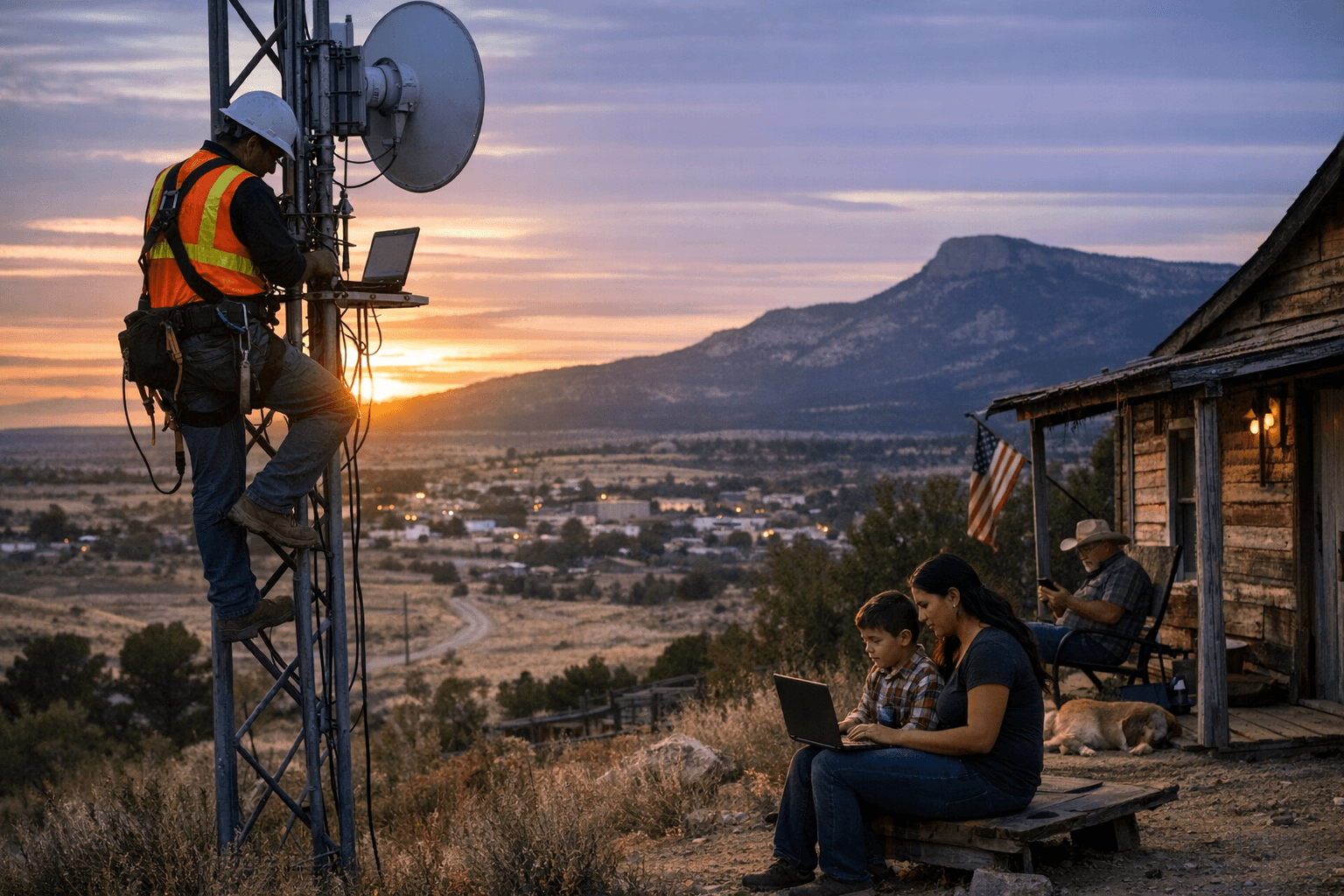
Fixed wireless ISPs are often the fastest realistic wired alternative for ranches and homes along county roads. These providers use towers and point-to-point links; performance depends heavily on line of sight to a tower and proper antenna placement. Ask each provider about rooftop mounts, pole installations, and whether repeaters or directional antennas are required for your terrain, these installation choices determine real-world speeds and reliability. Local impact: fixed wireless can bring multi-Mbps service to dispersed households without trenching fiber, improving access for telework, distance learning and emergency coordination across the county.
2. Satellite internet (geostationary and LEO)
Satellite reaches nearly every address in Las Animas County, with two main categories: older geostationary services (Viasat, HughesNet) and low-earth-orbit (LEO) networks (Starlink and other LEO providers). LEO systems generally deliver higher download/upload speeds and lower latency than geostationary satellites, which matters for video calls and remote health visits; however, availability, pricing, and weather performance vary by provider. Expect differences in data caps, hardware fees, and winter performance, ask about dish mounting, signal obstructions (trees, ridgelines), and return/ trial policies. Local impact: satellite can be a reliable stopgap or primary option where towers and wired infrastructure are absent.
3. DSL, copper and fiber options
Wired options, DSL over copper or fiber, are concentrated in Trinidad and other population centers where telephone and fiber lines already exist. Outlying properties often lack fiber infrastructure; even DSL may be limited by distance from a central office. If you are in town or along a main corridor, run an address-level check with incumbent carriers and ask about “last-mile” distance limitations and upgrade plans. Local impact: when available, wired service usually provides the most consistent speeds for schools, businesses and public institutions; expanding it requires coordinated investment and local permitting.
4. Mobile hotspots and cellular broadband
Major cellular carriers (AT&T, Verizon, T‑Mobile) offer 4G/5G-based home gateways and portable hotspots that can act as primary home internet where signal is adequate. Check cell signal strength at your exact property, indoors and outdoors, and consider a fixed wireless gateway rather than a phone hotspot for steadier performance and Ethernet ports. If signal is weak, a carrier-approved signal booster or a directional external antenna aimed at a nearby tower can make cellular home internet viable. Local impact: cellular options provide fast deployment and mobility, useful for small businesses, seasonal residents, and emergency backup during outages.
5. How to evaluate which option fits you
Make decisions at the address level by comparing multiple providers and real-world performance metrics. Run availability checks on provider websites and state or national broadband maps, but verify with neighbors and community groups about actual speeds and reliability rather than marketing claims. Match technology to need: prioritize wired or LEO satellite for latency-sensitive uses (telehealth, online classes, videoconferencing) and weigh data caps or throttling for heavy-streaming households. Budget for equipment and professional installation where needed; rural installs often require external antenna mounts or trenching for cabling.
6. Federal, state and local programs that can help
Subsidy programs and grants can change eligibility and details, so confirm current rules with providers and state broadband offices. Programs such as the FCC’s Affordable Connectivity Program can lower monthly costs for qualifying households, and federal/state broadband grants or local cooperatives may subsidize buildouts for underserved areas. Contact county economic development or municipal offices about any local matching funds, co-op opportunities, or planned public-private projects that could affect deployment timing. Local impact: subsidy programs reduce cost barriers for families and small businesses, and grant-funded projects can close service gaps on county roads and in hamlets.
7. Practical steps residents should follow
1. Check coverage with at least three providers (wired, fixed wireless, satellite, cellular) and request written speed estimates for your address.
2. Confirm real-world speeds via neighbors, Facebook groups or local forums; advertised speeds are not guarantees.
3. If wired or fiber isn’t available, compare fixed wireless and LEO satellite for cost, latency, data caps and installation requirements, and ask about trial or return policies.
4. For poor cellular signals, explore directional antennas or carrier boosters and ask providers for a site survey. Businesses should also contact county economic development about grants or cooperative builds.
8. Where to go locally for help and public access
County offices, municipal halls and community action agencies can point you to local programs or upcoming enrollment events for subsidy programs. Libraries, starting with the Carnegie Public Library in Trinidad, offer computer access, printing and public Wi‑Fi during hours, and can be a first stop for residents without home service. Regional workforce centers and community centers often keep lists of providers, host sign-up events, and can help with paperwork for subsidy programs. Provider customer support teams can arrange a site survey if you are unsure about line-of-sight or signal strength.
9. Notes, caveats and seasonal considerations
Availability, pricing and contract terms change frequently, always confirm current offers, installation costs, contract length and any data caps before signing. Weather and winter conditions can reduce performance for satellite and some fixed wireless links; ask providers about past winter reliability in Las Animas County. Keep documentation of installation agreements, and retain contacts for local installers or tower operators if follow-up adjustments are needed.
Practical closing wisdom Start by surveying your exact address and talking to neighbors, local experience is the best predictor of day-to-day performance, and be persistent with providers about site surveys and installation notes. If you represent a business or a cluster of unserved homes, organize a formal request through the county or a co-op to attract grant funding or provider investment; collective demand moves towers and fiber faster than single calls. Keep receipts, document speeds, and use local public access points while you evaluate options, getting connected in Las Animas County is often about matching terrain, budget and patience.
This article was produced by Prism’s automated news system from verified source data, official records, and press releases, then run through automated quality and moderation checks before publishing. The system is built and supervised by the people who set the standards it runs under. Read our full AI policy.
Did this article answer your question?