Las Animas County Courthouse blends Beaux-Arts history with daily justice
The courthouse still anchors Trinidad’s daily civic life, from court dates to records and meetings. Its 1912 Beaux-Arts design also makes it one of Las Animas County’s defining landmarks.
The Las Animas County Courthouse is where county government becomes real for Trinidad residents, not just symbolic. People come here for court business, and the building also stands as one of the clearest reminders of how much civic ambition was packed into the county seat more than a century ago.
A county building that still handles everyday business
At 200 E. 1st St., Room 304 in Trinidad, the courthouse remains part of Colorado’s Third Judicial District trial-court system and continues to serve as a working public building. Its weekday hours run from 8:00 a.m. to 12:00 p.m. and again from 1:00 p.m. to 5:00 p.m., with civil return dates held Monday through Friday at 10:30 a.m. The courthouse does not accept fax filings, a small but revealing detail that shows how firmly this older institution still depends on direct public contact.
That practical role gives the building a meaning far beyond its exterior. For county residents, the courthouse is where legal deadlines, hearings, and day-to-day court business meet the routines of local life. It is also one of the places where the county’s public identity is most visible, because the same address that houses the courts also represents the authority of Las Animas County itself.
Why the building looks the way it does
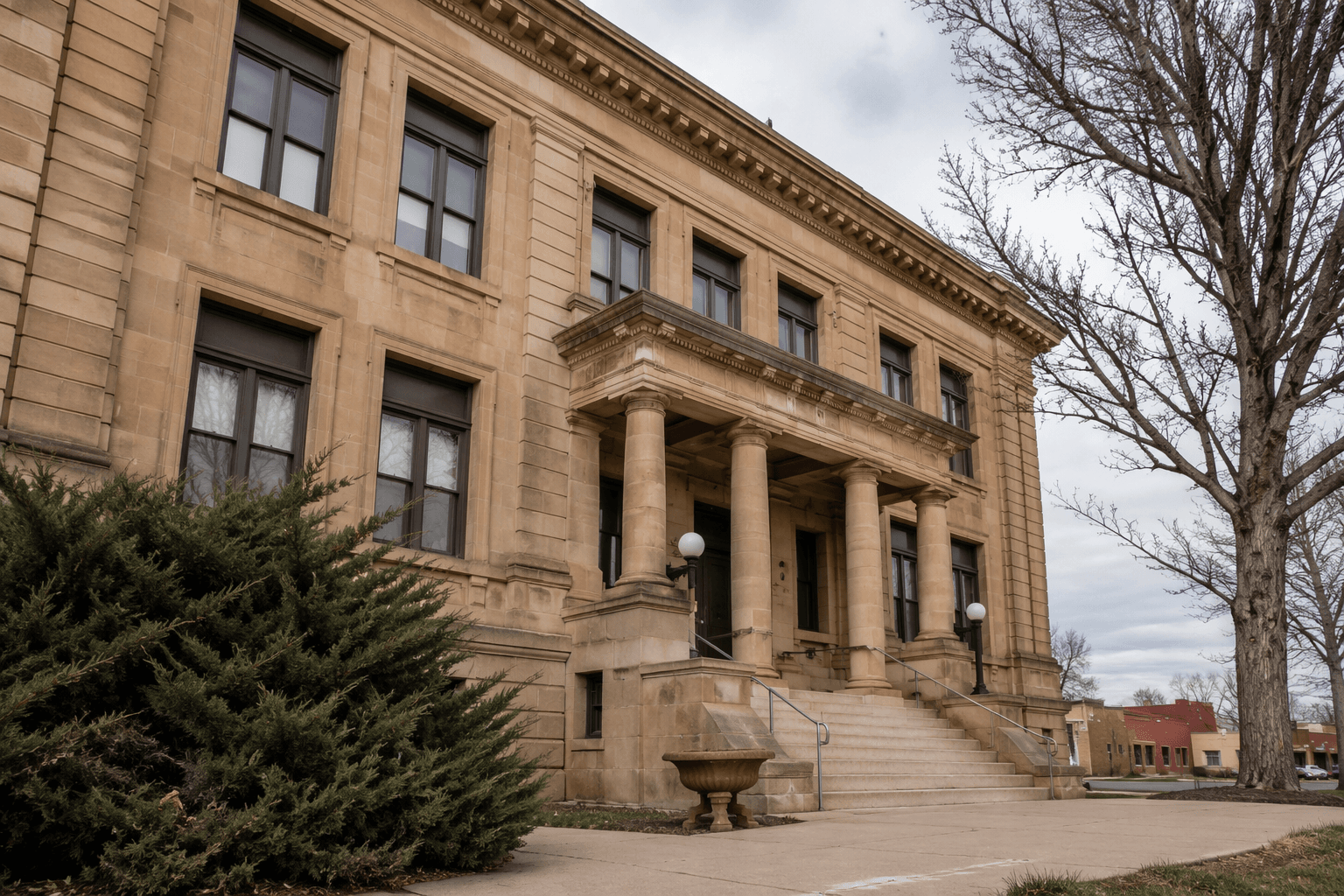
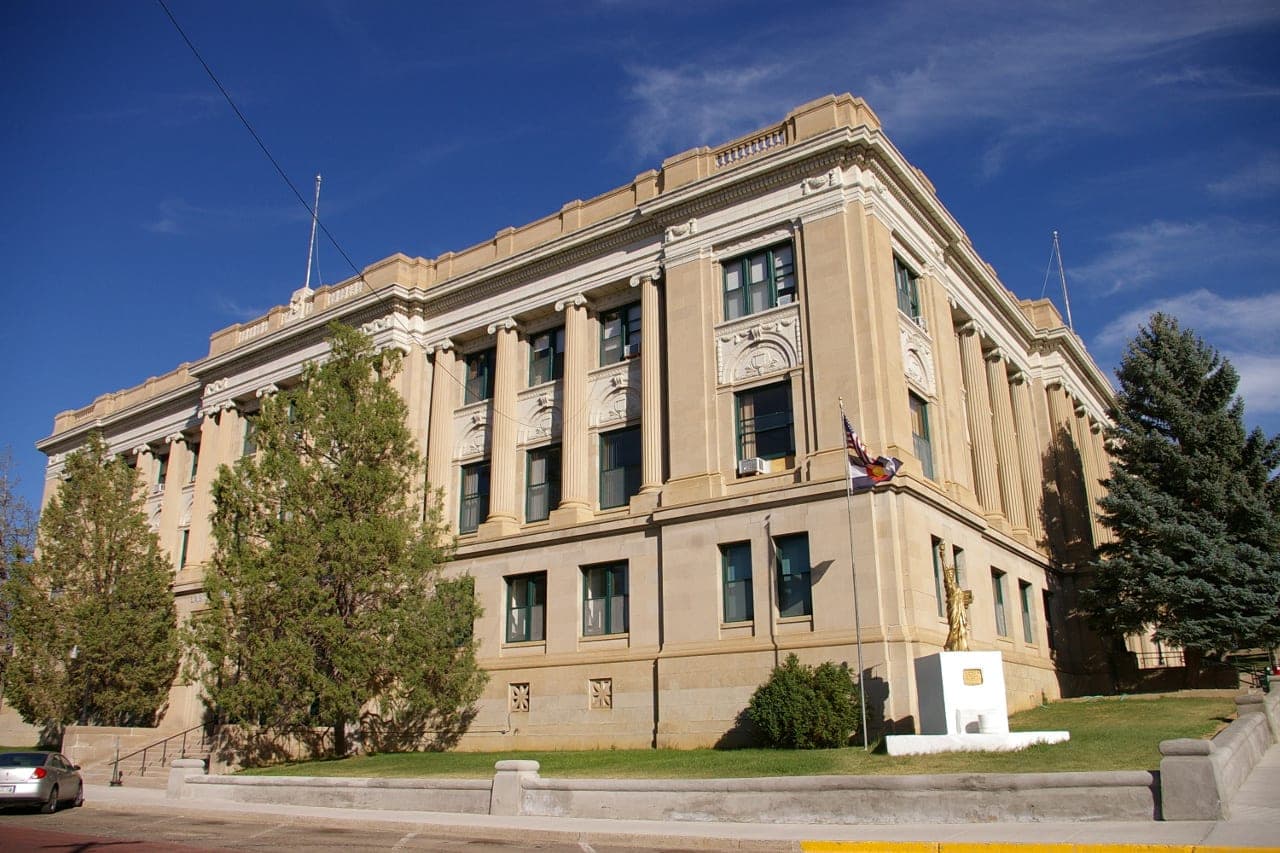
The courthouse was built in 1912 as a Beaux-Arts monument, and its materials and form make that style immediately legible. SAH Archipedia credits the design to Isaac H. Rapp, William M. Rapp, and A. C. Hendrickson, and describes the structure as faced with Bedford, Indiana, limestone and creamy terracotta trim. It occupies a full-block site, with two-story Ionic columns dominating the three-story facade and a rooftop balustrade completing the composition.
The site itself matters as much as the ornament. Because the courthouse sits on hilly ground, its full basement emerges along the north side, where the main entrance lies, giving the building a more layered profile than a flat downtown site would allow. That combination of monumental frontage and practical adaptation to the slope is part of what makes the courthouse so distinctive in Trinidad’s street grid.
The county seat in a county that spans a great deal of ground
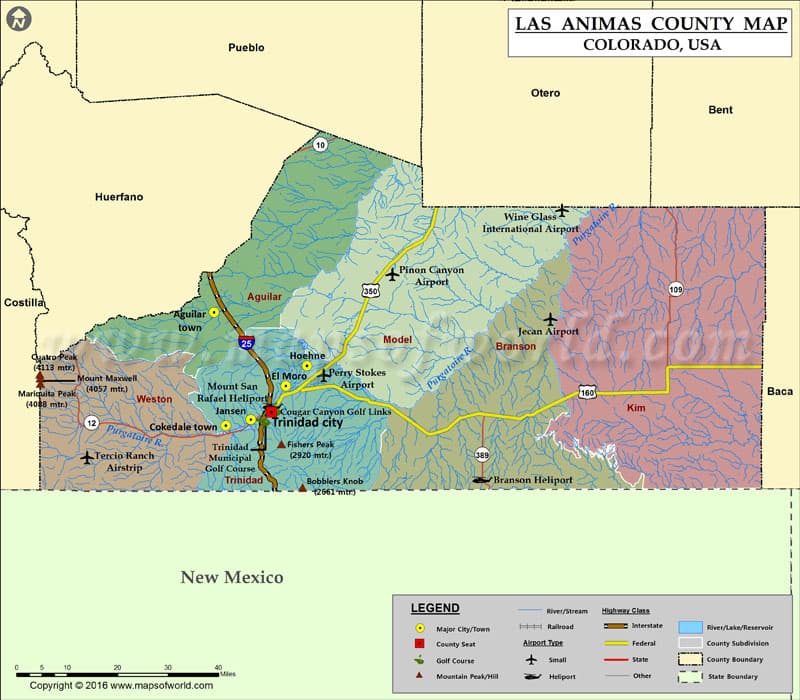
Las Animas County was formed on February 9, 1866, and Trinidad has served as the county seat since that same year. The county is the largest in Colorado, covering 4,775 square miles, which gives the courthouse a reach that extends well beyond downtown Trinidad. A single courthouse has to serve a county that is physically huge, geographically varied, and tied together by one central seat of government.
That scale helps explain why the building matters as more than an architectural showpiece. In a county this large, the courthouse is one of the places where residents from across the region have to engage with the same set of public institutions. It is the address tied to justice, records, and the formal side of civic life, which is why its daily function carries so much weight.
Inside the building and around the block
Visit Trinidad describes the interior as featuring murals, craftsman ceilings, ironwork, and marble flooring. Those details add texture to a building that might otherwise be known only for its facade, and they help explain why so many people respond to the courthouse as both a working office and a landmark. The interior still reflects the kind of craftsmanship that was expected of a major county building in the early 20th century.
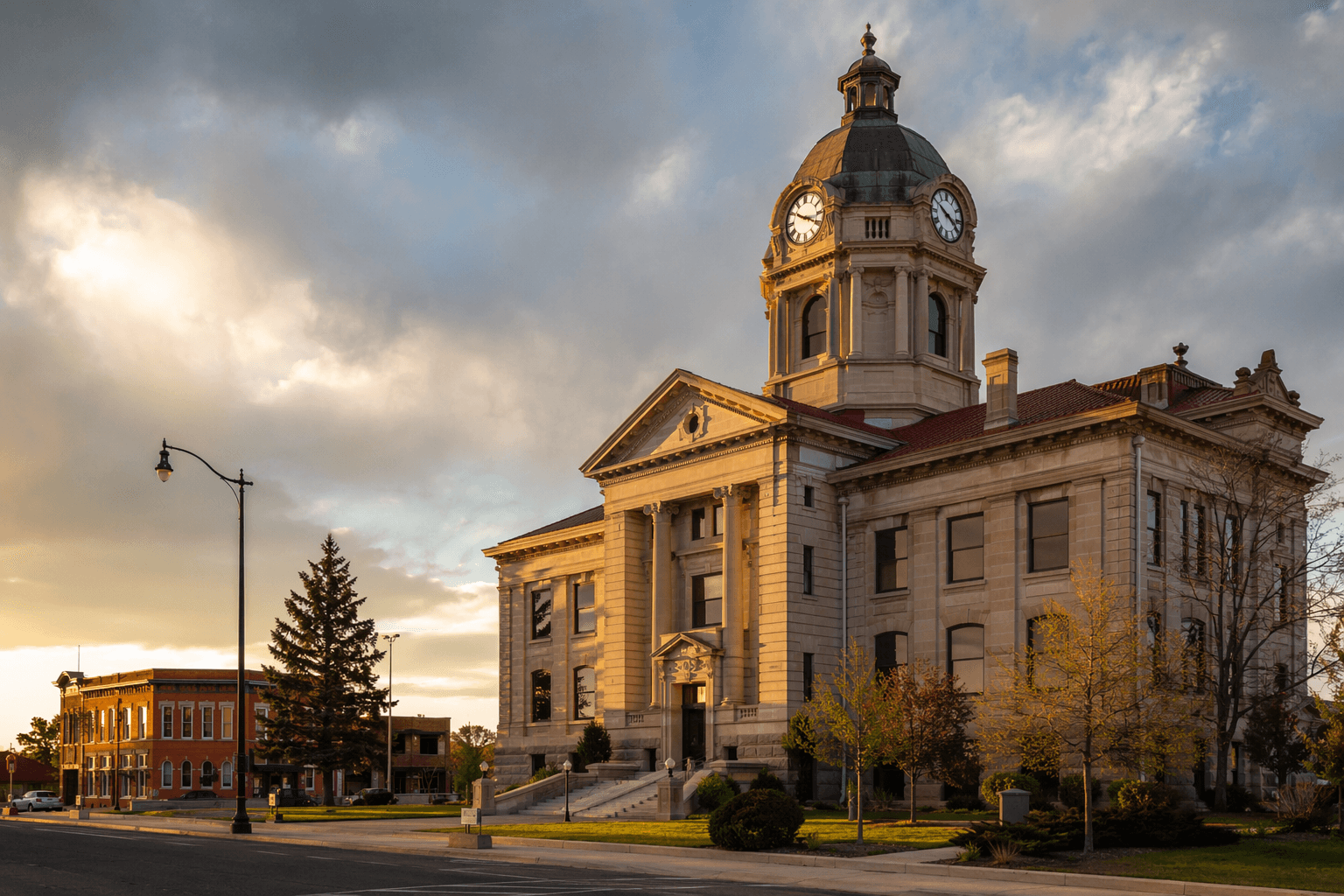
That sense of pride extends to the building’s place in Trinidad’s downtown landscape. Visit Trinidad says many people, including architect I.H. Rapp himself, considered the courthouse his masterpiece. Seen that way, the building belongs to the broader architectural identity of Trinidad, where the Rapp family left a strong mark on the city’s public face and helped shape how the county seat still reads today.
How to use the courthouse without losing time
A visit is straightforward if you know the basics. The courthouse is open on weekdays during regular business hours, and the location page provides a courthouse phone number of 719-846-3316 and a fax number of 719-497-8267, even though the combined court does not accept fax filings. Civil return dates are set for 10:30 a.m. Monday through Friday, so anyone handling court business should plan around that schedule rather than assuming a one-size-fits-all visit.
The building’s routine is part of its value. It is not preserved as a dead monument, but used every week by people dealing with matters that affect property, families, deadlines, and local government records. That steady use is what keeps the courthouse central to county life, even as its Beaux-Arts front still gives Trinidad one of its most recognizable civic landmarks.
A landmark tied to a harder local history
The courthouse also sits in a county marked by deeper historical conflict. Trinidad and Las Animas County are part of a region shaped by the 1913 to 1914 coalfield era and the Ludlow Massacre, events that left a lasting imprint on southern Colorado. Against that background, the courthouse carries another layer of meaning: it represents order, law, and public authority in a place where the past includes struggle over labor, power, and community control.
That is why the building continues to matter in two ways at once. It is a Beaux-Arts showpiece made of Bedford limestone and terracotta, and it is also the place where Las Animas County residents still encounter the machinery of local government. In Trinidad, those functions are inseparable, and the courthouse remains the county’s most visible meeting point between history and daily justice.
This article was produced by Prism’s automated news system from verified source data, official records, and press releases, then run through automated quality and moderation checks before publishing. The system is built and supervised by the people who set the standards it runs under. Read our full AI policy.
Did this article answer your question?