McDonald Brothers Ranch shows how Las Animas County land was built
A 580-acre homestead grew into a 6,700-acre cattle ranch near Weston, showing how one Las Animas County family kept land together across generations.
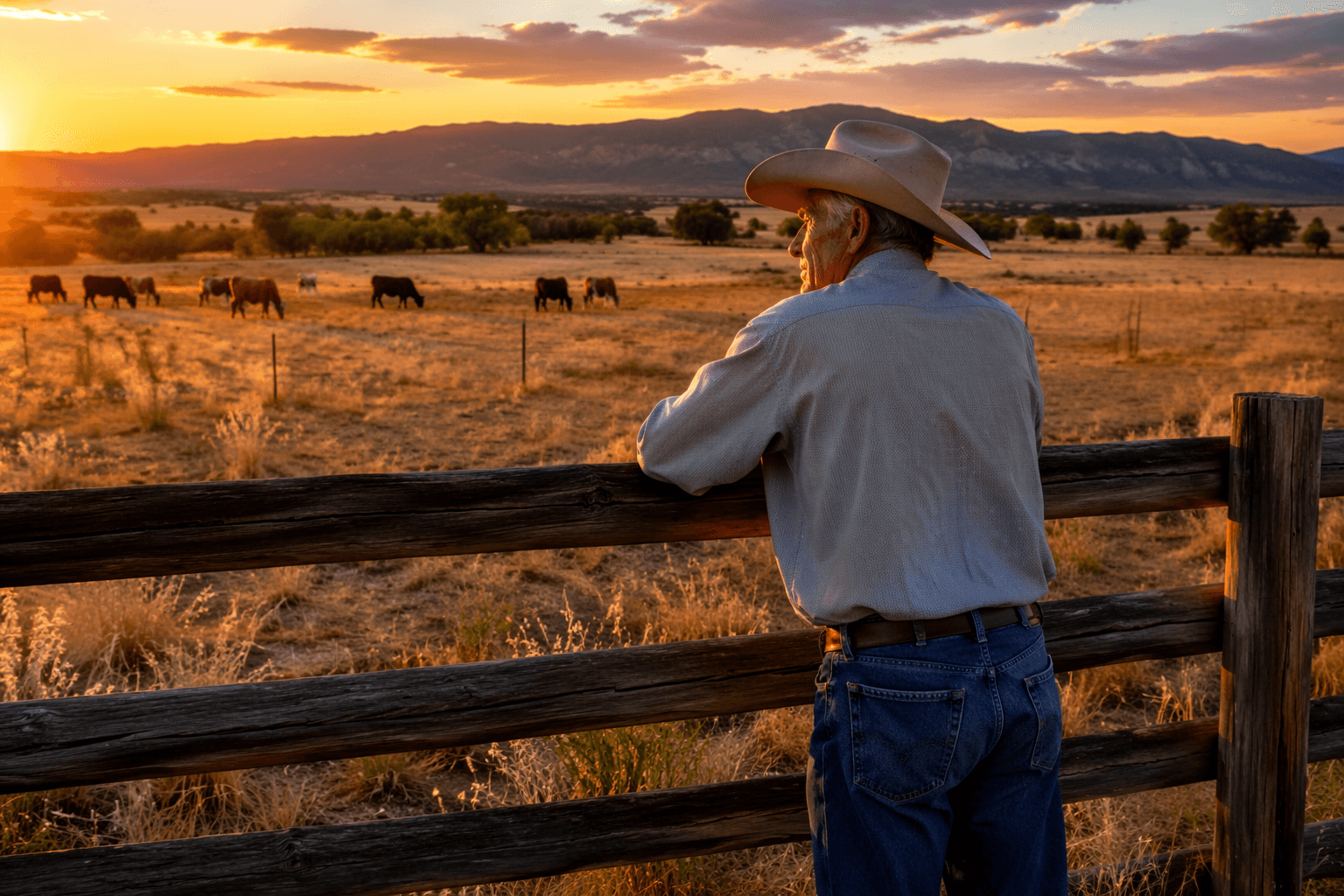
The McDonald Brothers Ranch near Weston shows how Las Animas County land was built one parcel at a time, then protected long enough to stay a working cattle operation. What began as a single homestead in 1891 now stretches across about 6,700 acres and remains in family hands, which makes it a clear case study in how ranches survive when land, weather, and succession all pull in different directions.
How the ranch was assembled
Filmore McDonald first homesteaded 580 acres in Las Animas County near Weston in May 1891. Within ten years, James McDonald, William McDonald, and Filmore McDonald had each homesteaded and received patents on adjoining parcels, building a ranch footprint that grew from separate claims into one larger operation.
That history matters because it shows how many southern Colorado ranches were actually made. The land was not assembled in one clean transaction. It came together through homesteading, federal patents, adjoining sections, and later purchases that eventually expanded the holding to around 6,700 acres. In a county where wide-open space still defines the economy, that slow accumulation is the difference between a family business and a short-lived holding.
Today, the McDonald Brothers Ranch remains a cattle operation. The land is owned by nine descendants of James McDonald, which makes the ranch less a museum piece than a living asset that still has to pay its way and stay organized across generations.
Why the Centennial Farms designation matters
The ranch is part of Colorado’s Centennial Farms & Ranches program, created in 1986 by Governor Richard D. Lamm, the Colorado Historical Society, and the Colorado Department of Agriculture. History Colorado says the program honors family farms and ranches that have endured growth, changing farming methods, drought, and economic conditions.
That framework fits the McDonald ranch because the story is not only about longevity. It is about what it takes to keep land from breaking apart when each generation inherits a different share, a different set of obligations, and a different market. The Centennial Farms program exists because family agriculture does not survive on sentiment alone. It survives when families make repeated decisions to keep acreage intact, keep it producing, and keep it in the family even when selling part of it might be the easier short-term answer.
In practical terms, that means the ranch’s value is measured in more than cattle. The acreage itself is the business base, and the decision to hold it together is a business strategy as much as a family choice.
Why Las Animas County is the right place to understand the pressure
Las Animas County is Colorado’s largest county, covering about 4,775 square miles in the southern end of the state. The U.S. Census Bureau lists its 2020 population at 14,555, which means the county has a lot of land and relatively few people to occupy it. Weston is even smaller, with a 2020 population of 53.
Those numbers help explain why ranching remains such a visible part of the local economy. In a place this large and sparsely populated, land is not just scenery. It is the main operating asset, the main inheritance, and often the main reason a family stays tied to the county at all. A 6,700-acre ranch near Weston stands out because it fits the scale of the place while also revealing how much discipline it takes to keep that scale intact.
The county’s size also makes fragmentation costly. Once acreage is broken up, the ranch loses the very features that make it viable: contiguous pasture, room for cattle, and the ability to manage the land as one enterprise rather than a patchwork of smaller pieces.
What succession looks like on the ground
The McDonald ranch’s ownership structure points to the central challenge of multigenerational ranching: succession. Colorado State University Extension provides estate and succession-planning resources for agriculture and business management because farm and ranch families have to decide how land will move from one generation to the next without destroying the operation.
On a ranch like this one, succession is not an abstract legal topic. It shapes who controls the cattle business, who makes land decisions, and how family members balance ownership with day-to-day work. The fact that nine descendants of James McDonald own the ranch today suggests a system that has managed to keep the property together instead of dividing it into smaller, less workable pieces.
That kind of continuity usually requires a combination of planning and restraint. Families have to decide whether the land will stay focused on cattle, whether any acreage will be sold to cover expenses, and how to preserve the ranch’s productive core when ownership is spread across multiple heirs. Colorado State University Extension’s succession resources reflect how common those decisions are across agriculture, but the McDonald Brothers Ranch gives them a local face.
More than a cattle ranch
History Colorado notes that multiple generations still use the ranch for fishing, hunting, hiking, camping, and recreation. That gives the property a second life beyond livestock production. It is both a working business and a place where family members still gather around the same land that began as a homestead in 1891.
That dual role is part of why the ranch endures. A property with deep family use can carry a meaning that reaches beyond annual cattle revenue, but it still has to function as a business if it is going to remain intact. The McDonald Brothers Ranch shows how that balance can work in Las Animas County: land assembled slowly, held across generations, and kept productive in a county where open space is the economy and fragmentation is the risk.
This article was produced by Prism’s automated news system from verified source data, official records, and press releases, then run through automated quality and moderation checks before publishing. The system is built and supervised by the people who set the standards it runs under. Read our full AI policy.
Did this article answer your question?