Picketwire Canyonlands Offers North America's Largest Dinosaur Tracksite to Visitors
1,900 dinosaur footprints pressed into Purgatoire River bedrock 150 million years ago make Picketwire the largest tracksite in North America. Here's how to reach them.

The 1,900 individual footprints along the Purgatoire River make Picketwire Canyonlands the largest documented dinosaur tracksite in North America, yet the most common mistake rangers at the Comanche National Grassland office in La Junta see is simple: people show up in the middle of a summer afternoon with a water bottle and running shoes.
The canyonlands sit within the Comanche National Grassland south of La Junta. To reach the trailhead, drive south from La Junta on Colorado Highway 109 for 13 miles, turn right (west) on County Road 802, also called Vogel Canyon Road, for 8 miles, then left (south) on County Road 25 for 6 more miles to the Corral Parking Area. The last 3-mile push to the Withers Canyon Trailhead on Forest Service Road 500A requires a high-clearance, four-wheel-drive vehicle. Drivers without one should park at the Corral Area and add those 6 miles to their round-trip total.
The standard hike from Withers Canyon Trailhead covers 11.2 miles round trip with a 250-foot descent into the canyon and a river crossing at the tracksite itself. Bring water shoes or old sneakers for the crossing. The canyon runs at least 10 degrees warmer than the surrounding plains, and summer temperatures can reach 90 to 120 degrees Fahrenheit. There is no potable water anywhere in the canyon. The U.S. Forest Service requires visitors to be in excellent physical condition for this trail and recommends leaving early and carrying at least one gallon of water per person.
For families or anyone who wants to skip the hike, the U.S. Forest Service guided auto tour is the only authorized motorized access into the canyonlands. Tours run Saturdays during spring and fall, 8 a.m. to 4 p.m., departing from the Forest Service office at 1420 East 3rd St. in La Junta. Tickets are $15 per adult (ages 13 and up) and $7.50 per child. Reserve through Recreation.gov; tours fill quickly.
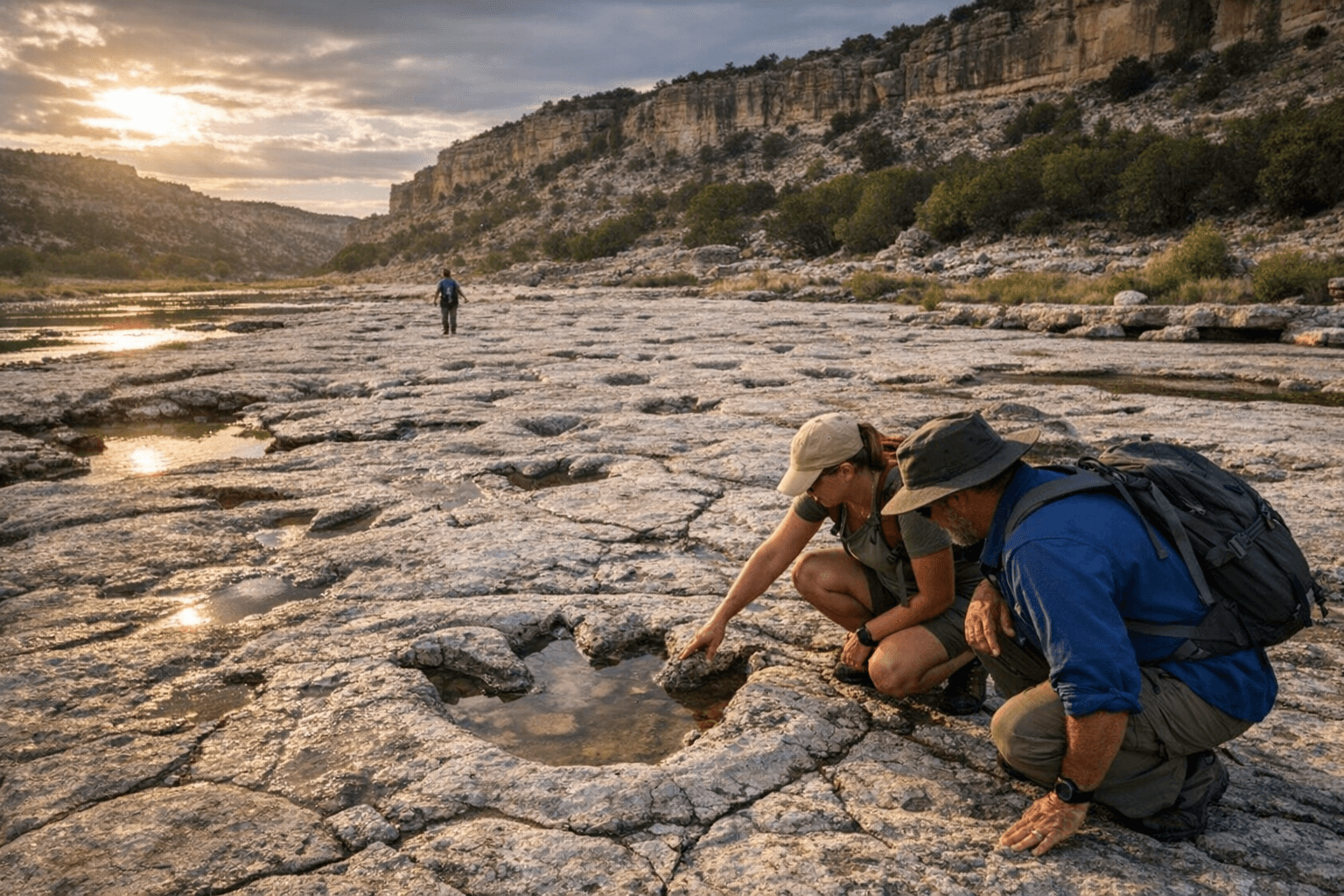
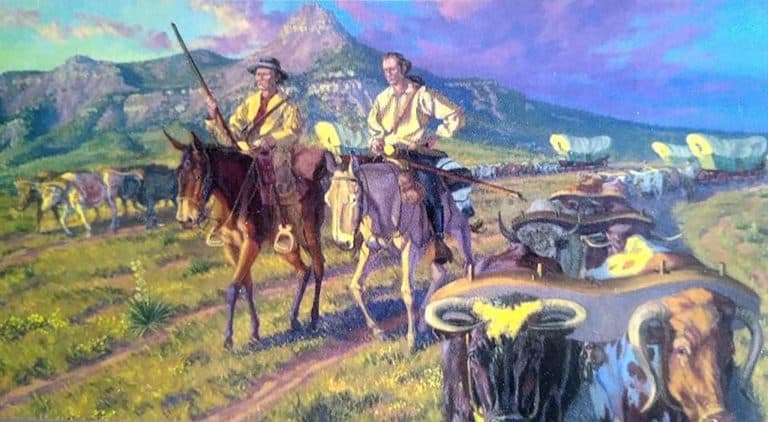
Either way, the 130 separate trackways preserve prints from Apatosaurus and Allosaurus, laid into Jurassic mud more than 150 million years ago. The parallel and overlapping arrangement of trackways has helped paleontologists study herd movement patterns, and the Sternberg Museum of Natural History has supported ongoing excavation of a sauropod skeleton in the canyon. Beyond the tracksite, the Dolores Mission and Cemetery ruins stand on land donated by early settler Damacio Lopez, and the Rourke Ranch tells a different kind of story: Eugene Rourke's original 160-acre homestead grew into a 50,000-acre cattle operation before the family held it into the 1970s.
Overnight camping is not permitted. Individual motor vehicles may not enter the canyon outside of authorized tours. Removing or disturbing footprints, fossils, or artifacts is a federal offense, and the Forest Service asks that visitors report any newly exposed or fragile features to rangers. Current tour dates, access conditions, and reservation availability are posted at the U.S. Forest Service Picket Wire Canyonlands page and Recreation.gov.
Know something we missed? Have a correction or additional information?
Submit a Tip