Flash flood warning extended for Lewis and Clark County burn scar
The Horse Gulch burn scar was under another flash flood warning tonight, with 27 people in the zone and repeated alerts since July 17.
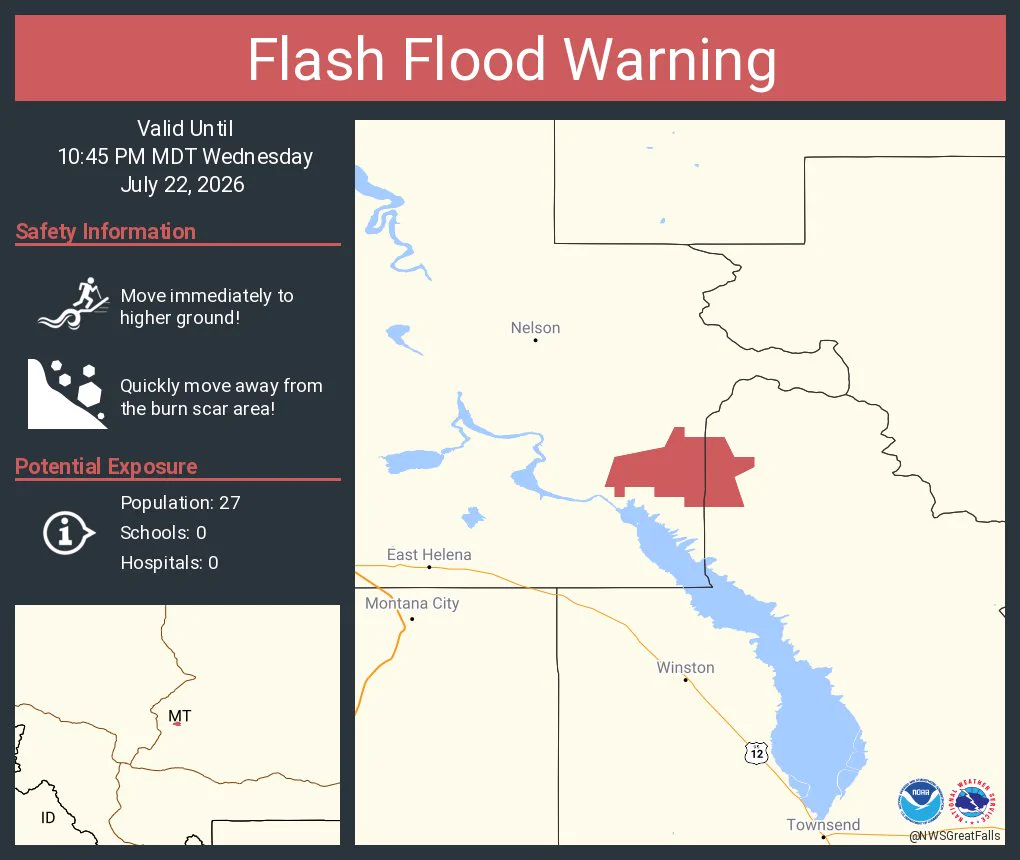
The National Weather Service extended a flash flood warning for Lewis and Clark County and Broadwater County until 10:45 p.m. MDT Thursday, keeping the Horse Gulch burn scar in northwestern Broadwater County and southeastern Lewis and Clark County under urgent notice. The warning told people to quickly move away from the burn scar area and move immediately to higher ground.
A graphic tied to the alert put 27 people inside the warning area, with zero schools and zero hospitals. That narrow footprint still carried a serious risk because the same burn scar had already been flagged again and again as rain moved across southwest Montana.
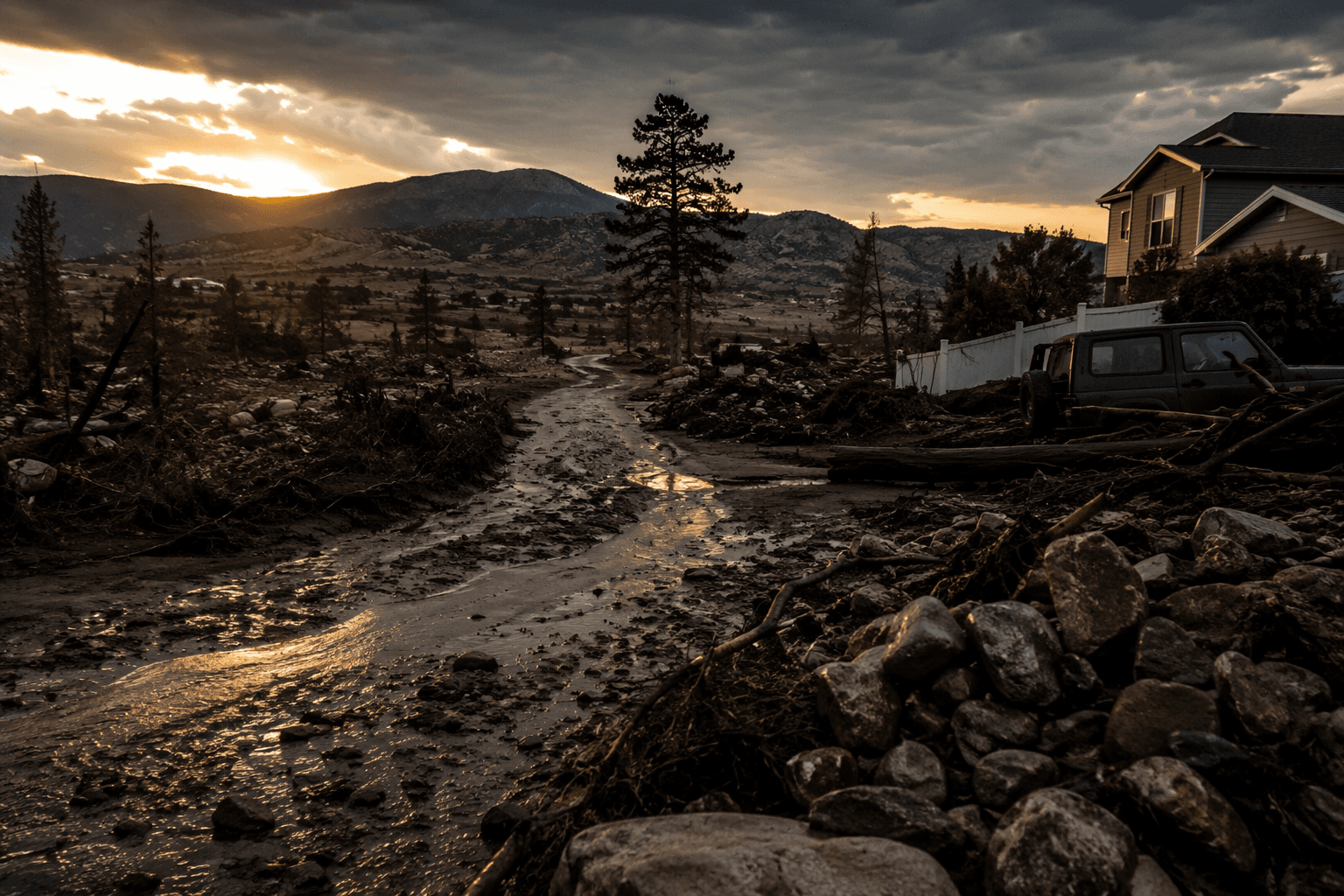
The warning came alongside a flash flood watch for the Horse Gulch burn scar that covered portions of southeast Lewis and Clark County and northwest Meagher County through late evening. That watch warned that flash flooding and debris flows caused by excessive rainfall were possible, a combination that turns steep, fire-scarred ground into fast runoff when storms stall over the same drainage.
NWS Billings said the broader weather pattern included a moist and unstable air mass and slow-moving thunderstorms capable of producing very heavy rain, which raised the flash flood risk Wednesday afternoon and evening. The repeated alerts on the Horse Gulch burn scar, with flash flood warnings already issued on July 17, July 18 and July 22, showed the same stretch of ground returning to the warning list over several days.
For Lewis and Clark County, that pattern matters as much as the rainfall itself. The burn scar has become a recurring weak point in the county’s flood response, where each new storm tests how well local and state agencies can keep residents, roads and travel corridors out of harm’s way. Montana Department of Transportation also maintained flood-warning and alerts-and-closures pages as the state tracked road conditions, while travel on unpaved roads in southwest Montana could be difficult during the storm period.
This article was produced by Prism’s automated news system from verified source data, official records, and press releases, then run through automated quality and moderation checks before publishing. The system is built and supervised by the people who set the standards it runs under. Read our full AI policy.
Did this article answer your question?