Gates of the Mountains blends Lewis and Clark history, trail access
Lewis called these cliffs the Gates of the Mountains, and a two-hour boat tour still turns them into one of Helena’s easiest summer day trips.

A two-hour boat ride through Gates of the Mountains still delivers one of Lewis and Clark County’s most dependable summer outings: a close look at the Missouri River canyon and an easy drive from Helena. The site remains a High Potential Historic Site on the Lewis and Clark National Historic Trail, and today’s boat tour leaves from a marina just 3 miles off Interstate 15.
What Lewis saw here
Lewis reached this stretch of river on July 19, 1805, and wrote that the cliffs rose about 1,200 feet from the water. In his journal, he gave the place the name that still sticks, “Gates of the Mountains,” after the canyon walls seemed to swing open and shut around the Missouri. The landmark sits in the Helena-Lewis and Clark National Forest, and Indigenous people lived in and traveled through this country long before the expedition arrived.
What changed after Holter Dam
The canyon did not stay frozen in 1805. Holter Dam, completed in 1918, measured 104 feet high and 1,364 feet long, and the reservoir it created reached 24 miles into the canyon through the Gates of the Mountains. The dam also raised the water level and reduced the current, changing how the Missouri moves through the corridor while leaving the limestone walls and narrow passage intact.
That hydroelectric project tied the canyon to Montana’s modern power era, with the work moving through the United Missouri River Power Company and later Montana Power Company under the direction of Samuel Hauser.
The boat tour is the simplest way to see it
For most people, the best way to experience Gates of the Mountains is still by boat. Today’s tours run aboard the Canyon Voyager or the Sacajawea, with open-air seating and a cover for rain, and the 2026 season runs from May 23 through Sept. 13. Admission is listed at $20 for adults, $15 for seniors, $10 for children ages 3 to 17, $15 for active military, and free for children 2 and under. Same-day tickets are sold in person only, and dogs are not allowed on the tours.
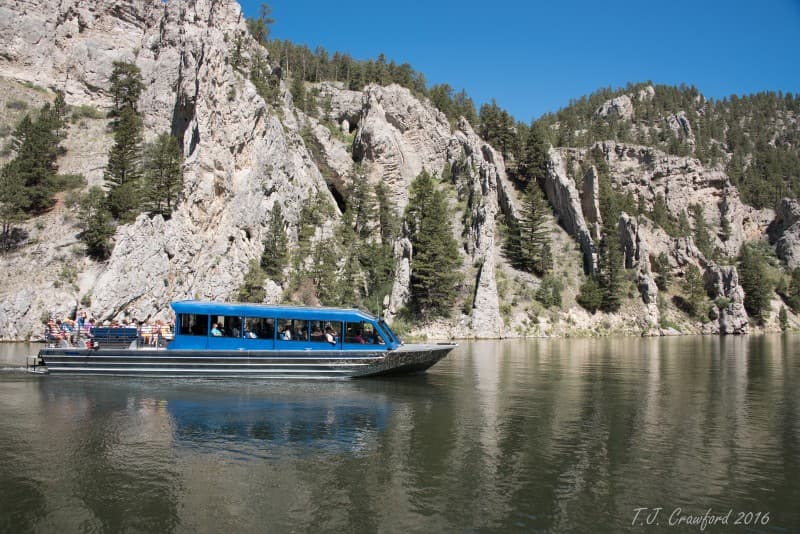
The marina sits about 20 miles north of Helena on the south end of Holter Lake, at Interstate 15 exit 209. The operation also includes 150 private docks and a public boat ramp, and Gates of the Mountains lists roughly 30,000 visitors a year coming through the site.
Trail access, picnic stops and camping
The Gates of the Mountains Wilderness covers 28,465 acres in the Big Belt Mountains and offers about 53 miles of trails. Several access points reach the trail network, most of them in the Beaver Creek drainage above and below the old town of Nelson, and some lower, drier routes make better spring trips when higher country is still holding snow. Water can be scarce in the wilderness, so hikers need a full bottle and a map.
The U.S. Forest Service maintains a Gates of the Mountains Wilderness & Recreation Area map, which is useful because the area is more than a single trailhead. Hunters Gulch Trailhead provides access to the wilderness from Forest Service Road 4140, while Coulter Campground offers five boat-in campsites on Upper Holter Lake and sits about a mile from the Meriwether Picnic Site, a day-use area with wilderness access and boat docks.

For an overnight base, Holter Lake Campground gives the most complete public-camping setup close to the canyon. It sits about 45 miles north of Helena along the Missouri River, has 52 reservation-only sites including 9 tent-only sites, and includes a concrete boat launch, courtesy dock, potable water, dock slips and no hookups.
Why the place still draws crowds
Gates of the Mountains has been running boat tours since 1886, and the operation still markets the site as both a history stop and a wildlife corridor. Its captains are U.S. Coast Guard licensed, its vessels are inspected annually, and its crews train in first aid and CPR.
This article was produced by Prism’s automated news system from verified source data, official records, and press releases, then run through automated quality and moderation checks before publishing. The system is built and supervised by the people who set the standards it runs under. Read our full AI policy.
Did this article answer your question?