Helena survey finds Montanans increasingly get news from social media
Social media is now how 71% of Montanans say they get news, even as 84% still say local news matters to their family.

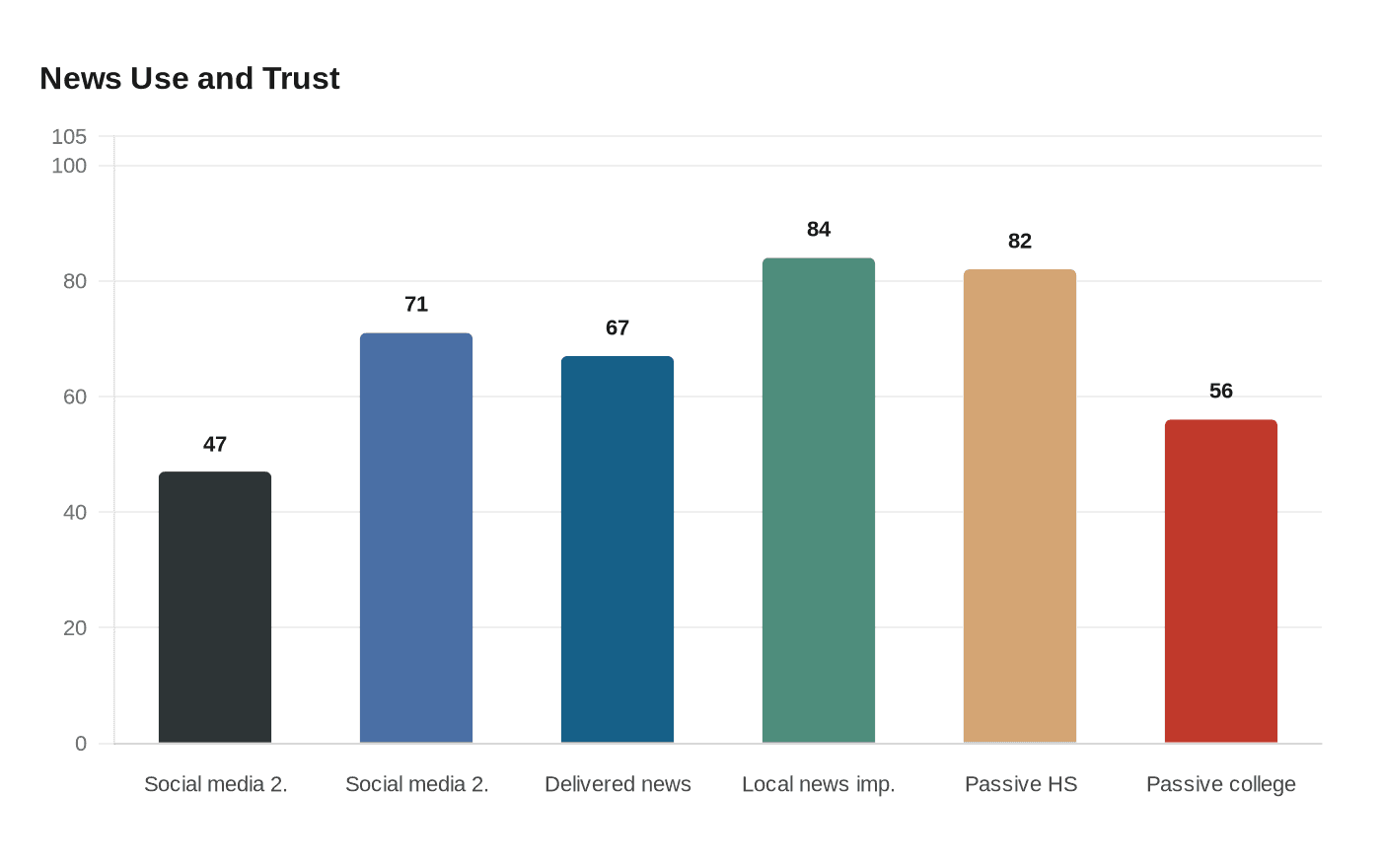
A new statewide survey unveiled in Helena shows the fight for public attention has shifted from newsrooms to feeds, with 71% of Montanans saying they now use social media for news and information, up from 47% in 2019.
The Greater Montana Foundation released its 2025-2026 Sources of News Survey on May 28 in Helena. The study was commissioned by the foundation and conducted by the University of Montana Bureau of Business and Economic Research in the winter of 2025-2026, the first GMF sources-of-news survey in the post-COVID era. Its sampling error rate was plus or minus 6%.
The clearest warning for Lewis and Clark County is that news is increasingly arriving passively. The survey found 67% of respondents said they read or listen to news that is delivered to them, while 33% said they actively search for news that interests them. That matters in Helena, where city council decisions, county budget fights, school issues and public-safety updates compete with an algorithm that can bury local coverage unless residents are already inclined to look for it.
At the same time, the survey suggests local journalism still has a firm civic role. Eighty-four percent of respondents said local news is absolutely, mostly or somewhat important to them and their family. But attention is thinning: the share of Montanans who said they do not follow the news closely rose from 22% in 2019 to 32% in the latest survey, while those who follow news very closely slipped from 23% in 2015 to 19% in 2025-2026.
The age gap was stark. Among Montanans ages 18 to 34, 51% said they follow the news very or somewhat closely, compared with 85% of adults age 65 and older. Education also tracked with different habits, with 82% of adults with a high school education saying they were passive news consumers, compared with 56% of college graduates.
The survey also pointed to sharper ideological sorting. Republicans were more likely to name Fox News and local TV stations as top online sources, while Democrats were more likely to point to The New York Times, CNN and local newspapers. Analysts said that suggests age and party are increasingly shaping not just what Montanans believe, but which institutions they trust to explain what is happening around them.
The broader landscape leaves little room for complacency. A January 2025 LOR Foundation study found Montana had 230 local and regional news creators and curators, but more than half of the state’s counties had only one or zero outlets creating original local news. Pew Research Center reported in April 2026 that only 21% of Americans said they follow local news very closely, down from 37% in 2016. For Helena and Lewis and Clark County, the message is blunt: local institutions still matter, but they now have to reach residents in a media environment where attention is harder to win and misinformation can spread faster than verified reporting.
This article was produced by Prism’s automated news system from verified source data, official records, and press releases, then run through automated quality and moderation checks before publishing. The system is built and supervised by the people who set the standards it runs under. Read our full AI policy.
Did this article answer your question?