Lawsuits block Forest Service wildfire fuel reduction plans in Helena forest
Court fights are stalling fuel-reduction work across the Helena forest, leaving beetle-killed trees and heavy fuels in place near Helena and the Big Belt Mountains.
Legal challenges are keeping the Forest Service from moving ahead with wildfire-fuel reduction work across the Helena-Lewis and Clark National Forest, where beetle-killed trees and dense brush remain a worry from Helena to the Big Belt Mountains. The agency says a forestwide prescribed-fire strategy over about 2.3 million acres would change how wildfires burn and give communities and firefighters more protection, but conservation lawsuits have turned many of those plans into court fights instead of on-the-ground treatment.
That conflict matters in Lewis and Clark County because the forest still carries the scars of the mountain pine beetle outbreak in the 2010s, especially around the Brooklyn Bridge area south of Helena, where managers say excess fuels piled up faster than crews could remove them. Forest Service project listings on the forest include commercial harvesting, pre-burn slashing and prescribed burning, the kinds of treatments officials say are needed to keep fires smaller and more manageable near town.

The pattern is not new. The Moose Creek Vegetation Management Project was upheld by the Ninth Circuit in April 2020. The Horsefly project, which covered 10,343 acres of cutting and burning, was challenged in 2021 and then halted by a federal court on June 27, 2024. In the Big Belt Mountains, the 1,241-acre Wood Duck project drew a 2025 federal-court challenge after conservation groups again argued the work looked more like logging than fire prevention.

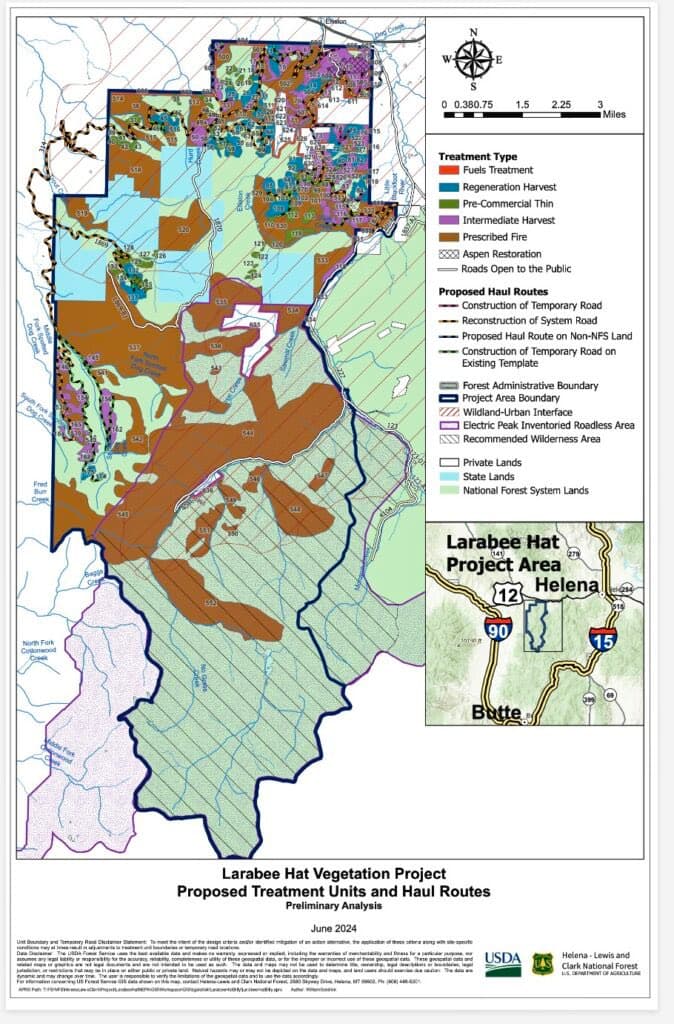
The latest fight centers on grizzly connectivity. In June 2026, Native Ecosystems Council, Alliance for the Wild Rockies and the Council on Wildlife and Fish sued over the Larabee Hat Vegetation Project, saying the Forest Service and U.S. Fish and Wildlife Service weakened secure-habitat standards in a critical corridor by shrinking the minimum patch size from 2,500 acres to just one acre. Conservation groups say that change undercuts grizzly recovery; the Forest Service and project supporters say the work improves forest health, habitat and wildfire resilience.
For Helena-area residents, the cost of delay is practical: more smoke risk, more homes exposed to heavy fuels, more property risk and insurance pressure, and higher future suppression bills for taxpayers. Contractors hired to cut, burn and thin those stands also lose field seasons when projects stall in court. As the lawsuits keep pushing treatment back, the question in Lewis and Clark County is whether the work can happen fast enough to matter before the next fire season arrives.
This article was produced by Prism’s automated news system from verified source data, official records, and press releases, then run through automated quality and moderation checks before publishing. The system is built and supervised by the people who set the standards it runs under. Read our full AI policy.
Did this article answer your question?