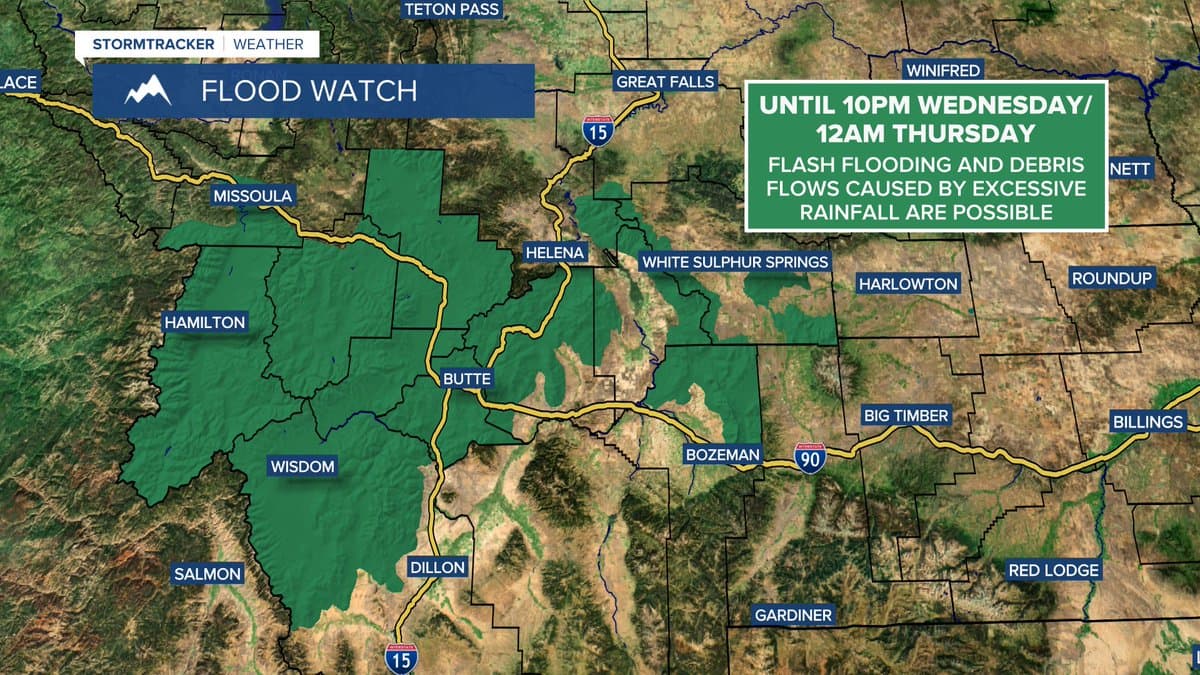
Lewis and Clark County urges Helena Valley flood prep now
Helena Valley basements, low-lying homes and drainage routes toward Lake Helena face the first serious runoff risk this spring. County officials said flood danger is already real despite average precipitation and below-average snowpack.

Helena Valley homes and basements, especially in lower elevations and along the drainage paths that feed Lake Helena, face the first serious spring flood threat of the season. Lewis and Clark County officials said the danger was already real even though precipitation had been about average and snowpack below average, because runoff, snowmelt and a heavy rain event can still push water into places that are not directly on a river.
MTN meteorologist Curtis Grevenitz warned that the wettest part of the year was beginning and could still bring damaging water. “We’re entering the wettest time of year, and it still could produce some pretty bad flooding, so the flood danger is still there,” Grevenitz said.
Lewis and Clark County floodplain administrator Worby McNamee said the Helena Valley is especially vulnerable because water moves through the area and works its way toward Lake Helena. He said flooding can become widespread in the valley, meaning homes and properties without river frontage can still be affected. County officials urged residents to check for hazards around their property, make sure water cannot get into the basement, clear gutters, inspect culverts and keep clean water on hand in case service is interrupted.
The county’s floodplain program says spring flood season usually peaks from May to June, and it lists major flood years in Lewis and Clark County as 1975, 1981, 1996, 2011 and 2018. The county has participated voluntarily in the National Flood Insurance Program since the 1980s, adopted FEMA flood insurance rate maps on Sept. 19, 2012, and adopted its most recent floodplain ordinance in November 2022. County officials regulate more than 30 floodplain maps covering the Helena Valley, York, Craig, Augusta and Lincoln areas.
State insurance officials added a separate warning for homeowners. Montana Commissioner of Securities and Insurance James Brown said standard homeowners’ policies typically do not cover flood damage. In a Feb. 20, 2025 release, Brown said Montanans should consider separate flood insurance through the National Flood Insurance Program or private insurers, and noted that NFIP policies generally have a 30-day waiting period before coverage begins. The release also said federal disaster assistance is available only when the president declares a disaster and usually comes as a low-interest loan that must be repaid.
The warning carried extra weight after December flooding in Lincoln County, where heavy rain in early December led to mass flooding on Dec. 11, 2025. By Jan. 13, 2026, officials had placed preliminary damage at $9.69 million and the City of Libby was still under a boil water advisory. For Helena Valley property owners, the message was plain: the next flood may not wait for the calendar.
This article was produced by Prism’s automated news system from verified source data, official records, and press releases, then run through automated quality and moderation checks before publishing. The system is built and supervised by the people who set the standards it runs under. Read our full AI policy.
Did this article answer your question?