Lewis & Clark Caverns State Park: What to Know Before You Go (Seasonal Guide and Visitor Info)
Montana's first state park turns away visitors on peak summer weekends; book your cave tour before making the 68-mile drive from Helena.
Montana Fish, Wildlife & Parks enforces one rule at Lewis & Clark Caverns State Park that catches more Helena-area day-trippers off guard than any other: every single person who enters the cave needs a guided tour ticket, and on peak summer weekends those tickets run out before the parking lot fills. The drive from Helena covers roughly 68 miles southwest on I-15 through Whitehall and then east on Montana State Highway 2, about 90 minutes under normal conditions. Arriving without a reservation and finding every Classic Tour slot gone is a preventable outcome. This guide covers what Montana Fish, Wildlife & Parks requires, what the cave physically demands, and what to confirm before you leave the driveway.
Montana's First State Park and the Rules That Come With That Designation
The caverns sit 12 miles east of Whitehall in Jefferson County, technically outside Lewis and Clark County but well inside the day-trip radius that Helena residents have used for generations. Montana Fish, Wildlife & Parks manages the 3,015-acre park and has done so since the state formally established it in 1937, giving Lewis & Clark Caverns the distinction of being Montana's first state park. The story goes back further: local hunters first explored the caves in 1892, the federal government designated the area a national monument in 1908, and the state took ownership three decades later. The Corps of Discovery passed near this stretch of the Jefferson River in 1805, though there is no evidence the expedition ever located the caverns.
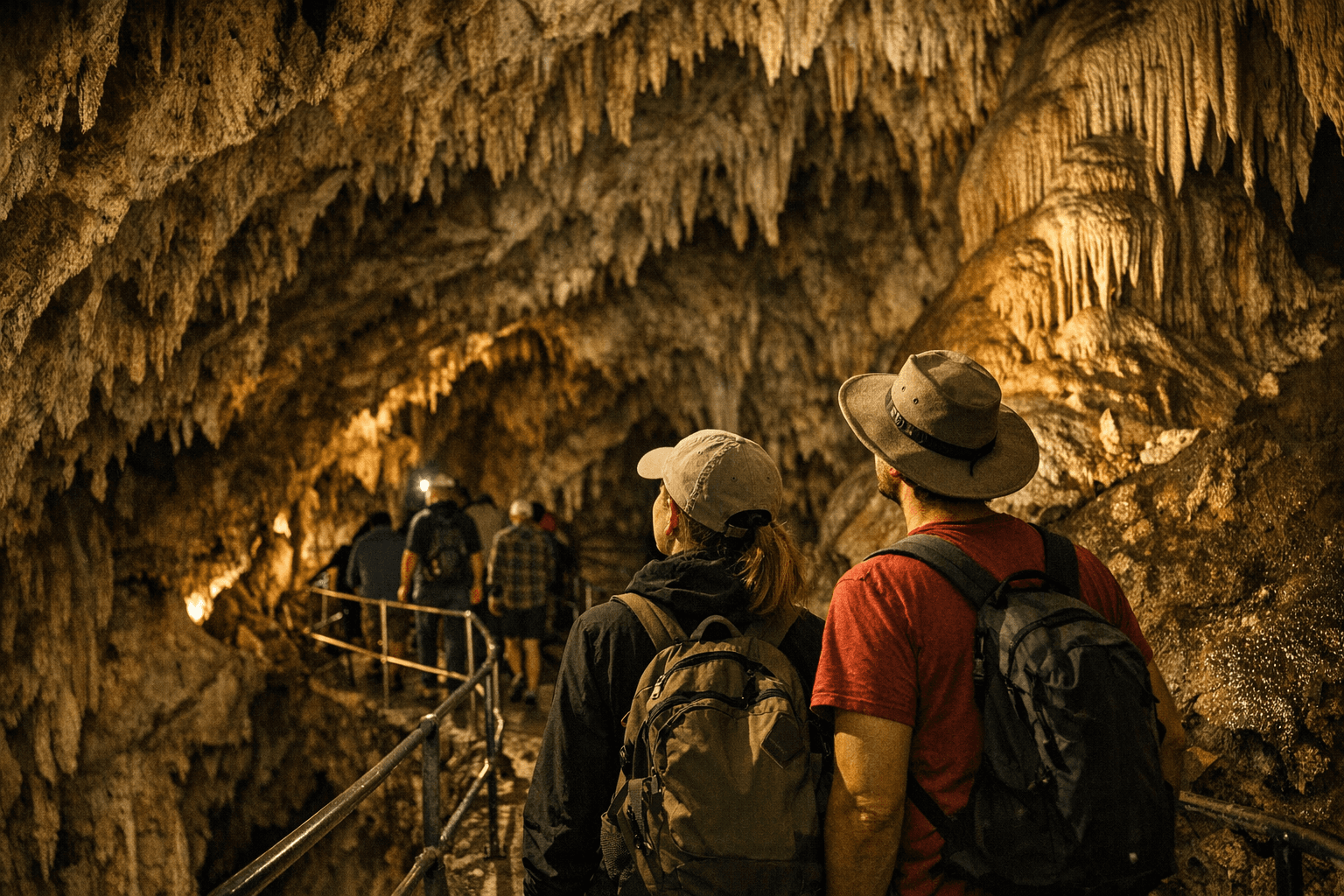
FWP describes the underground landscape as "one of the largest known limestone caverns in the Northwest," a system of calcite, stalactites, stalagmites, columns, and helictites formed over millions of years in a limestone environment. The caves are also characterized as one of the most highly decorated limestone cave systems in the American Northwest. That geological significance is exactly why access is controlled so tightly: the park's guided-tour-only policy protects formations and subterranean ecosystems that cannot be restored once damaged.
Cave Season: May 1 Through September 30
The caverns open for standard guided tours on May 1 and close on September 30 each year. There are no walk-up, self-guided, or early-access exceptions during the regular season. Outside that window, the main tour program goes dark until the following spring, with one limited exception in December described in the section below.
FWP's park page and the state parks reservation portal are the authoritative sources for current tour schedules, daily availability, and any changes to the seasonal calendar. Do not rely on third-party travel sites for operating hours. Check those two sources directly before booking.
What the Classic Tour Actually Demands
The Classic Tour is the primary guided experience during the regular season: a two-hour, two-mile walk through multiple chambers with interpretive stops throughout. The FWP description is specific and worth reading before you book. The tour gains 300 feet of elevation, requires ascending more than 100 stairs on the way in, and descends more than 500 stairs on the way out. The cave floor is wet and slippery throughout. The caverns are naturally air-conditioned to a consistent 48 degrees Fahrenheit year-round, which means a light jacket is not optional comfort gear; it is a practical necessity even if the temperature outside approaches triple digits.
Guides emphasize preservation at every interpretive stop, explaining how the cave environment is sensitive to light, moisture, and contamination, and describing the specific measures taken to protect formations and subterranean ecosystems. That educational component is built into the tour structure; it is not a preamble you can skip.
If sustained stair climbing or uneven underground terrain presents a concern, contact FWP directly before booking. No ADA accommodation specifics are published in the standard park materials, and the Classic Tour's physical profile is not adjustable at the gate.
The White-Nose Syndrome Gear Rule
The caverns serve as a summer roosting site for Townsend's big-eared bats, and protecting that population from white-nose syndrome is a non-negotiable park requirement. The fungal disease has caused significant bat mortality across North America, and any clothing or gear previously used in another cave or mine can carry the responsible fungus. Visitors are required to leave contaminated gear behind, full stop. This applies to boots, jackets, bags, and any equipment that has been inside another cave or mine. Rangers have authority to deny entry to anyone whose gear presents a transmission risk. If you caved somewhere else this summer, plan your outfit accordingly before arriving.
Don't Get Turned Away: Pre-Trip Checklist
Tours sell out on busy summer days and group sizes are capped to protect cave resources. FWP explicitly recommends reserving tour tickets in advance and arriving at least 30 minutes before the scheduled tour departure. Late arrivals risk forfeiting their reservation. The park sits in a remote stretch of the Jefferson River canyon, well outside any town with services, so download or print your confirmation before you leave Helena rather than counting on a signal to pull it up at the gate.
Before making the drive, confirm all of the following:
- Reserve tour tickets online through the state parks reservation portal and carry your confirmation. Walk-up availability is not guaranteed on summer weekends.
- Plan to arrive at least 30 minutes early. The park is not forgiving of stragglers when tours are full.
- Pack a jacket. The cave holds at 48°F regardless of outside conditions.
- Leave any clothing or gear used in other caves or mines at home. This is a hard requirement enforced at entry.
- Wear closed-toe shoes with grip. Sandals or smooth-soled footwear are a hazard on wet cave floors.
- Secure pets before entering the visitor center area. Dogs are welcome on above-ground trails and in the campground but are prohibited inside the caverns.
Above-Ground Recreation and the Trails Worth Your Time
The park's above-ground offering is substantial enough to justify the drive even without a cave ticket. More than 10 miles of hiking and biking trails traverse terrain with elevation changes exceeding 1,000 feet, ranging from strenuous ridge routes to more accessible options. The Nature Loop Trail is the approachable choice for families or anyone looking to spend an hour moving without committing to a major climb. The Fishing Access Trail drops down to the Jefferson River for anglers, connecting the park to one of southwest Montana's productive fishing corridors. Picnic areas and an amphitheater provide additional space, and interpretive events run through the summer months.
Overnight Stays: Campground, Cabins, and Year-Round Access
The campground at Lewis & Clark Caverns operates year-round, which makes it more useful than its seasonal cave-tour counterpart. The facility includes 40 campsites with hookups, three cabins, a tipi, and a group camping area. Hiker and biker sites are available on a first-come, first-served basis. Cabins and standard sites can be reserved through the state parks portal.
Full seasonal amenities run from May through September: showers, potable water, an RV dump station, the visitor center with interpretive displays, a gift shop, and a café. Outside that window, the campground remains accessible but with significantly reduced services. If you are planning a shoulder-season overnight stay, confirm which amenities are operational before making the trip.
The December Candlelight Tours
The one off-season access point worth knowing about is the December candlelight tour program. The park offers limited tours during December that recreate the experience of early cave exploration by lantern light. Slots are scarce. Book through the state parks reservation portal well ahead of the holiday season and expect the same physical demands as the summer Classic Tour.
The Drive and Peak-Season Bottlenecks
From downtown Helena, the route heads south on I-15 to the Whitehall interchange, then east along Montana State Highway 2 to the park entrance. The total distance is approximately 68 miles, and the drive runs about 90 minutes. The Jefferson River canyon stretch of Highway 2 is scenic and narrow in places, with limited roadside services between Whitehall and the park.
Peak-season pressure concentrates on summer weekend mornings, particularly in July and August. The touring capacity cap means the park cannot absorb overflow arrivals the way a trailhead or reservoir day-use area can. If a Saturday in midsummer is the target date, booking several weeks out is standard practice rather than surplus caution. The park's decision to cap group sizes is a deliberate stewardship choice, and those limits are enforced at the ticket booth, not negotiated there.
For the most current tour times, ticket availability, seasonal schedules, and special programs, the FWP state park page and the Montana State Parks reservation portal are where the definitive answers live. Everything else is a secondary source.
Know something we missed? Have a correction or additional information?
Submit a Tip