Marysville’s Drumlummon Mine fueled Montana’s gold rush fortune
Marysville’s Drumlummon Mine turned a Silver Creek camp into a multi-million-dollar mining boom, and its buildings still shape tourism and preservation today.
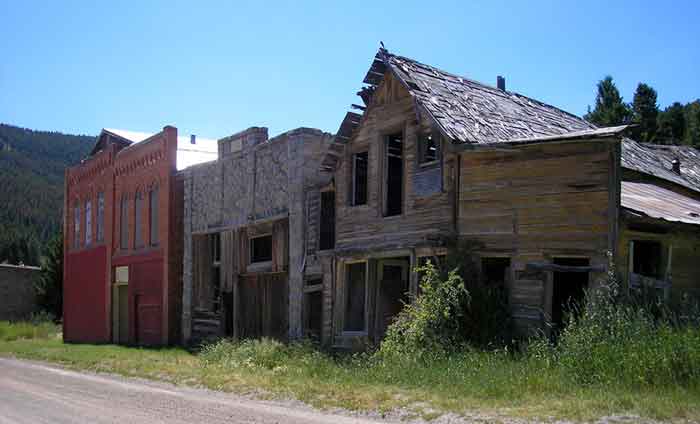
Marysville looks small now, but the ground there once produced one of Montana’s richest mining fortunes. The Drumlummon Mine helped turn a remote Silver Creek camp into a town of roughly 3,000 people, and the traces left behind, from a burned stamp mill site to a preserved church and commercial district, still define how Marysville fits into Lewis and Clark County’s story.
A mining district built on silver, gold and outside capital
Marysville sits in the Silver Creek mining district, where early prospectors first found placer gold mixed with a high percentage of silver. Silver Creek itself runs eastward to Lake Helena, and the creek helped give the whole district its first economic identity long before Marysville became the better-known town. Silver City, on that same creek, was the first county seat of Edgerton County, the county that later became Lewis and Clark County.
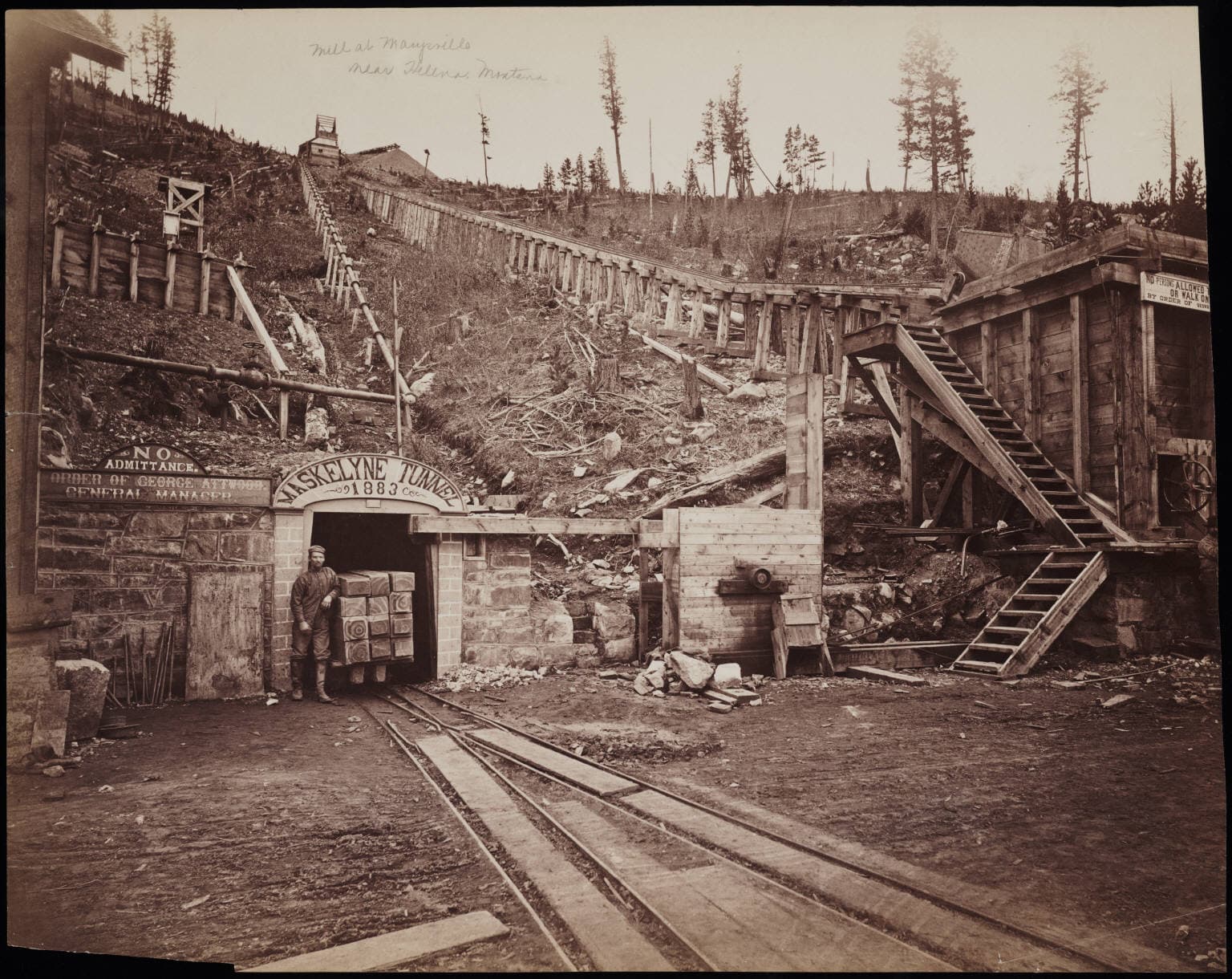
Thomas Cruse changed the scale of the place in 1876 when he discovered rich, deep veins of silver and gold and named his claim the Drumlummon Mine after his parish in County Cavan, Ireland. The mine’s early significance was serious enough that the Montana Historical Society Library and Archives preserves an 1882 report on the Drumlummon by John Darlington in the Thomas Cruse papers, a reminder that the operation drew attention from financial backers and technical observers early on.
Cruse sold the mine to a British syndicate in 1882 and became an instant millionaire. By 1896, Montana Company Ltd. had expanded the operation at Marysville with several stamp mills and a new cyanide plant, pushing the district from a promising strike into a major industrial mining center.
Why Marysville became a boom town
The money that came out of the mine quickly changed the size and character of the settlement. Marysville grew into a bustling mining town of about 3,000 residents in the 1880s and 1890s, a population that made it one of the more important camps in the Helena basin. Today only a handful of residents still live there, and the town sits at about 5,420 feet, a high-elevation reminder of how closely its fortunes were tied to the mountain mining economy.
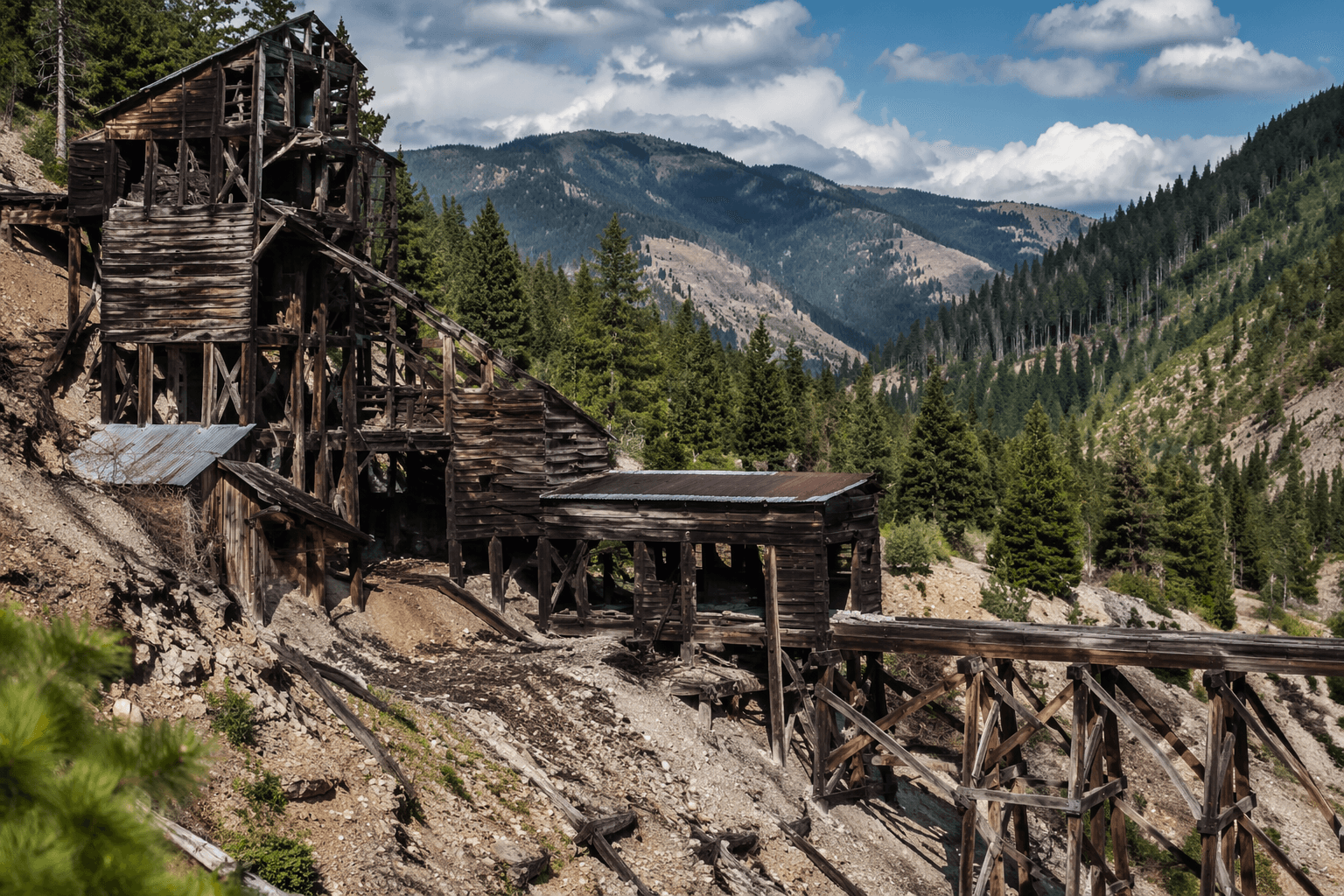
The scale of production explains why the place still matters. Over the years, the Drumlummon Mine produced more than $15 million in gold, making it one of Montana’s richest gold mines. The broader Marysville Mining District eventually yielded $30 million in gold. Those totals place Marysville well above the level of a fleeting frontier camp and into the class of places that helped shape regional wealth, labor, transportation and investment patterns around Helena and Lewis and Clark County.
That history also connects the town to the larger county story in a direct way. Marysville was not just a mine site. It was part of the web of settlements, county-seat politics and transportation corridors that linked Silver Creek, Silver City and the Helena basin as mining districts matured into settled communities.
What remains on the ground now
The physical evidence in Marysville is important because so little of the town’s peak population remains. The big stamp mill burned in 1971, but the loss of that industrial landmark does not erase the layout of the mining era. The Methodist Episcopal Church, built in 1886, still stands as one of the clearest surviving pieces of the boom years.
The National Register nomination describes the church as a standard wood-frame mining-camp church design on a sandstone foundation. That detail matters because it places Marysville within a recognizable Montana building tradition, where churches had to be practical, durable and quick to raise in towns that were expanding as fast as the ore could be processed. The National Register documentation also identifies the church as a locally significant property, giving it weight beyond sentimental value.
Marysville’s downtown has its own preservation footprint. The Marysville Historic Commercial District includes 52 contributing buildings and 26 noncontributing buildings. That mix shows a town where the historic fabric still forms the core of what survives, even if later alterations and losses have changed some structures. For visitors and preservation planners, the district is a second layer of evidence, separate from the mine itself, that the town was once a fully functioning commercial center rather than just a collection of mine-related ruins.
The Marysville school also still stands, another visible marker of the several thousand people who once lived nearby. Together, the church, school, commercial district and mining remnants create a landscape that still reads like a town built around extraction, processing and the short-lived abundance that followed.
Why the legacy still matters now
Marysville’s future is tied less to ore than to interpretation. The surviving buildings and district give the town a usable identity for heritage tourism, historic preservation and county storytelling, especially because so much of its boom-era economy has disappeared. A place with only a handful of current residents can still carry outsized value if its architecture, street pattern and mining remains are legible to visitors and historians.
That matters in practical terms for Lewis and Clark County because Marysville offers a rare, intact link between industrial mining wealth and the built environment that wealth left behind. The district’s surviving structures can support preservation work, local tourism and educational visits without needing to invent drama that is not already there. The facts are enough: a mine that made millions, a town that swelled to thousands, and a present-day settlement that has been reduced to a small remnant of its former self.
From Marysville to Helena
Cruse’s money did not stay in Marysville. Part of his fortune helped build a new cathedral in Helena, extending the Drumlummon story into the county seat and showing how mining wealth moved into civic and religious institutions. The Cathedral of Saint Helena began construction in 1908 and held its first mass in 1914, giving Cruse’s philanthropy a concrete place in Helena’s chronology.
That link closes the loop between the creek, the mine and the county capital. Silver Creek fed the first discoveries, Marysville concentrated the wealth, and Helena absorbed part of it in stone and stained glass. The result is a local history that is still visible in the buildings standing today and in the high, quiet ground where a mining town once helped bankroll Montana’s gold rush fortune.
This article was produced by Prism’s automated news system from verified source data, official records, and press releases, then run through automated quality and moderation checks before publishing. The system is built and supervised by the people who set the standards it runs under. Read our full AI policy.
Did this article answer your question?