Montana justice department speeds up human trafficking hotline response
Montana is changing its trafficking hotline to get help out faster, a shift that could determine what happens in Helena’s first critical minutes after a tip.

A tip about trafficking in Helena now has a better chance of reaching the right people faster, as the Montana Department of Justice changes the state hotline to speed response times.
That matters in Lewis and Clark County because the first minutes after a call can decide whether a victim is found, evidence is preserved, or a case slips away. The Montana Human Trafficking Hotline, 833-406-STOP (7867), remains the main statewide reporting line, and the state also offers live chat through its hotline service. The goal of the new approach is to tighten the handoff between a caller, the hotline, and the local or state authority that can act.
The change comes against a backdrop that is all too familiar in Helena. A 72-year-old Helena man, Steven Kyle Miller, was sentenced to 10 years in prison, with five suspended, after pleading guilty to human trafficking tied to an illicit Cedar Street massage parlor. A Helena woman also pleaded guilty in February 2026 to felony sex trafficking connected to the same business. One account of that investigation said it began with a tip from a TSA agent at Helena Regional Airport, a reminder that trafficking cases can surface far from the courtroom and move quickly once a warning reaches investigators.

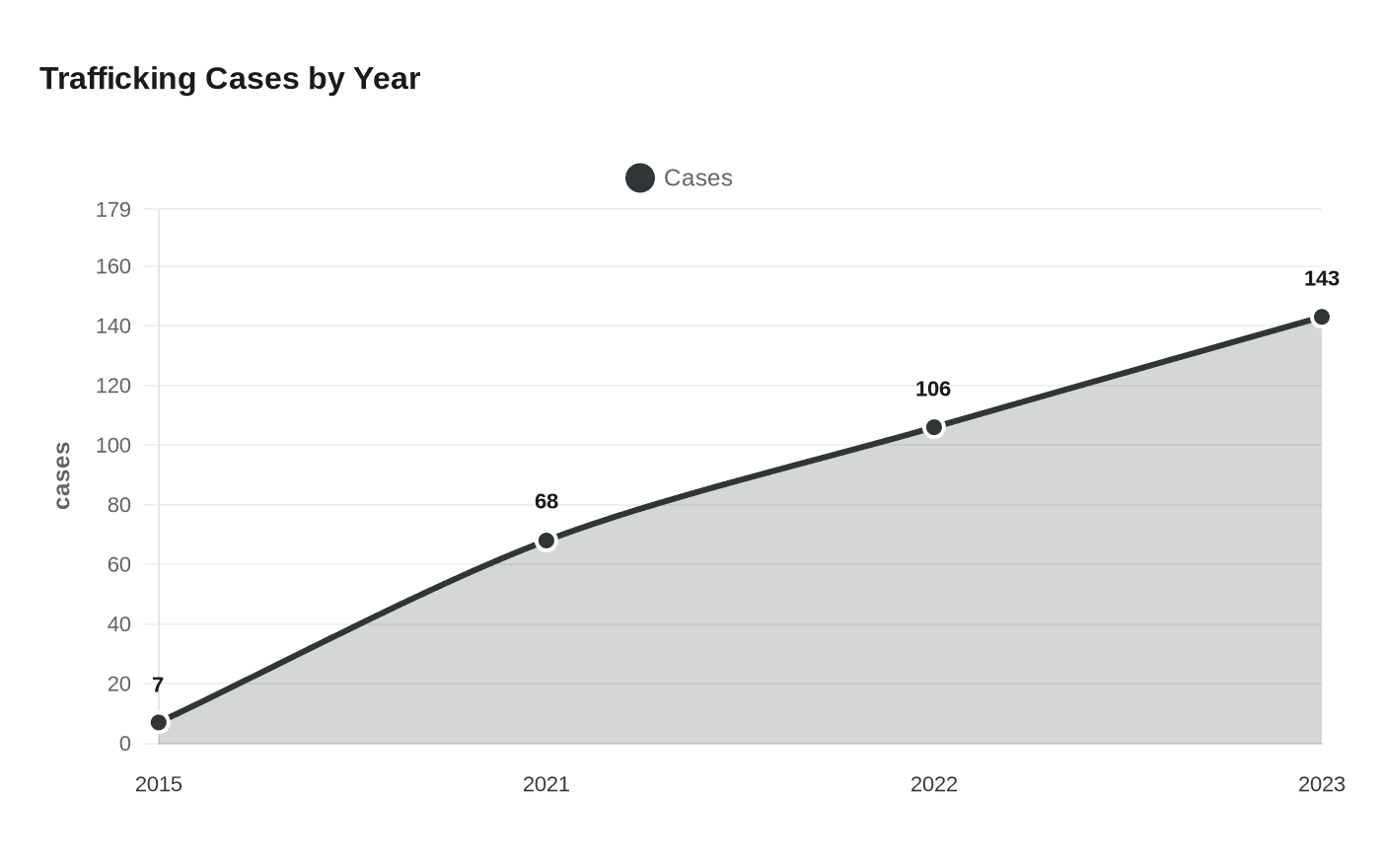
Montana officials have described trafficking in the state as including forced labor, sexual exploitation and coercion. The state’s human trafficking unit within the Department of Justice Division of Criminal Investigation was created in 2019 and typically handles up to 120 cases a year. DOJ tracking cited by state officials shows how sharply the problem has grown, from seven cases in 2015 to 68 in 2021, 106 in 2022 and 143 in 2023.
That rise helps explain why a faster hotline response is not just an administrative change. In a state where distances are long and specialized support can be hard to reach, a delayed transfer can mean a missed call, a slower welfare check or a victim disappearing before help arrives. Montana Office of Public Instruction materials also note that schools work with law enforcement, public health agencies and community groups on child sex trafficking awareness, prevention, response and reporting, which means the hotline’s speed can affect more than one part of the system.
For Helena, where Cedar Street has already become shorthand for a trafficking case that reached sentencing and plea agreements, the test is simple: whether the new hotline path closes gaps before they become lost opportunities.
This article was produced by Prism’s automated news system from verified source data, official records, and press releases, then run through automated quality and moderation checks before publishing. The system is built and supervised by the people who set the standards it runs under. Read our full AI policy.
Did this article answer your question?