Retiring MDT Historian to Lecture on County's Historic Bridges April 14
A bridge built in 1901 is still carrying traffic northeast of Helena under a 5-ton weight limit. Retiring MDT historian Jon Axline lectures on the county's aging spans April 14.
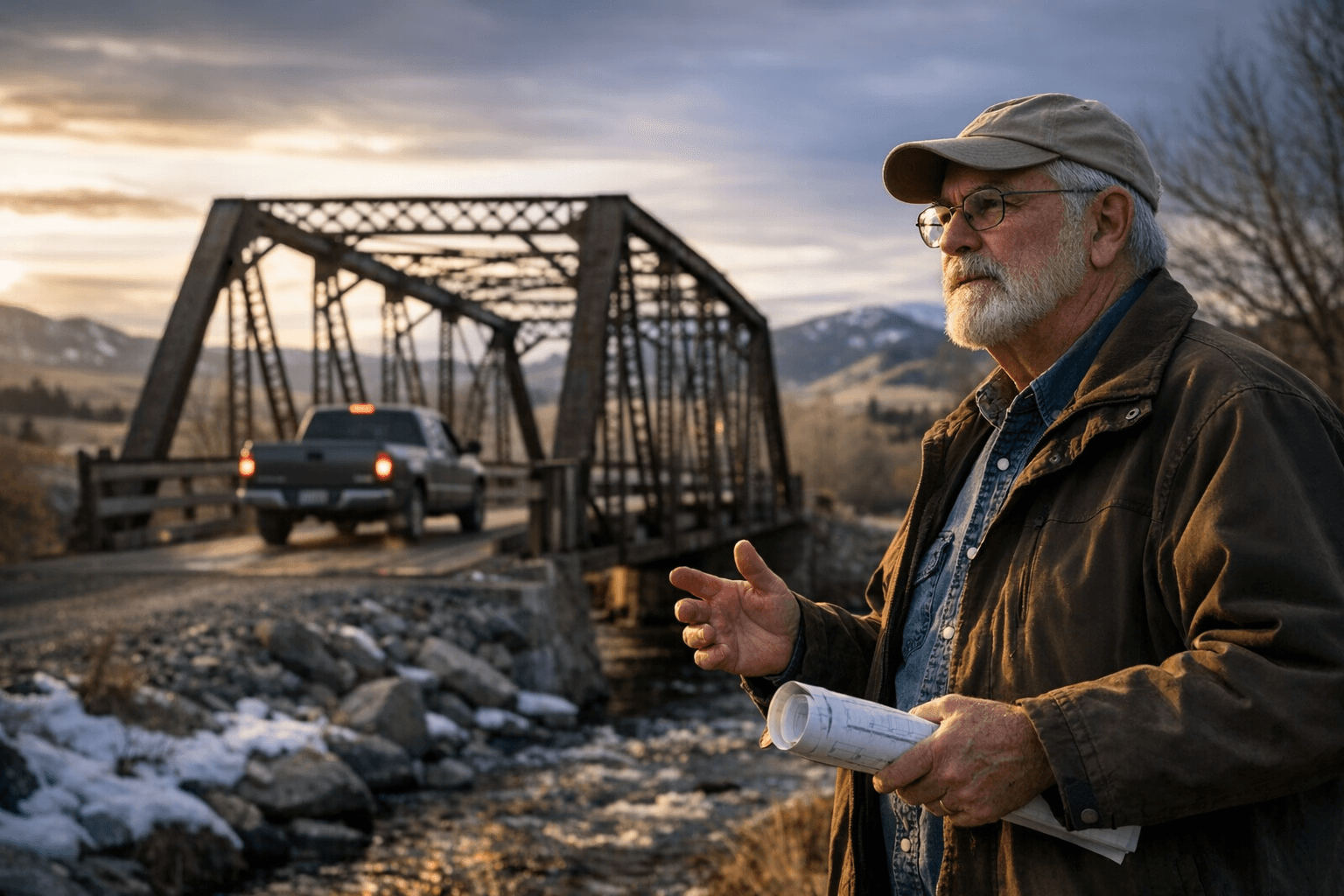
The Birdtail Road Bridge over Flat Creek has been carrying traffic northeast of Helena since 1901. A 1977 inspection called for its replacement, projecting the cost at $112,180. Nearly five decades later, Lewis and Clark County enacted a 5-ton weight limit on the structure after an updated load rating revealed it had been absorbing overweight traffic for years; on the day of the most recent inspection, a hay truck likely exceeding the limit was photographed crossing it. The county eventually sourced a temporary bridge from Idaho to handle heavy loads. The original structure, now more than 120 years old, is still there. That cycle of deferred decisions and stopgap fixes is precisely the history that retiring Montana Department of Transportation historian Jon Axline has spent a career documenting.
Axline will present "Historic Bridges of Lewis & Clark County" on April 14 at 7 p.m. at the Lewis & Clark County History Center, 618 Helena Avenue in the Steamboat Block in downtown Helena. The Lewis & Clark County Historical Society is hosting the event, which is free and open to the public; refreshments will be served.
The talk lands against a deteriorating backdrop for state infrastructure. Montana's bridges were among the categories that dropped in grade in the American Society of Civil Engineers' 2024 state report card, pulling the state's overall infrastructure rating down to a C-minus from a C in 2018. Statewide, 388 of Montana's 5,235 bridges, or 7.4 percent, are now classified as structurally deficient, up from 365 in 2021. In rural Lewis and Clark County, where alternate crossings can be miles apart, a restricted bridge does not just slow commerce. It stretches EMS response times, reroutes school buses, and can sever the back-road corridors that ranchers, fire crews, and evacuating residents depend on when wildfires move through the Helena-area foothills.
Axline is the author of "Conveniences Sorely Needed: Montana's Historic Highway Bridges, 1860-1956," which traces the engineering, economic, and social forces behind more than a century of Montana bridge construction. During his MDT tenure he produced numerous National Register of Historic Places nominations and helped communities document aging spans before demolition. His April 14 lecture will cover local bridge types, construction eras, and the criteria that determine which structures earn preservation status and which are replaced. Nineteenth- and early-twentieth-century designers never built for modern agricultural equipment or emergency apparatus, a mismatch that county engineers are now pricing out in real time.
Axline's retirement closes a long institutional memory at MDT. The April 14 presentation at 618 Helena Avenue begins at 7 p.m.
This article was produced by Prism’s automated news system from verified source data, official records, and press releases, then run through automated quality and moderation checks before publishing. The system is built and supervised by the people who set the standards it runs under. Read our full AI policy.
Did this article answer your question?