Why Helena weather apps and TV forecasts often differ
Helena weather apps often miss the mark because mountains, altitude, and model choice distort the forecast; local meteorologists can add the context software skips.
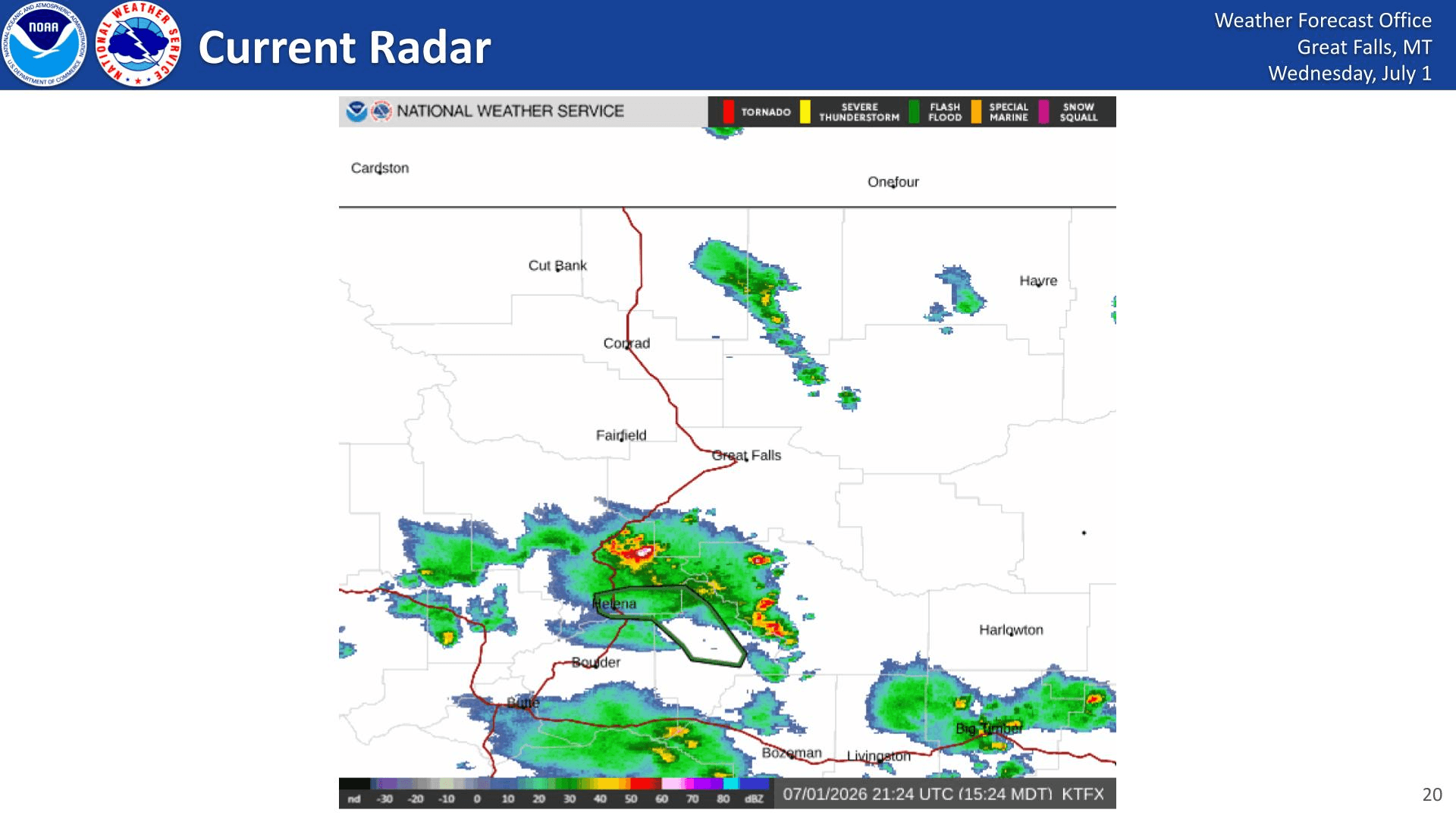
Helena’s forecast split is usually not a mystery of bad luck. It is the product of terrain, altitude, and the fact that many apps are built on computer models that cannot always capture what happens between the Continental Divide, the plains, and the weather spilling in from Canada.
For Lewis and Clark County, that difference is not academic. Helena Regional Airport sits at 3,874 feet, and the National Weather Service office serving the city is in Great Falls, which means local conditions are being read through a wide geographic lens before they ever reach a phone screen.
Why Helena is hard to forecast
Montana is one of the places where a clean statewide forecast often breaks down first. Mountains, the Continental Divide, the plains, and northern influences can change conditions quickly from one valley to the next, which is exactly why an app that looks precise on paper can feel wrong on the ground.
The climate numbers reinforce that point. Lewis and Clark County averages about 14 inches of precipitation a year, about 52 inches of snow, and precipitation on roughly 88 days annually. That is enough seasonal variety to make a single generic forecast less useful than a forecast that knows the county’s geography and elevation.
How a local forecast gets built
Curtis Grevenitz, KTVH’s chief meteorologist, says the first step is not opening an app at all. It is checking what is happening right now: temperatures, wind, radar, and satellite images. That matters because forecasting starts with the current atmosphere, not with a computer’s guess about the future.
From there, the gap between TV and app forecasts often opens up. Apps also use computer models, but viewers usually do not know which model the app selected, whether it is blending several models, or whether it is simply averaging them. Grevenitz argues that averaging can be a poor fit for Montana, where one-size-fits-all guidance often misses the local effects of terrain.
That is also where human judgment enters. Grevenitz says decades of pattern recognition, plus lessons passed along by older forecasters and longtime residents, help him tell when a model is off. In other words, the TV forecast is not just software repeated out loud. It is software filtered through Montana-specific experience.

What the models can and cannot do
The National Weather Service maintains several model systems, including the Global Forecast System, NAM, HRRR, RAP, ensembles, and the National Blend of Models. That range is useful, but it also explains why different apps can deliver different answers: each one may be relying on a different blend of data.
The Global Forecast System is a global model with coarser grid resolution than regional models. NOAA’s environmental modeling center says it provides forecasts out to 16 days at 13-kilometer resolution, which is useful for broad trends but not always fine enough for the sharp local changes that matter in Helena, where terrain can redirect wind and split precipitation over short distances.
The National Weather Service also posts model and map pages that show the same basic truth in plain sight: forecast tools are not interchangeable. A regional model such as NAM can resolve smaller features more tightly than a global model, while ensembles and blended products try to smooth out uncertainty. That is helpful for long-range planning, but it can still miss the exact hill, pass, or valley that changes your day.
When to trust an app, and when to trust the local forecast
For daily life in Helena, the best source depends on the decision you are trying to make. If you are deciding whether to leave early for a drive, whether to move a field crew, or whether to keep an outdoor event on the calendar, the most useful forecast is the one that shows how a local meteorologist is interpreting the latest radar, satellite, and surface readings.
- For commuting over mountain passes, lean on the local TV forecast and the National Weather Service’s current conditions, because terrain can change the wind and precipitation picture quickly.
- For smoke-sensitive outdoor work, focus on the shortest-term forecast and the latest observed conditions. In a fast-changing atmosphere, current radar and satellite often tell you more than a distant model run.
- For irrigation and event timing, use the app as a planning tool, but check whether the forecast is based on one model or a blended product. The farther out the timing window, the more valuable a human forecaster’s local judgment becomes.
The key is not to treat the app as wrong and television as right. It is to understand that the app often shows one model’s answer, while a local forecast has already applied Montana-specific context. In a county where weather can change quickly across short distances, that added interpretation can be the difference between a workable plan and a costly surprise.
Why the county’s climate background matters
Climate normals help explain why this matters so much in Helena. The Montana Climate Office says climate normals are 30-year summaries updated each decade, and the current set uses the 1991-2020 record. Those numbers do not replace a forecast, but they show the statistical backdrop the forecast is built on.
The broader Montana climate pattern also matters. The Desert Research Institute’s Western Regional Climate Center says weather west of the mountain barrier is generally milder, cooler in summer, and shaped by different wind and cloud patterns than the east. That geographic divide is part of why a forecast that works for one side of the state may not fit the other, especially near the Continental Divide.
That is also why forecast labels matter as much as forecast numbers. The National Weather Service has announced that its Regional Temperatures and Precipitation Product for Montana will be discontinued July 7, 2026, with an effective date of June 29, 2026. For Helena-area readers, the practical lesson is straightforward: know whether you are looking at a broad model, a blended product, or a forecast that has been adjusted by someone who understands how Lewis and Clark County actually behaves.
In Helena, the smartest forecast habit is not choosing between app and TV forever. It is knowing when the app is enough, and when the local forecast has the better read on the ground.
This article was produced by Prism’s automated news system from verified source data, official records, and press releases, then run through automated quality and moderation checks before publishing. The system is built and supervised by the people who set the standards it runs under. Read our full AI policy.
Did this article answer your question?