Hundreds gather in Holyoke to discuss mental health in agriculture
More than 100 people turned out in Holyoke for a community dinner, documentary screening and panel that put farm and ranch mental health squarely on the local agenda.

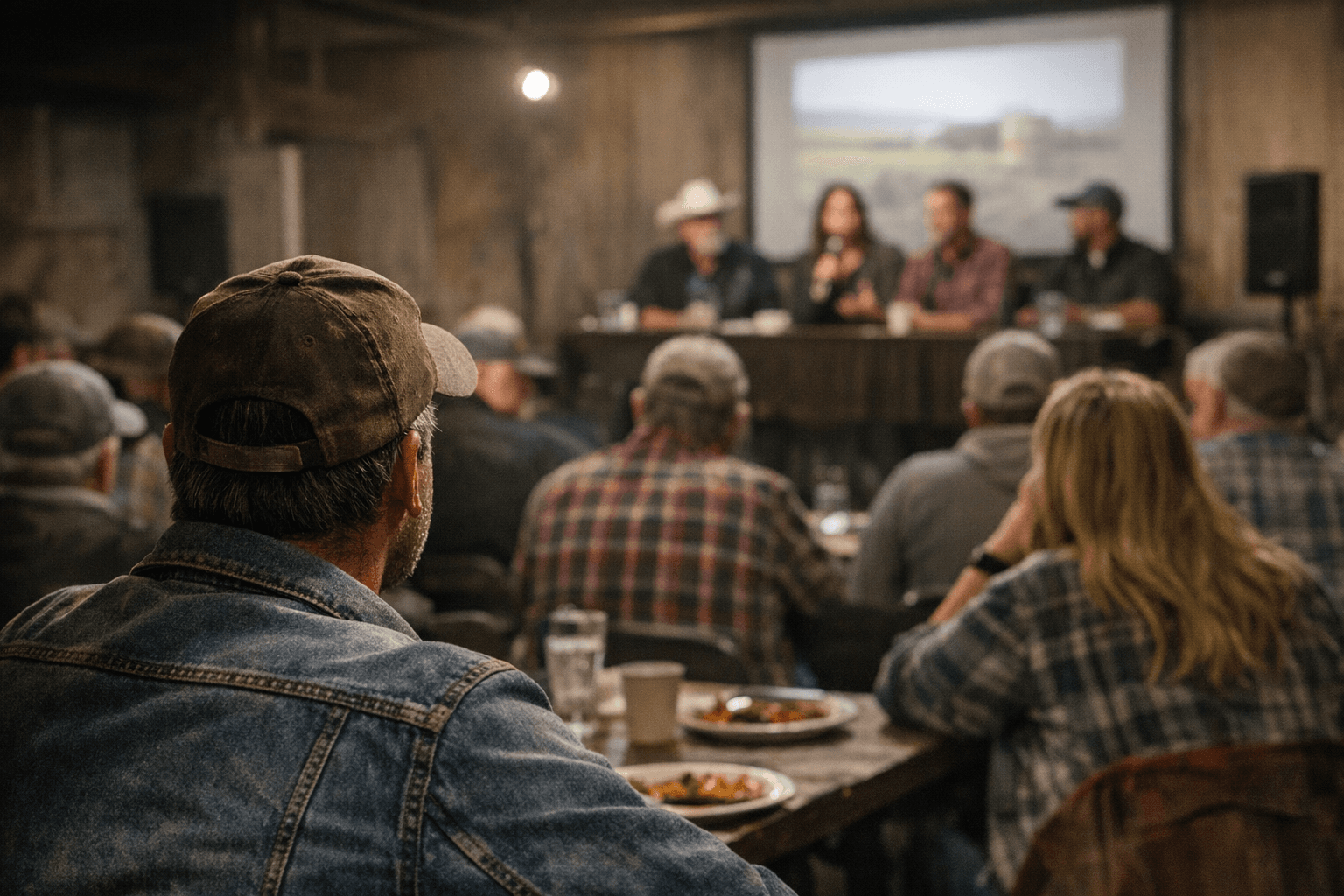
More than 100 community members packed the Phillips County Event Center, 22505 US-385 in Holyoke, for "Rooted in Resilience: Mental Health in Agriculture" on March 24, with a 5:30 p.m. start for a free community dinner, a screening of the documentary Legacy: Stories of Healing and Hope, and a panel discussion that ran into the evening. Organizers provided Spanish interpretation and free childcare, underscoring efforts to make the program accessible to Holyoke’s diverse farm and ranch population.
The program brought together regional figures with direct ties to northeast Colorado agriculture. Tim Stahley, Director of Engagement and Extension for Colorado State University Extension’s Eastern Counties, served as emcee. Panelists included Jason Santomaso of Sterling Livestock Commission, Yesenia Bencomo of the Holyoke School District’s ESL/elementary staff, third-generation Thatcher rancher Jacob Walter, and Kirsten Wulfsberg, a licensed professional counselor and Regional Behavioral Health Specialist with CSU Extension who represents Colorado AgrAbility. The mix of Extension staff, service providers and producers shaped conversations from technical resources to lived experience.
Local economic context framed why the turnout matters: Logan County encompasses roughly 1.1 million acres of farmland and ranks among Colorado counties with the largest agricultural sales, locally summarized at about $732 million in ag sales. Panelists and organizers emphasized the concrete stressors facing those operations today, including market volatility, weather extremes, rising equipment and input costs, long work hours, and social isolation in small towns such as Fleming and Haxtun.
Practical resources highlighted at the event included referral pathways to statewide programs. The Colorado Agricultural Addiction and Mental Health Program, known as CAAMHP, provides confidential vouchers for ag-competent counseling, commonly described as six free sessions for farmers, ranchers and family members. State and nonprofit partners cited at the screening include Colorado AgrAbility and AgWell, operated by the Rocky Mountain Farmers Union, and the Colorado Department of Agriculture’s statewide film tour that has used Legacy to catalyze local conversations.
Policy context underpinned the outreach: SB24-055, signed June 6, 2024, created an Ag Behavioral Health Work Group and an Agricultural and Rural Community Behavioral Health program designed to coordinate outreach, training and grantmaking for rural mental-health services. The law’s community-of-practice model aligns with CSU Extension’s role in Eastern Counties programming and gives local leaders a framework to translate one-night events into follow-up trainings, peer-support groups and targeted referrals.
The strong turnout at the Phillips County Event Center affirmed that farm stress is no longer a private matter confined to kitchen-table conversations. With CSU Extension staff such as Tim Stahley and regional behavioral health specialists like Kirsten Wulfsberg active in the region, organizers and public agencies now have a tested model—dinner, film, panel, and wraparound services—to convert community interest into sustained supports for families who work the land.
This article was produced by Prism’s automated news system from verified source data, official records, and press releases, then run through automated quality and moderation checks before publishing. The system is built and supervised by the people who set the standards it runs under. Read our full AI policy.
Did this article answer your question?