JBS Greeley Strike Puts Logan County Cattle Ranchers in Uncertain Territory
A strike by 3,800 workers at JBS Greeley's 5,500-head-capacity plant is stranding cattle in High Plains feedlots, and Logan County ranchers are watching feed costs climb by the day.
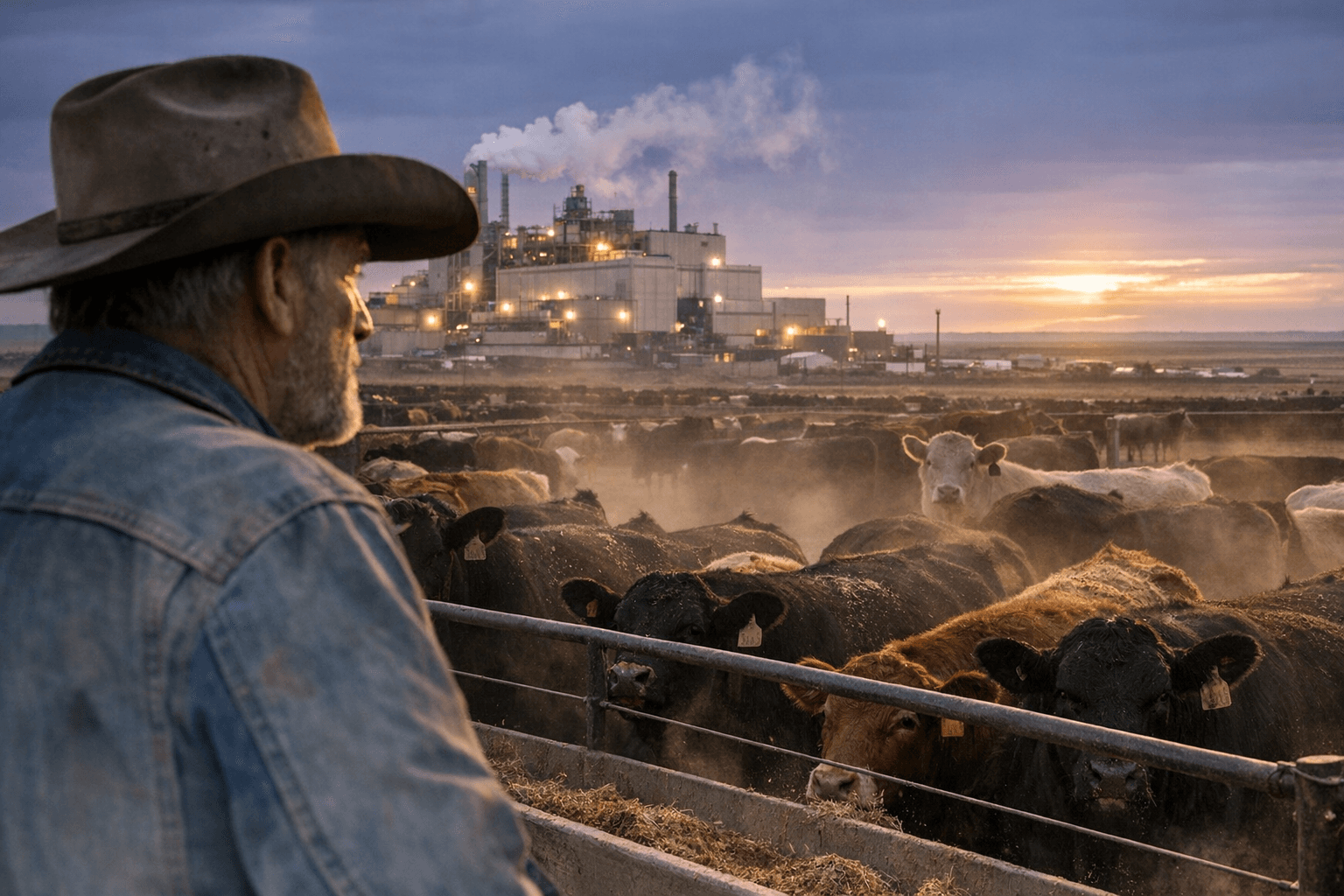
More than 3,800 workers walked off the job at JBS USA's Greeley beef processing plant on March 16, shutting down one of the nation's largest slaughterhouses and leaving cattle producers across Colorado's High Plains, including Logan County, scrambling to figure out where their animals are headed next.
The plant, which operates as Swift Beef Co. and carries a daily slaughter capacity of 5,500 head, sits at the center of the regional beef supply chain. Its idling is what Jennifer Martin, an animal sciences researcher at Colorado State University, called an unambiguous cost problem for feedlot operators. "The feedlots, the people who have the cattle right now, the longer they sit kind of in a holding pattern, the more expensive they become to feed," Martin said. "For consumers, it means that prices will likely go up."
The strike, organized by United Food and Commercial Workers Local 7, followed months of stalled contract negotiations. UFCW Local 7 president Kim Cordova said JBS insisted on wage increases of less than 2% annually, below Colorado's inflation rate, and accused the company of retaliating against workers during bargaining. "UFCW 7 says workers will remain on the picket lines until JBS comes to the table to negotiate with workers and rights its unlawful union busting," Brownfield Ag News reported, citing the union directly. JBS did not respond to requests for comment.
According to Jennifer Martin and Cordova, the walkout is the first at a U.S. slaughterhouse since workers struck a Hormel plant in Minnesota in 1985, a dispute that lasted more than a year and, according to the Minnesota Historical Society, included violent confrontations between police and protesters.
For Logan County ranchers, the immediate question is how long the disruption lasts. Ag economist Josh Maples of Mississippi State University Extension put it plainly: "This is a duration matters type event." Maples noted that because cattle supplies are already historically tight nationally, any significant backlog at Greeley will be difficult to absorb. "If we see some kind of bigger disruptions here that last for a while, it's absolutely going to have some local impacts. It's going to have impacts on cattle in particular that are going to that plant," he said. He added that some rerouting to other facilities is possible, but cautioned that the degree of price impact on both fed and feeder cattle depends entirely on how long the picket lines hold.
Cattle futures traded sharply higher on March 16, the day the strike began, signaling that markets had already priced in at least some supply disruption. The Greeley walkout comes roughly two months after Tyson Foods closed its meatpacking plant in Lexington, Nebraska, citing a smaller national herd and millions of dollars in projected losses, a closure that sent its own ripples through High Plains livestock communities.
The broader structural concern, raised by industry observers in the days since the strike began, is how heavily the beef supply chain relies on a handful of high-capacity plants. The Greeley facility processes cattle from across Colorado and neighboring states, and any prolonged shutdown forces producers to either hold cattle longer at mounting feed cost, haul them greater distances to alternative processors, or both. Some producers and policymakers have explored investing in smaller, distributed processing facilities to build redundancy into the system, but those efforts remain largely aspirational.
Union steward Avalos, speaking on the picket line in Greeley, captured the stakes on both sides. "It's a huge impact in the community for us to be striking," Avalos said. "I know a lot of us are worried, and hope that nothing goes even more south."
With the strike now entering its second week, the answer to Maples' duration question will determine whether Logan County ranchers face a temporary inconvenience or a sustained squeeze on margins that were already thin before the first picket sign went up.
This article was produced by Prism’s automated news system from verified source data, official records, and press releases, then run through automated quality and moderation checks before publishing. The system is built and supervised by the people who set the standards it runs under. Read our full AI policy.
Did this article answer your question?