Local women highlight P.E.O.'s education mission in Logan County
P.E.O. turns local support into tuition help, re-entry grants and scholarships that can move Logan County women from interruption to completion.

In Logan County, P.E.O. is not just a name on a fundraiser or a social circle. Its real impact shows up when a woman can return to school, finish a degree, or gain a credential that opens the door to a better job. In a county anchored by Sterling, where Logan County government offices are centered, that kind of help can shape what comes next for families, employers and the wider community.
A sisterhood built around education
P.E.O., short for Philanthropic Educational Organization, began on January 21, 1869, when seven students at Iowa Wesleyan College in Mount Pleasant, Iowa, formed what became a long-running educational sisterhood. Those founders were Hattie Briggs, Alice Coffin, Ella Stewart, Suela Pearson, Franc Roads, Alice Bird and Mary Allen. From the start, the organization has focused on helping women advance through education, and that mission still defines the group more than 150 years later.
The organization has grown far beyond its Iowa origins. P.E.O. says it has brought together more than a half million women in the United States and Canada, with more than 5,400 chapters spread across the two countries. That scale matters because it shows how a local chapter in a place like Sterling plugs into a much larger network of support, experience and fundraising power.
How the money becomes opportunity
P.E.O.’s educational philanthropies are designed to meet women at different points in their schooling and careers. The program list includes scholarships, grants, awards, loans and stewardship of Cottey College, a women’s liberal arts and sciences college in Nevada, Missouri, that P.E.O. has supported since 1927. The newest philanthropy, the STAR Scholarship, dates to 2009 and recognizes outstanding young women for achievements inside and outside the classroom.
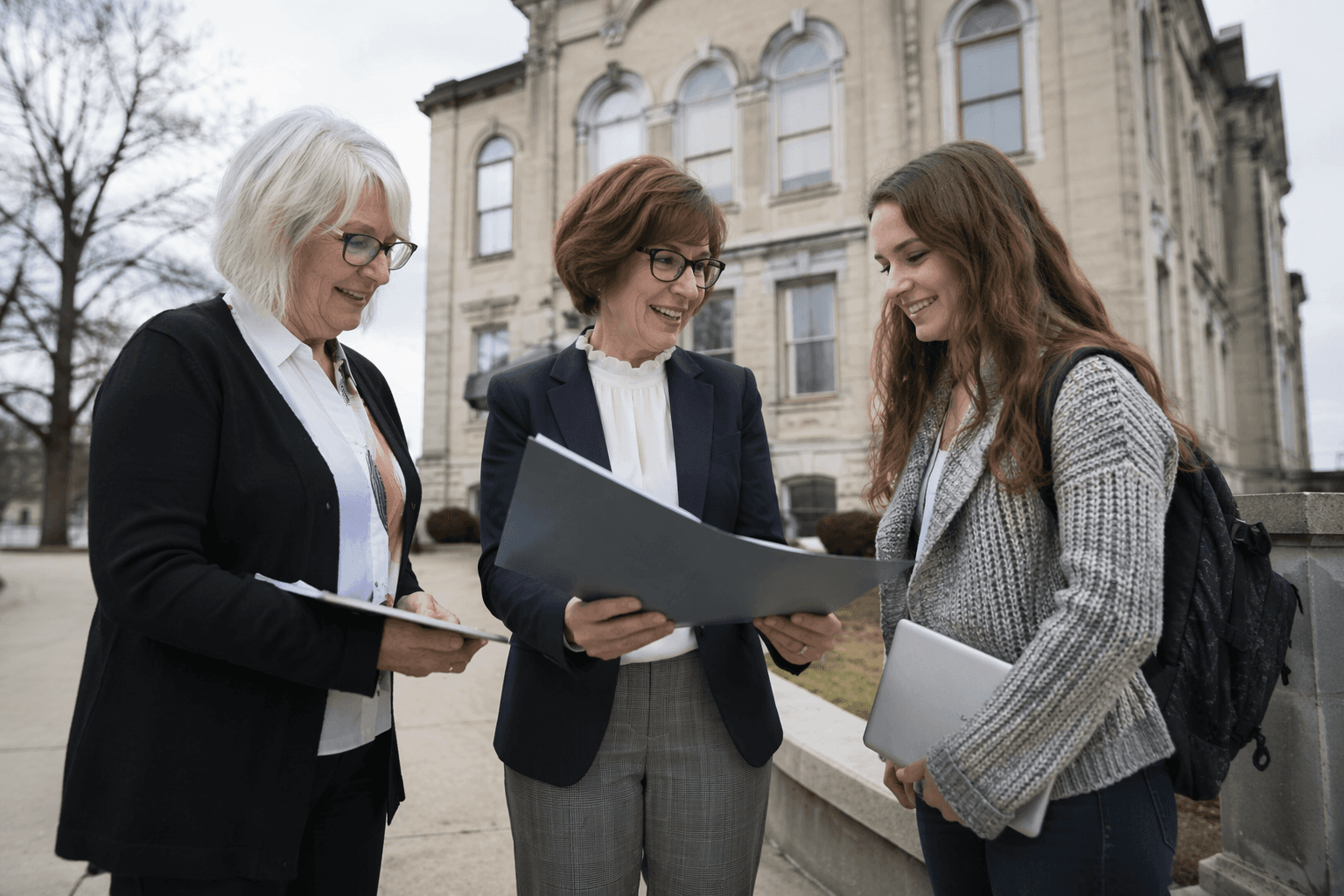
The most direct path from philanthropy to opportunity is through grants and loans. The Program for Continuing Education, established in 1973, offers need-based grants of up to $4,000 for women in the United States and Canada who have had their education interrupted and need to return to school to complete a degree or certification that will improve their marketable skills. The Educational Loan Fund, started in 1907, offers loans to qualified women students at levels of up to $12,000 for an accredited non-degree program or associate degree, $15,000 for a bachelor’s degree, $20,000 for a master’s degree and $25,000 for a doctoral degree.
That structure gives P.E.O. a practical role in the middle of life transitions. A woman who left school before finishing, or who is trying to move from one job track into another, can use the aid to close the gap between where she is and the next credential she needs. P.E.O. says its educational philanthropies have provided approximately $462 million in financial assistance to more than 129,000 women, which shows how consistently those grants and loans have translated into degrees, licenses and better employment options.
Who can qualify
The aid is aimed at women with concrete educational goals, not at general operating costs or broad community programming. For the Continuing Education program, the key requirement is interruption: the applicant has had her education disrupted and needs to return to school to complete a degree or certification that strengthens employment prospects. For the loan fund, the path is broader, covering qualified women students in an accredited non-degree program, an associate degree, a bachelor’s degree, a master’s degree or a doctoral degree.
That range matters in a county like Logan, where education can mean different things at different stages of life. For one woman, the next step might be a certification that gets her into a more stable field. For another, it may be a graduate degree that expands leadership opportunities. P.E.O.’s model is built to meet those different needs with specific forms of support instead of a one-size-fits-all award.
Why the local chapter matters in Sterling
P.E.O. chapter mapping materials describe the local chapter as the heart of the organization, and that is one reason the model fits a place like Logan County. The work begins with personal relationships, shared goals and local participation, not just a distant national office. The Colorado State Chapter of P.E.O. also frames the organization around service and philanthropy growing out of love and friendship, which helps explain why the local version tends to feel both practical and personal.
That structure is important in Sterling, where county life is centered and community networks still carry real weight. A local chapter can identify women who may need a grant, help them understand the eligibility rules and connect them to national programs that can change their educational path. It is a small-scale route into a large system, and that is what makes it effective in a rural county.
The Colorado connection for Logan County women
Colorado P.E.O. resources also point to scholarships closer to home. The state organization includes Colorado and local chapter scholarships, along with information for Colorado residents who are interested in Cottey College. That gives Logan County women a path that starts in their own state and can extend to a P.E.O.-supported college outside Colorado if that is where their academic goals lead.
The broader message for Logan County is straightforward: P.E.O. is built to turn volunteer energy into educational momentum. From its 1869 founding by seven Iowa Wesleyan students to the 1907 loan fund, the 1973 continuing education grants and the 2009 STAR Scholarship, the organization has kept returning to one practical idea: when women can keep learning, communities gain stronger workers, steadier families and more experienced leaders.
This article was produced by Prism’s automated news system from verified source data, official records, and press releases, then run through automated quality and moderation checks before publishing. The system is built and supervised by the people who set the standards it runs under. Read our full AI policy.
Did this article answer your question?