Logan County Courthouse receives two Edward S. Curtis photographs
Two Edward S. Curtis photographs now hang in the Logan County Courthouse, adding to a public building already known for the Eugene Carara collection.

Two photographs by Edward S. Curtis have joined the Logan County Courthouse art collection after Delinda Korrey and Ken McDowell presented the works to Logan County commissioners on Tuesday on behalf of her brother. The donation adds to a courthouse that serves not just as a landmark in downtown Sterling, but as a place where residents regularly handle government business, attend hearings and seek official records.
The courthouse already houses the Eugene Carara art collection, a reminder that Logan County has long used one of its most visible public buildings as a place to display community-owned art. Explore Sterling describes those Carara works as oil paintings purchased by private citizens and then donated to Logan County to keep the collection together. The new Curtis photographs fit that pattern of putting art in a space where the public already comes to meet the county’s legal and administrative functions.
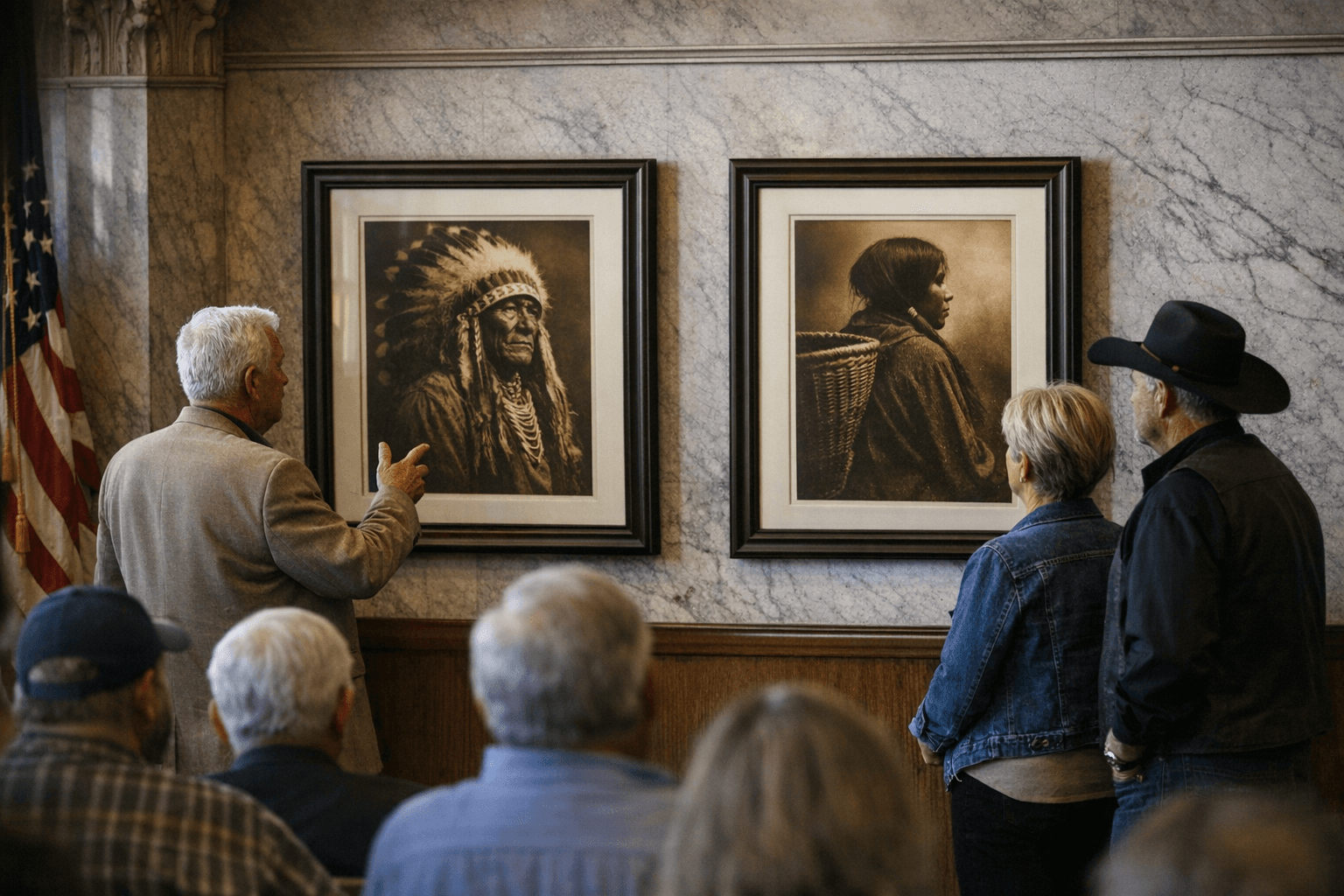
Curtis remains one of the most recognizable photographers of the American West. Best known for his 20-volume project The North American Indian, he traveled across the continent between 1900 and 1930 photographing more than 70 Native American tribes, according to the Smithsonian Institution. The Library of Congress says its Curtis collection includes more than 1,600 unpublished images from that body of work, a measure of how large and enduring his archive remains. Even two photographs from that legacy carry weight in a county that still sees itself through a Western and agricultural lens.

The donation also reflects a local preference for making public institutions feel rooted in Logan County history rather than purely functional. In a courthouse that handles the county’s day-to-day government work, art does more than fill wall space. It gives residents something shared to see while they are there for hearings, records or other official business, and it reinforces the idea that the courthouse belongs to the public in more than a procedural sense.
This article was produced by Prism’s automated news system from verified source data, official records, and press releases, then run through automated quality and moderation checks before publishing. The system is built and supervised by the people who set the standards it runs under. Read our full AI policy.
Did this article answer your question?