Logan County to Hold Public Hearing on Wind Energy Regulation Changes
Logan County commissioners will hear public comment on wind energy regulation changes March 17, three days away, as the county overhauls rules for wind, solar, battery storage, and data centers.

Logan County Commissioners will hold a public hearing this Monday, March 17, on proposed amendments to the county's wind energy regulations, the latest step in a broader overhaul of rules governing renewable energy and technology infrastructure across the county.
The hearing follows months of regulatory work that began in earnest after the county placed a six-month moratorium in October on permits for wind and solar projects, battery energy storage systems, and data center facilities. At the time, the county had no regulations in place for data centers or battery storage and needed time to develop them, while also reviewing existing wind and solar rules that were last adopted in 2023.
Among the specific changes under consideration for wind energy regulations is an extension of the notice period given to neighboring landowners before a permit hearing is set. County Planner Rob Quint had previously told commissioners that the current 14-day window is too short. Commissioners have also discussed raising permit fees to align with neighboring counties, funding outside third-party permit review, and charging higher fees for larger projects.
The wind hearing arrives after standing-room-only public hearings at the Logan County Courthouse in early January on proposed regulations for data centers, battery energy storage systems, and amended solar rules. Commissioners tabled all three at that meeting to allow additional public comment and incorporate suggested changes. Commissioner Mike Brownell had asked Quint whether a three-month moratorium would be too long as those regulatory drafts were being prepared.
Commissioner Jim Santomaso had called for revisions to wind and solar rules and pushed for the county to develop data center regulations from scratch. Quint said wind, solar, and battery storage rules should be completed relatively quickly, but data center regulations present a harder challenge: Quint has been unable to find comparable Colorado regulations and plans to contact Laramie County for guidance, noting that Cheyenne, Wyoming is expected to become the site of one of the largest data center hubs in the country.
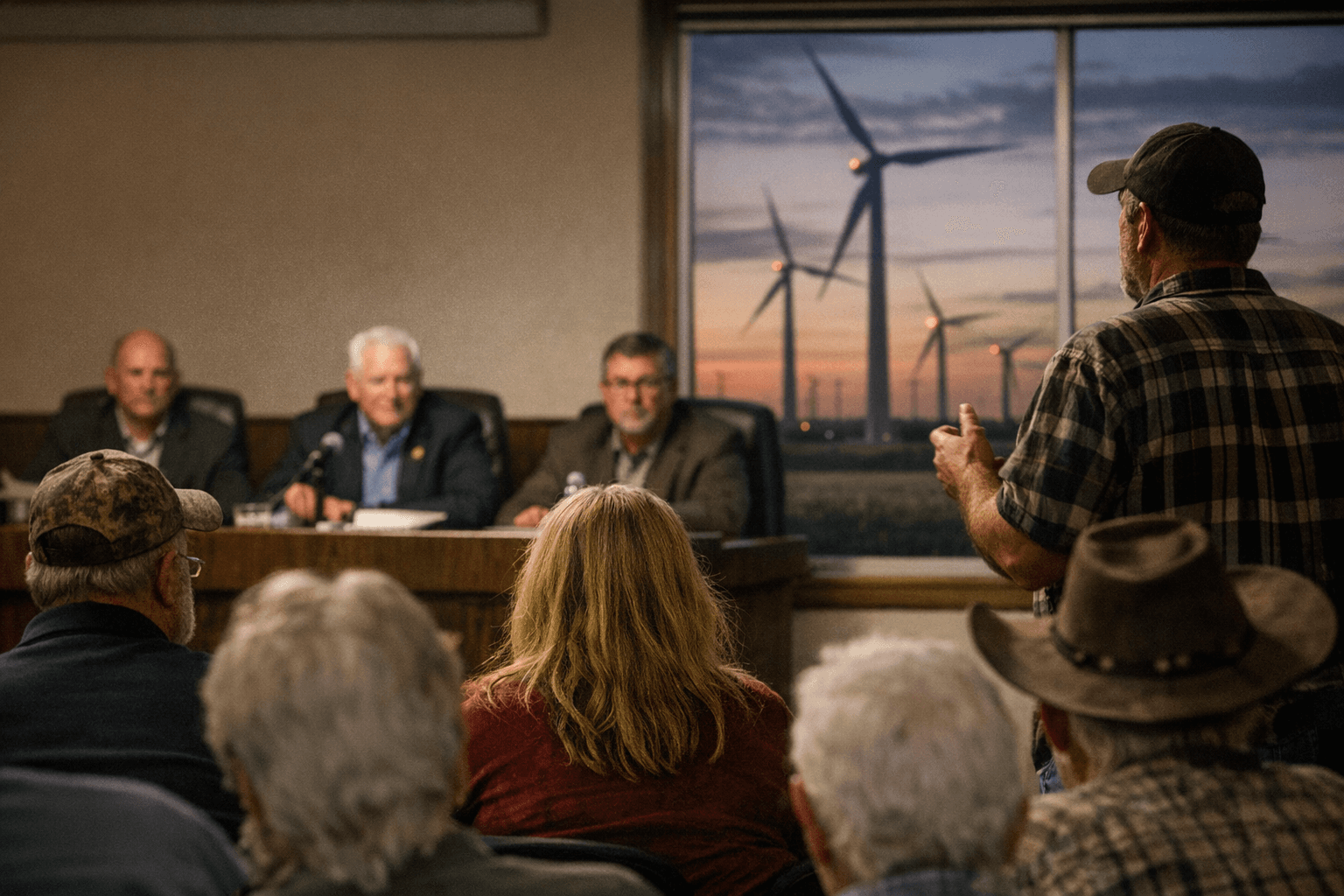
The stakes in wind regulation are significant for Logan County's finances. Wind projects are expected to contribute $2.2 million in property tax revenue this year, roughly 13 percent of the county's total property tax income, according to figures provided by county officials. Since 2003, wind projects have contributed at least $25.3 million to the county through building permits and various taxes.
The regulatory push traces back to the contentious 2020 approval of a 74-turbine NextEra project near Fleming, which flooded the commissioners' office with emotional emails and postcards from residents. Proposed setback requirements have drawn scrutiny from developers since then: Avangrid estimated that a proposed 1,200-foot setback from nonparticipating landowners' parcels would eliminate roughly 50 turbines from one planned project, or 42 percent of the company's footprint in Logan County. "We look forward to continuing discussions with Logan County decision-makers and appreciate the opportunity to share the impacts that the proposed regulations would have on project viability, and, ultimately, the future of wind projects in Logan County, Colorado," an Avangrid spokesperson said.
Commissioner Joe McBride offered a different perspective on wind energy's local value, noting that three turbines on his in-laws' property near Peetz had helped the family weather difficult farming years.
Under the county's established process, all regulation drafts go through the Planning and Zoning Commission, which makes formal recommendations to the Board of County Commissioners before any public hearing is held and rules are adopted. Monday's hearing on wind amendments represents that final public step before commissioners could act on the proposed changes.
This article was produced by Prism’s automated news system from verified source data, official records, and press releases, then run through automated quality and moderation checks before publishing. The system is built and supervised by the people who set the standards it runs under. Read our full AI policy.
Did this article answer your question?