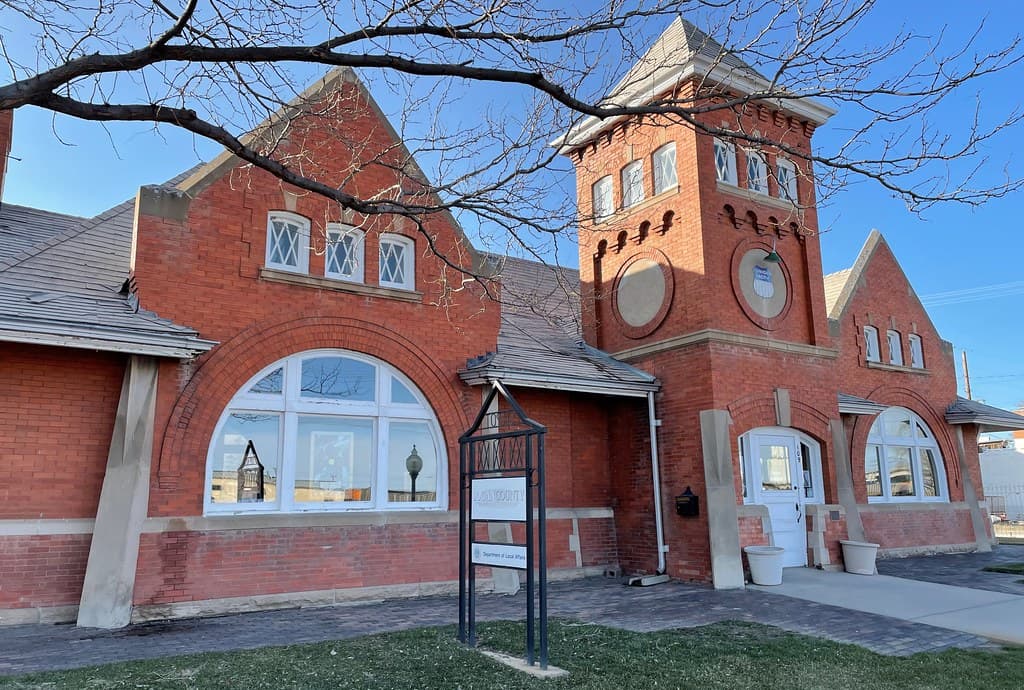
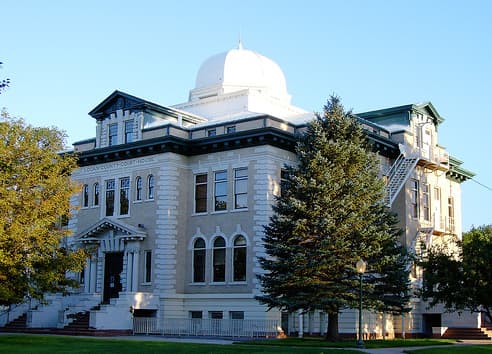
Logan County's Cattle King, John Wesley Iliff, Shaped Colorado's Ranching Legacy
A Logan County town still bears his name, but John Wesley Iliff's true legacy is 35,000 cattle, 65,000 controlled acres, and a ranching model that changed what Americans eat.
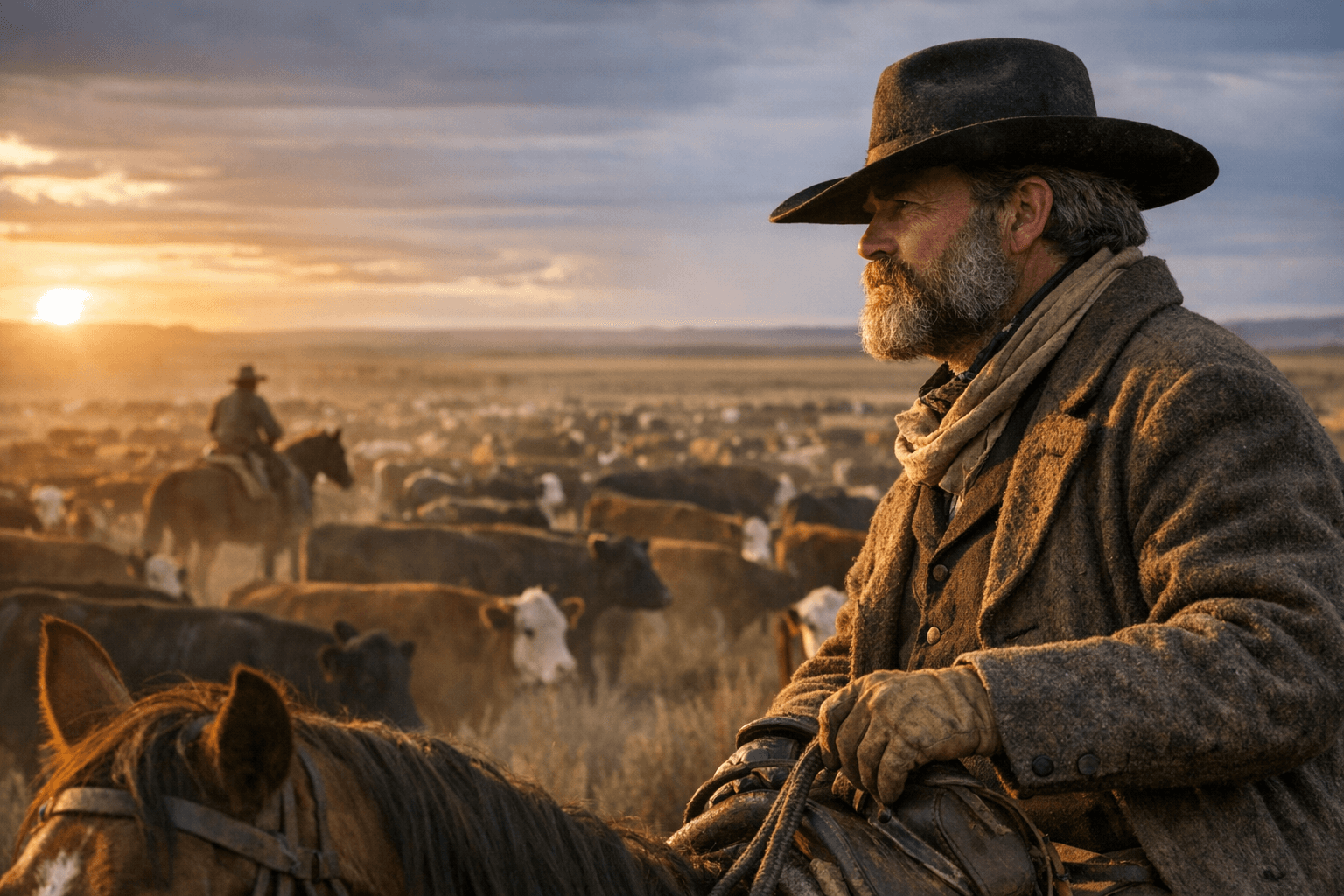
Before a single building went up in the town that bears his name, John Wesley Iliff had already assembled one of the most formidable cattle operations the American West had ever seen. The Colorado Encyclopedia puts it plainly: "If there is a name in Colorado history that is synonymous with cattle and ranching, it is John Wesley Iliff." For Logan County, that name is not just history — it is geography, identity, and a daily reminder that the open grasslands stretching from Julesburg to Snyder once fed tens of thousands of cattle under a single man's brand.
From $500 and a Kansas Storefront to Colorado's Richest Rancher
Iliff's path to cattle royalty began with a modest stake. Born December 18, 1831, in McLuney, Ohio, to Salome Reed and Thomas Iliff, he attended Ohio Wesleyan in Delaware, Ohio but did not graduate. In 1857, at age 26, his father handed him $500 in cash. He moved to Ohio City, Kansas, and opened a retail store. Two years later, with gold discovered in Colorado, he relocated to Denver and opened a second store on Blake Street.
That Blake Street operation became the foundation of something far larger. Iliff traded supplies to westward immigrants and accepted livestock in return, then fattened those animals on the open range. The profits flowed back into land purchases across northeast Colorado. According to Wikipedia, this cycle ultimately created what it describes as the largest ranch in Colorado history, with Iliff raising as many as 35,000 head a year to sell to Union Pacific construction crews. He became a millionaire, earning the epithet "the Cattle King of the Plains."
Mastering the Plains: Water, Grass, and 100 Miles of Cattle Country
The scale of Iliff's operation defies easy summary. Within a year of shifting his focus to cattle, the Journal-Advocate reports, he had assembled 7,000 head and spread them across land stretching 100 miles from Julesburg to Snyder, Colorado. He first operated near Crow Creek, east of Greeley, before moving portions of his operation to Lodgepole, Nebraska.
His real competitive advantage, however, was water. Using the Homestead Act of 1862, Iliff strategically claimed parcels that included the best watering holes along the South Platte River. The Journal-Advocate captures the arithmetic of this strategy precisely: he actually owned only 15,000 acres, but by controlling the water, he effectively commanded more than 65,000 grazing acres. The Colorado Encyclopedia puts his deeded holdings at approximately 15,500 acres, with that same water-rights strategy extending his practical reach deep into Wyoming.
During dry years, Iliff moved his headquarters to the area near present-day Weldona and Orchard, where about 16 small streams fed into the South Platte River. Those streams, the Journal-Advocate notes, supplied the water and green grass his expanding herds required when other parts of the range turned brittle.
Camps, Brands, and a Man Who Preferred a Buggy
Running cattle across that territory required infrastructure. The Journal-Advocate describes 19 line camps scattered across Iliff's range, while the Colorado Encyclopedia records that within a few years he had built nine cattle camps with adobe shelters, allowing cattle to live on the plains year-round. The two figures likely reflect different periods or different definitions of "camp" versus "line camp," and the distinction points to an operation that evolved considerably over roughly two decades.
Iliff's cattle carried two brands: the "Star" and the "LF." His markets were equally diverse. According to the Colorado Encyclopedia, he sold to Indigenous peoples, army posts including Fort Laramie, the city of Cheyenne, and railroad construction crews, with the Union Pacific contract proving particularly lucrative.
One detail from the Journal-Advocate stands out for its specificity: Iliff visited his far-flung camps on a regular basis, but usually rode in a buggy rather than on horseback. For a man overseeing one of the continent's largest cattle empires, it is a quietly eccentric image.
The Goodnight Deal and the Stockgrowers' Association
Ten years before his death in 1878, Iliff helped organize the Colorado Stockgrower's Association, a move that positioned him as a leader not just in scale but in industry structure. That same year, according to the Journal-Advocate, he paid Charles Goodnight $40,000 to drive cattle from Texas to Colorado, a transaction that illustrates both the financial muscle Iliff wielded and the logistical ambition of his operation. Goodnight was among the most famous cattlemen in Texas history, and the sum Iliff paid him was extraordinary for the era.
The Journal-Advocate described his business character in terms that circulated among his contemporaries: "He had an amazing head for business and was a role model for many others to start their businesses! He was often called the 'squarest man to ride the plains.'"
The Town That Carries His Name
The small Logan County town of Iliff may be the most tangible reminder of just how dominant this one rancher was in northeastern Colorado. According to Thomas J. Noel's account in SAH Archipedia, the town was platted in 1871 and sits at 3,833 feet. For years it remained little more than a railroad siding used to load cattle for shipment. As Noel writes: "Most of its buildings, like its people, are gone, but the old town well is still in the middle of Main Street in front of the post office."
That well, standing in the street, feels like an appropriate monument for a man who understood better than almost anyone else in 19th-century Colorado that controlling water meant controlling everything.
Death, Legacy, and the Theology School He Never Founded in His Lifetime
Iliff died on February 9, 1878, at age 46, with approximately 35,000 head of cattle and thousands of acres stretching from northeast Colorado into Wyoming. He was first buried at Riverside Cemetery in Denver and later re-interred at Fairmount Cemetery. His fortune did not simply disappear: it endowed the Iliff School of Theology in Denver, an institution that continues to operate today and carries his name into an entirely different sphere of public life.
The Colorado Encyclopedia frames his broader significance in terms that reach well beyond cattle counts: Iliff's method of ranching "forever changed the American diet by making beef available at low cost for the average citizen." He pioneered the practice of sheltering cattle on the open plains and pushed the adoption of technologies that helped scale beef production into a national industry. The conglomerate cattle operations and beef-processing networks that define Colorado's multibillion-dollar ranching industry today trace their structural origins to operations like his.
For Logan County, the legacy is visible in the town name on the highway signs, in the South Platte bottomlands he once commanded, and in the local histories documented by Nell Brown Propst in "Forgotten People, and Uncommon Men and the Colorado Prairie," Emma Burke Conklin in "A Brief History of Logan County," and L. Dale "Bud" Wells in "The Logan County Ledger." These accounts preserve a portrait of a man who arrived on the plains with almost nothing and remade the landscape, the economy, and the dinner table of an entire nation.
This article was produced by Prism’s automated news system from verified source data, official records, and press releases, then run through automated quality and moderation checks before publishing. The system is built and supervised by the people who set the standards it runs under. Read our full AI policy.
Did this article answer your question?