Northeast Colorado study highlights Logan County strengths, deep challenges
Logan County’s strongest industries are carrying a region with real pressure points. The new Northeast Colorado study says housing, health care and food insecurity must be tackled together.
Logan County’s future is tied to decisions made beyond county lines, and the latest Northeast Colorado Intersections report makes that plain. The six-county study says this part of the state has major economic strengths, but also health care deserts, poverty, food insecurity and housing problems that are still constraining everyday life in Logan County and its neighbors.
A regional report built from local voices
The 2026 Northeast Colorado Intersections report covers Logan, Morgan, Phillips, Sedgwick, Washington and Yuma counties, and it was co-created by Colorado State University’s Office of Engagement and Extension, the NoCo Foundation and CSU’s Institute for the Built Environment. The process was participatory and data-driven, with community meetings, focus groups, surveys and one-on-one conversations designed to surface the stories behind the numbers and strengthen regional voices for advocacy.
That matters because the report was not treated as a distant academic exercise. Local leaders were in the room when it was discussed during a two-hour meeting on April 30 at Northeastern Junior College in Sterling, which began at 8:30 a.m. Among the participants were Logan County rancher Josh Sonnenberg and Logan County Commissioner Jim Yahn, who also manages the Prewitt and North Sterling irrigation companies. Their presence signaled that agriculture, water, infrastructure and county governance were all part of the same conversation.
What Northeast Colorado still does well
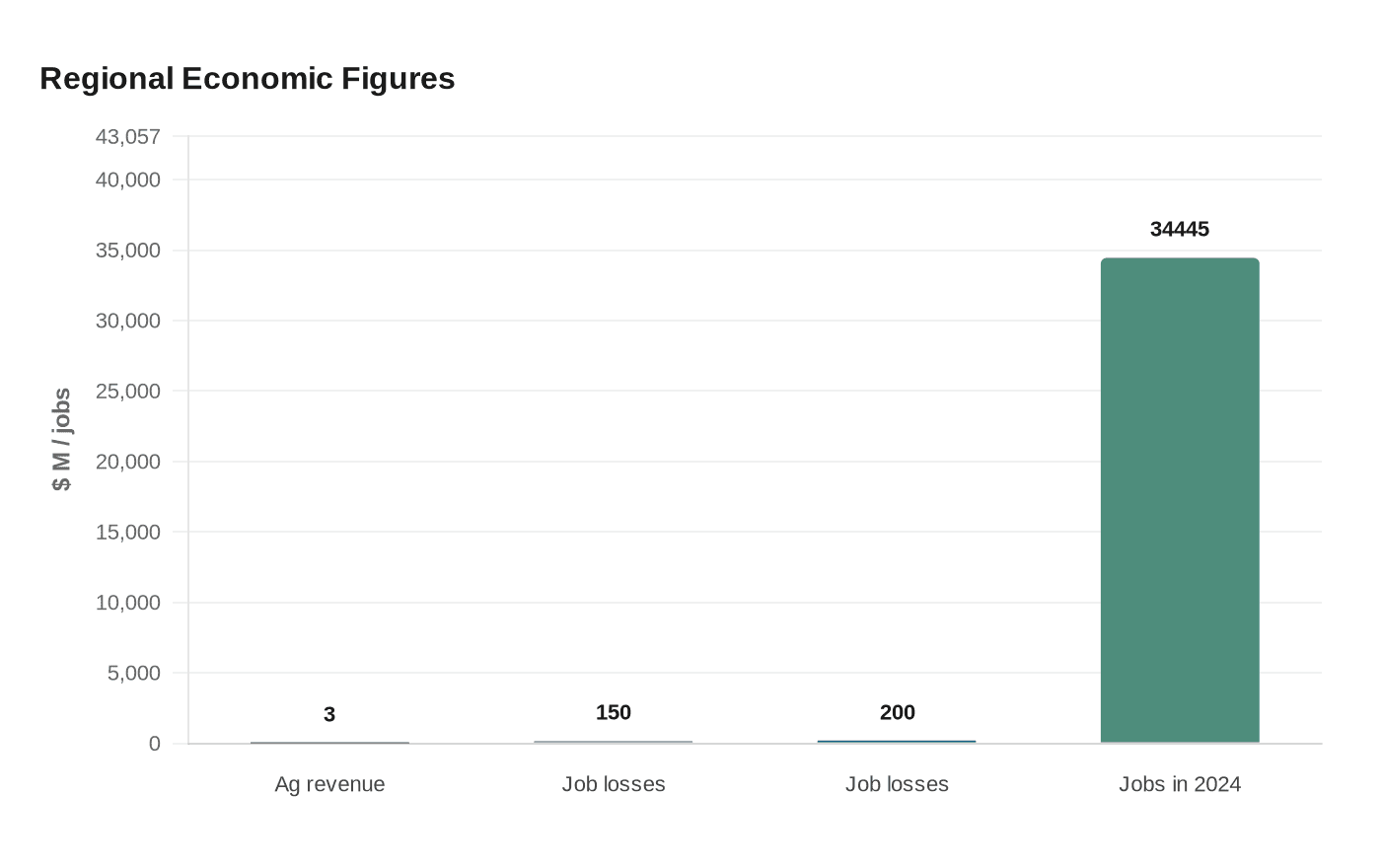
The report does not read like a warning label. It also makes a strong case that Northeast Colorado remains an agricultural engine, with annual agricultural revenue of more than $3 billion across the six counties. Five of the six counties rank among Colorado’s top 10 agricultural producers, and agriculture supports nearly half of the 34,445 jobs in Northeast Colorado in 2024.
That production base is not limited to one commodity. Beef cattle, dairy, pork and cash crops anchor the region, while wind and solar development have expanded in places where farming and grazing are less viable. For Logan County, where agriculture is part of the county’s identity and economy, that combination of traditional production and newer energy investment is a reminder that rural economies are diversifying even as they remain deeply dependent on land, weather and infrastructure.
The report also shows why the region’s fortunes are vulnerable. It estimates that drought, severe storms and related agricultural losses caused $150 million to $200 million in regional economic losses over the past decade. In a place where farm income, irrigation systems and transportation networks are all interconnected, a bad weather cycle does not stay confined to one sector for long.
The challenges are not separate problems
The central message of the study is blunt: northeastern Colorado has much to brag about, but the region still confronts health care deserts, poverty, food insecurity and SNAP enrollment rates above the state level. Housing is described as old, inadequate and not much more affordable than elsewhere in Colorado.
That combination is exactly why local leaders are being urged to work together now. A county can recruit a business, but it is harder to keep workers if they cannot find a house they can afford. A hospital can post a job, but it is harder to fill if doctors, nurses and support staff face the same housing squeeze as everyone else. Schools feel the strain too, because teacher recruitment, bus routes, student stability and family continuity all become harder when homes are limited and expensive.
The report’s deeper point is that these problems reinforce one another. If housing, health care, food access and workforce development are treated as separate policy silos, Logan County will keep spending energy patching the same leaks from different directions.
Logan County by the numbers
Logan County’s own profile shows why the report’s warnings land so hard locally. The U.S. Census Bureau estimates the county’s population at 20,654 as of July 1, 2025, down from 21,528 in the 2020 Census. It also shows that 20.6% of residents are age 65 or older, a sign that the county is aging even as younger residents continue to leave or settle elsewhere.
The county’s median household income is $51,829, and the median gross rent is $1,013. Those numbers help explain why housing affordability is a recurring pressure point even in a rural county that many outsiders might assume is cheaper than the Front Range. The Census profile also shows 7.2% of residents without insurance and only 12 building permits issued in 2024, both of which point to limited room for quick population or housing growth.
Health access is another pressure point. RHT Compass says Logan County has only one hospital serving 21,528 residents and that primary care and mental health are designated shortage areas. In a county with one main hospital and persistent workforce shortages, the difference between adequate staffing and thin staffing can affect everything from routine appointments to emergency response.
Food insecurity and family stability are part of the same story
The food-security picture is equally stark. Feeding Colorado’s Logan County fact sheet says 2,470 residents were food insecure using pre-COVID 2019 data, including 630 children. The same fact sheet says 2,701 people were below the poverty line and that 970 households received SNAP in 2020. Logan County also has six hunger-relief partners, but that network is operating in a county where need remains substantial.
Colorado’s Department of Human Services says county human services departments administer SNAP and many other benefits, which makes county systems central to the way families get help. That is one more reason the report’s regional approach matters: food insecurity is not just a charity issue, and it is not just a county issue. It is connected to wages, housing, transportation, health care access and whether families can remain stable enough to stay in the community.
An aging workforce raises the stakes
The report also points to a demographic warning that has broad implications for Logan County’s future. It says 40% of farmers and ranchers in the region are 65 or older, and KUNC reported that the study highlights fewer young people staying in the area. The aging work force extends beyond agriculture into health care, construction, manufacturing, transportation and services for older adults.
That creates a cascading problem for a county like Logan. If older workers retire faster than younger workers arrive, the county can lose not just payrolls but knowledge, mentorship and institutional memory. That makes it harder to maintain hospitals, keep schools fully staffed, repair roads, manage irrigation systems and support the services that older residents need to remain in place.
The practical next step for Logan County
The message from Sterling was not that Logan County lacks assets. It is that the county’s strengths will not hold if leaders keep treating housing, workforce, health access and food security as disconnected issues. The value of the Intersections report is that it gives county commissioners, hospital leaders, school officials, nonprofit partners and agricultural stakeholders a common map to work from.
For Logan County, the payoff is straightforward: collaborate on the problems that shape whether families can stay, workers can be recruited and services can keep running. If those challenges keep getting handled one at a time, the region will keep losing ground in places where it can least afford to.
Know something we missed? Have a correction or additional information?
Submit a Tip