Sterling FBLA teaches middle schoolers financial literacy during April visits
Sterling High FBLA took financial literacy into Sterling Middle School, giving younger students a practical lesson before first jobs, bank accounts and driving costs arrive.

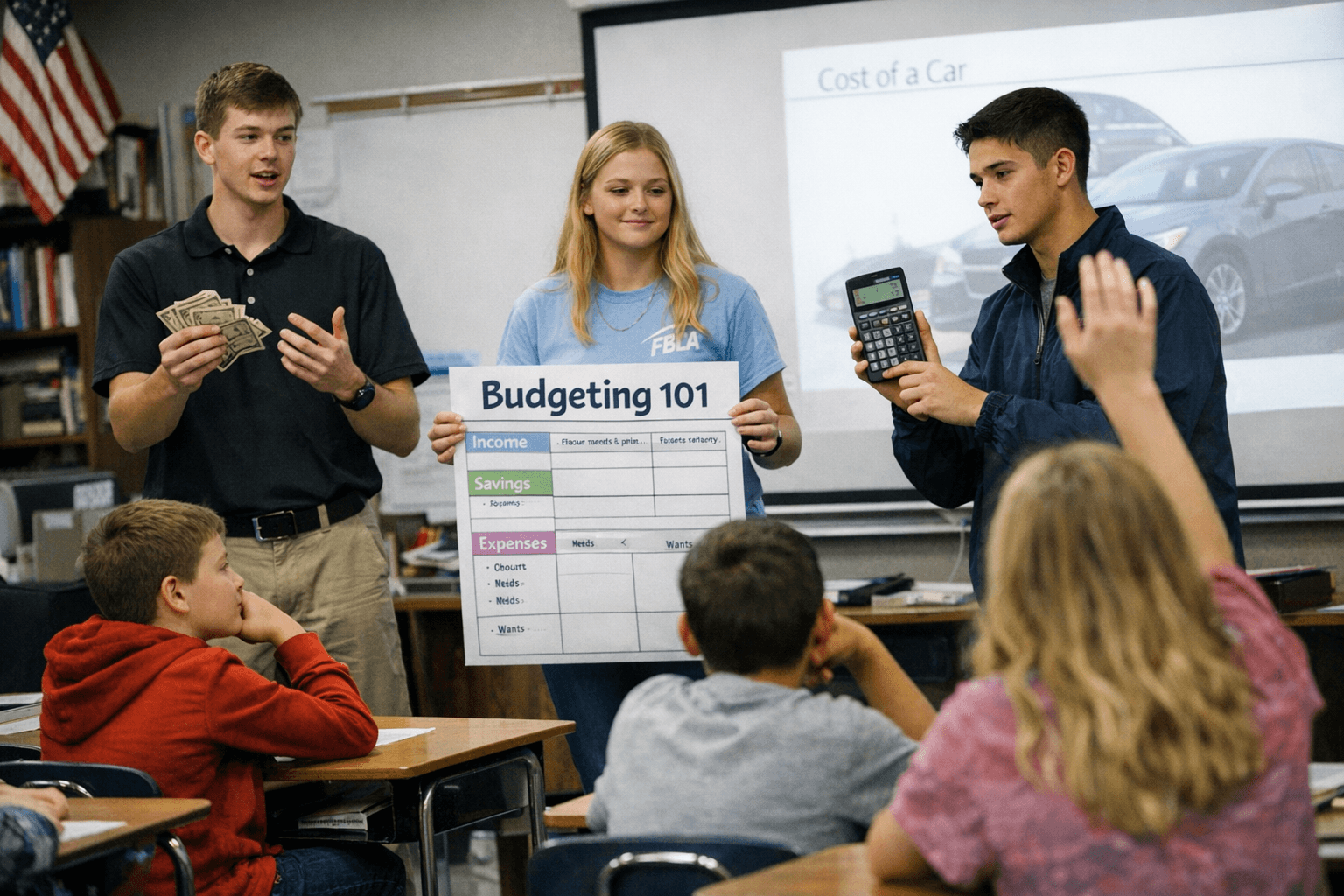
Sterling High School’s FBLA chapter spent National Financial Literacy Month in Sterling Middle School classrooms, turning a calendar observance into a lesson meant to stick long before students handle their first paycheck or bank card.
The peer-to-peer visit put high school students in the role of teachers, a low-cost but high-value approach that gives middle schoolers a chance to hear money advice from older students they may already know from Sterling Public Schools activities. In Logan County, where teens are already starting to think about allowance, summer work and driving expenses, that kind of early exposure can matter as much as any classroom unit.
The April 24 visit also fits a broader push to make financial literacy more than an elective topic. The Financial Literacy and Education Commission says Financial Literacy Month is meant to raise awareness and help Americans make informed financial decisions. FBLA, which describes itself as the largest business career and technical student organization in the world, says its chapters help advance financial literacy through leadership, service and career-connected learning.
That mission is not new. FBLA’s Financial Literacy Initiative was established during the 2016-2017 FBLA year by National Treasurer Nikolas Lazar, with help from the National Treasurer’s Council, to address financial illiteracy by building personal finance knowledge among members. In Sterling, that national effort took a local form as students from the high school brought the message to Sterling Middle School.
The lesson lands in a district that already says it prepares students for life beyond high school through career pathways and community partnerships. Sterling Public Schools also points to real-world experience in business and other career areas, which makes a student-led financial literacy lesson a natural fit rather than a one-off event. Colorado’s Department of Education also maintains financial-literacy standards and support materials for K-12 public schools, underscoring that the topic is part of the broader educational landscape.
For families in Sterling, the practical value is immediate. A middle schooler who starts hearing about smart money habits now is less likely to face those ideas for the first time after a first job, a first checking account or the cost of driving starts to show up. That is what gives the FBLA visit its weight: older students were not just visiting younger ones, they were helping build habits that can shape the next few years of a student’s life.
This article was produced by Prism’s automated news system from verified source data, official records, and press releases, then run through automated quality and moderation checks before publishing. The system is built and supervised by the people who set the standards it runs under. Read our full AI policy.
Did this article answer your question?