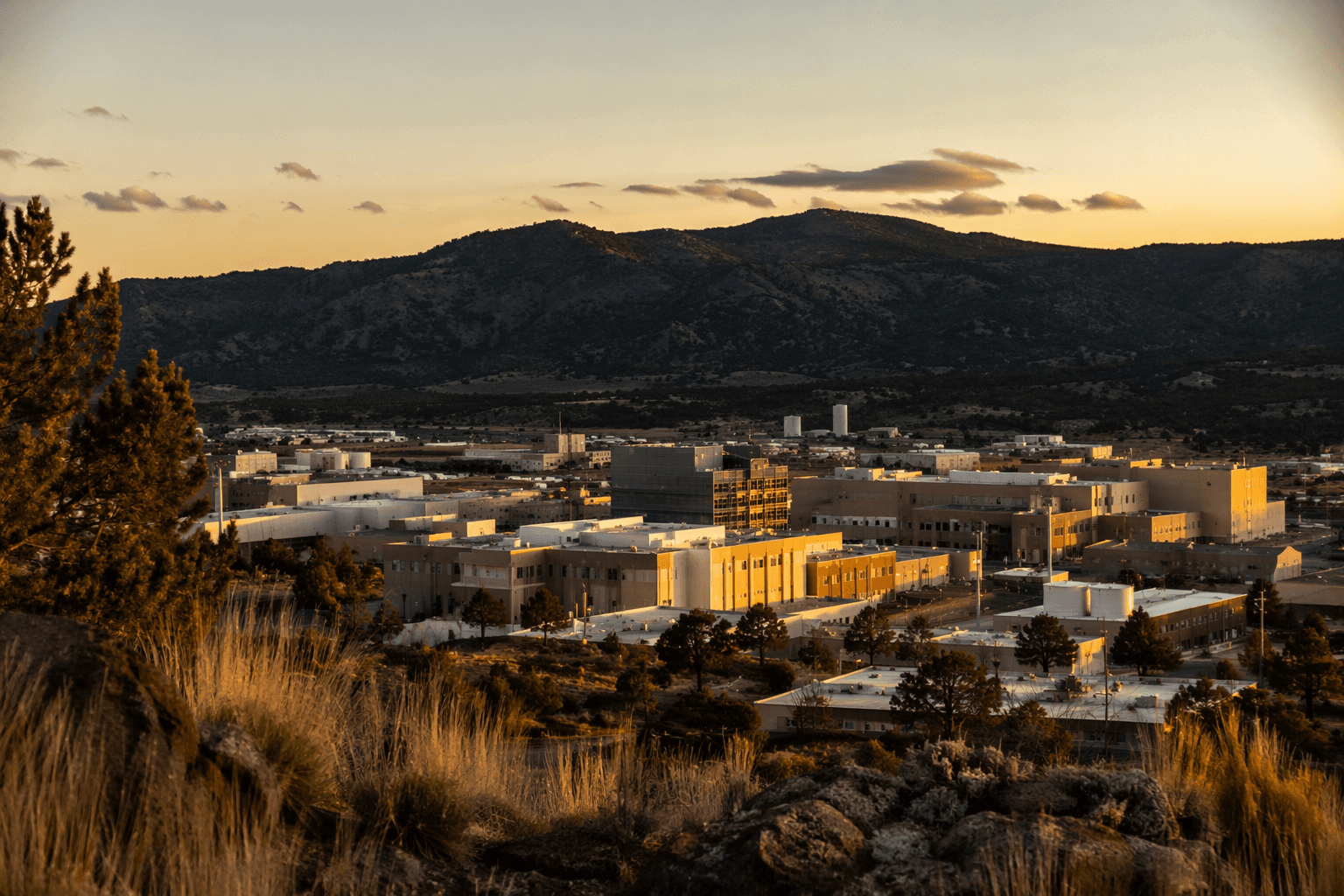
Los Alamos Lab highlights geologic hydrogen’s promise, big uncertainties
Los Alamos sees geologic hydrogen as a possible new energy prize, but the science is still far from commercial. If it works, the payoff could reach federal funding, jobs and Lab influence.
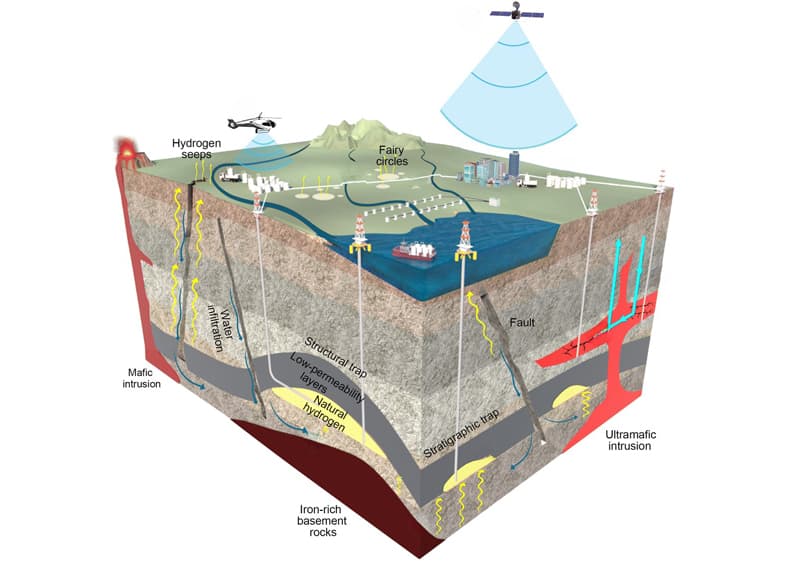
Los Alamos National Laboratory is betting that some of the next big energy decisions may be made underground, long before any new wells, pipelines or jobs appear above ground. The Lab has highlighted a comprehensive review of geologic hydrogen in Energy & Environmental Science, a Royal Society of Chemistry journal, and the paper’s scale alone signals how seriously the field is being taken: 14 authors, 45 pages, and a detailed sweep of where subsurface hydrogen may form, how it moves, and what would be required to produce and transport it at industrial scale.
Why Los Alamos is paying attention
The Los Alamos angle is not incidental. Geologic hydrogen sits squarely in the Lab’s long-running strengths in subsurface science and engineering, which makes it a natural place for researchers to study an energy resource that is still more theory than market. Mohamed Mehana, a Los Alamos research scientist involved in the work, argues that the resource could matter because it appears to be distributed globally and can occur in favorable geologic settings, but he also stresses that commercial extraction remains a major technical and economic hurdle.
That balance between promise and caution is the core of the story for Los Alamos County. The Lab is not saying hydrogen will soon be pouring out of the ground in northern New Mexico. It is saying the topic deserves real scientific attention because it could eventually affect energy security, energy system design and national energy strategy, all areas where Los Alamos has influence far beyond its county borders.
LANL is also already investing in a related line of work through ARPA-E’s GeoHydRA project, funded at $1.3 million. That project aims to raise hydrogen production rates by promoting hierarchical cracks in reactant rock formations, while bringing together geochemistry, geomechanics, fracture mechanics and porous media flow. In plain terms, that means the Lab is not just studying whether the resource exists, but how to coax more of it out of rock if the science proves out.
What geologic hydrogen could solve
The reason the field is drawing attention is straightforward: if hydrogen can be sourced from the subsurface at meaningful scale, it could become a new low-carbon energy and chemical input rather than a fuel that must be manufactured through more energy-intensive routes. The Lab’s review frames the topic as part of a broader future energy system, not a laboratory curiosity, and that matters for industries trying to cut emissions without giving up high-temperature heat, feedstocks or grid flexibility.
That is also where the business story starts. Any future hydrogen industry would need more than geology. It would need exploration tools, reservoir models, monitoring systems, production technologies, transport infrastructure and pipeline materials that can handle hydrogen safely. Those are all areas where a Lab like Los Alamos can shape standards, attract partners and influence how early money is spent, even before a commercial market exists.
Why the commercial gap is still wide
The same review that highlights the opportunity also makes clear how far the field still is from being an industry. Resource estimates remain uncertain, monitoring needs are unresolved, leakage is a real risk, and material-compatibility issues could complicate pipelines and other infrastructure. The authors also note that stimulated production might unlock more hydrogen, but the chemistry behind that approach has not yet been demonstrated at field scale.
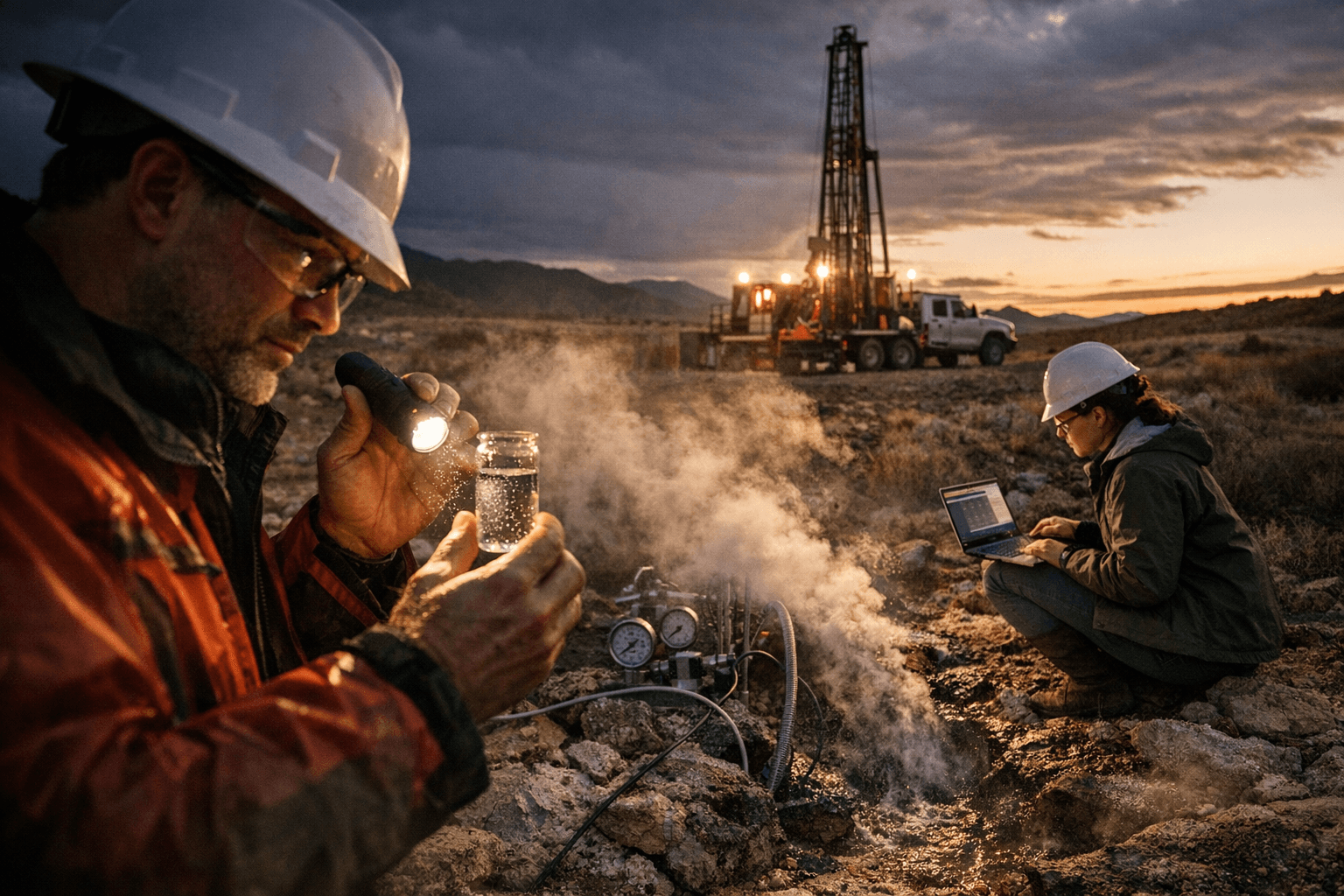
That last point is the biggest dividing line between promise and reality. A project can look impressive in the lab and still fail when exposed to the pressures, temperatures and variability of real rock formations. The technoeconomic assumptions behind geologic hydrogen are still largely untested, which means nobody should mistake a promising paper for a bankable business model.
There is, however, one real-world reference point. The Royal Society said in June 2025 that natural hydrogen could be a viable low-carbon resource where geology, industry and regulation align, and it pointed to Bourakébougou in Mali as the only place where naturally occurring hydrogen has been tapped for commercial benefit. That example matters because it proves the concept is not imaginary, but it also shows just how small, site-specific and hard to replicate the field remains.
What the federal map says
Federal agencies are treating the subject as more than a speculative niche. On January 16, 2025, the U.S. Geological Survey released the first publicly available continental-scale prospectivity map for geologic hydrogen in the conterminous United States. The map highlights the midcontinent region, the Four Corners states, the California coast and parts of the eastern seaboard.
The USGS approach is built around three ingredients: a source, a reservoir and a competent seal. That framework is important because it explains why geologic hydrogen is not everywhere just because hydrogen exists underground in trace amounts. Exploration is still early, high-concentration discoveries remain rare, and the map is really a way to narrow down where future work might pay off.
The Department of Energy is already putting money behind that search. ARPA-E announced $20 million for 16 projects across 8 states to speed up work on natural subsurface hydrogen generation, and DOE Hydrogen and Fuel Cell Technologies Office programming has also included public discussion of the engineering needed to bring geologic hydrogen to the surface. Federal interest like that can shape the market long before private capital is ready to move.
What it could mean for Los Alamos County
For Los Alamos County, the near-term impact is not a new hydrogen boom. The more realistic effect is subtler and potentially more durable: more grants, more research partnerships, more attention from energy companies and more national influence for a Lab that can help define what a future geologic hydrogen industry would need to look like.
That is the part worth watching. If the science advances, Los Alamos could help set the technical rules for a resource that sits at the intersection of subsurface engineering, energy security and industrial decarbonization. If the science stalls, the paper still marks something important for the county: the Lab is close enough to the front edge of a potential energy transition that the world’s next big underground fuel conversation may still start in Los Alamos.
This article was produced by Prism’s automated news system from verified source data, official records, and press releases, then run through automated quality and moderation checks before publishing. The system is built and supervised by the people who set the standards it runs under. Read our full AI policy.
Did this article answer your question?